
You notice it first as a misplaced set of keys or a forgotten name. Then, the gaps in memory start to widen, swallowing familiar faces and daily routines. This is not just normal aging; it is often the early whisper of Alzheimer's disease, a progressive neurodegenerative disorder that accounts for 60-80% of all dementia cases worldwide. By 2025, an estimated 7.2 million Americans aged 65 and older were living with this condition, a number projected to surge to 13.8 million by 2060. Understanding what happens inside the brain, how the disease unfolds over time, and what treatments are actually available today can mean the difference between confusion and clarity for families navigating this difficult journey.
The Biological Roots of Memory Loss
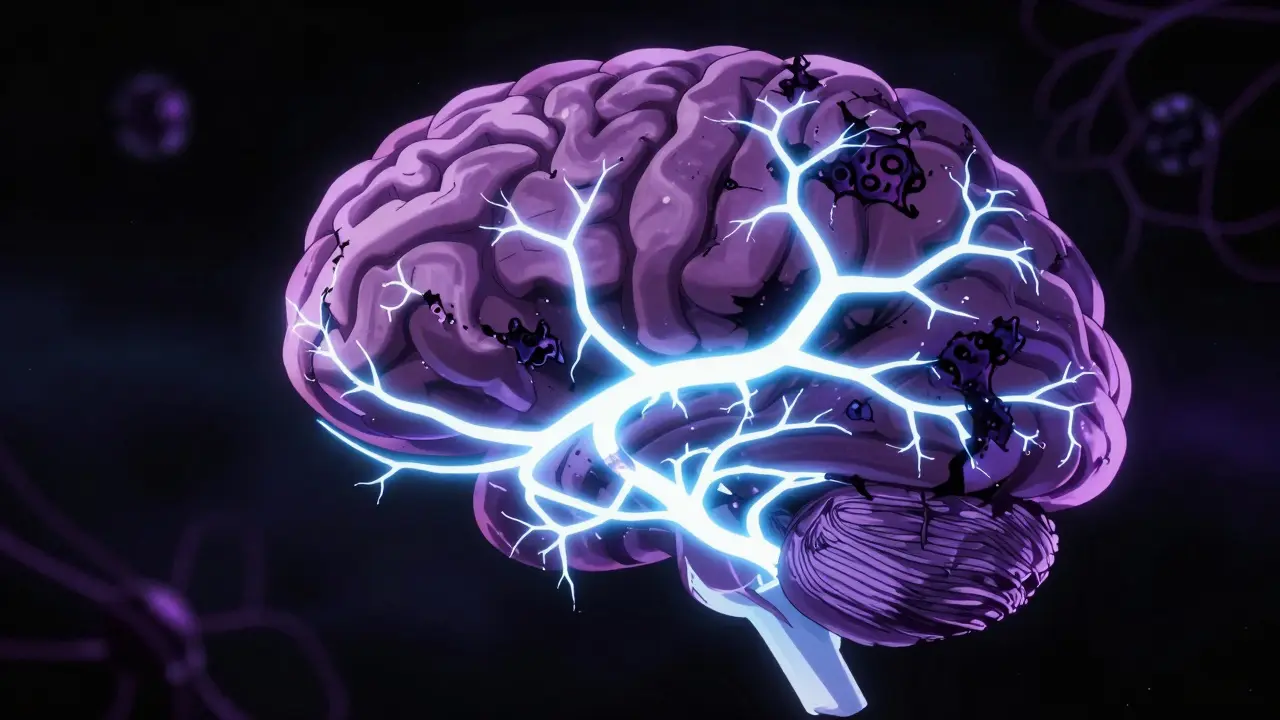
To understand why memory fades, we have to look at what is happening physically in the brain. Alzheimer’s is defined by two specific pathological hallmarks that disrupt communication between nerve cells. First, there are beta-amyloid plaques, sticky protein clumps that build up between neurons. These plaques interfere with cell function and trigger inflammation. Second, there are neurofibrillary tangles, twisted fibers of tau protein that form inside brain cells. Tau normally helps transport nutrients, but when it tangles, the transport system collapses, and the cell dies.
This damage hits hardest in the hippocampus, the part of the brain responsible for forming new memories. As neurons die here, the ability to recall recent events vanishes. The cerebral cortex also shrinks, affecting reasoning and language. For decades, diagnosis relied solely on symptoms. Today, however, biomarkers have changed the game. Cerebrospinal fluid analysis can detect decreased amyloid-beta 42 and increased phosphorylated tau proteins with 85-90% sensitivity. Advanced imaging like amyloid PET scans offers 92% specificity, though access remains limited to only 35% of U.S. healthcare facilities as of early 2025. Genetic factors also play a role; carrying the APOE-e4 allele increases risk by 3 to 15 times, depending on whether you have one or two copies of the gene.
How the Disease Unfolds: The Seven Stages
Alzheimer’s does not strike all at once. It progresses through a predictable pattern, typically categorized into seven stages. Knowing where someone stands on this spectrum helps families prepare for what lies ahead.
- Stage 1 (No Impairment): The person functions normally. There are no noticeable memory issues.
- Stage 2 (Mild Cognitive Decline): Subtle forgetfulness appears, such as misplacing objects or forgetting names. This is often mistaken for normal aging.
- Stage 3 (Mild Alzheimer’s): This is the earliest stage of clinical Alzheimer’s. Friends and family begin to notice difficulty with complex tasks, like managing finances or planning events. Memory lapses become frequent.
- Stage 4 (Moderate Decline): Clear deficits emerge. The person may struggle with arithmetic, forget their address, or have trouble concentrating. They still know who they are and their basic life history.
- Stage 5 (Moderately Severe Decline): Significant memory loss occurs. The person might forget their own phone number or home address. They need help choosing clothes appropriate for the weather or season.
- Stage 6 (Severe Decline): Personality changes become pronounced. Anxiety, paranoia, and compulsive behaviors may appear. They require assistance with bathing, dressing, and using the toilet.
- Stage 7 (Very Severe Decline): Complete dependency sets in. Communication abilities fade, leaving only single words or phrases. Physical functions like walking and sitting upright deteriorate.
Statistically, 61% of diagnosed cases are in the early stages, 28% in the middle, and 11% in the late stage. Life expectancy after diagnosis ranges from 4 to 8 years on average, though some live up to 20 years. The trajectory varies wildly based on overall health, genetics, and the quality of care received.
Current Treatments: Symptom Management vs. Disease Modification
For years, treatment focused purely on managing symptoms. Today, we stand at a crossroads between traditional symptom relief and emerging disease-modifying therapies. Understanding the difference is crucial for making informed decisions.
| Treatment Class | Mechanism | Efficacy | Key Risks |
|---|---|---|---|
| Cholinesterase Inhibitors (Donepezil, Rivastigmine) | Increase acetylcholine levels to boost communication between nerve cells. | Modest stabilization (3-6 months) in 40-50% of patients. | Nausea, sleep disturbances, slow heart rate. |
| NMDA Receptor Antagonists (Memantine) | Regulates glutamate activity to prevent excitotoxicity. | 20-30% reduction in symptom progression in moderate-to-severe cases. | Dizziness, headache, confusion. |
| Monoclonal Antibodies (Lecanemab, Donanemab) | Target and clear amyloid plaques from the brain. | Lecanemab slows decline by 27%; Donanemab by 35% over 18 months. | ARIA (brain swelling/bleeding), requiring regular MRI monitoring. |
Cholinesterase inhibitors like donepezil remain the standard for mild to moderate Alzheimer’s. They work by boosting acetylcholine, a neurotransmitter vital for memory. While they don’t stop the disease, they can provide a temporary window of stability for nearly half of patients. Memantine is often added in later stages to regulate glutamate, another chemical messenger involved in learning.
The landscape shifted dramatically in January 2025 with the full FDA approval of lecanemab, a monoclonal antibody branded as Leqembi that targets amyloid plaques. In the CLARITY AD trial involving 1,795 participants, lecanemab slowed cognitive decline by 27% over 18 months. Another drug, donanemab, showed a 35% slowing in its TRAILBLAZER-ALZ 2 study. However, these drugs come with significant caveats. They carry a risk of ARIA, Amyloid-Related Imaging Abnormalities, which includes brain swelling and microhemorrhages. Incidence rates are 12.5% for lecanemab and 24% for donanemab. This means patients must undergo monthly MRI scans to monitor safety, adding complexity and cost to treatment.
The Reality of Access and Cost
Even with effective treatments, getting them is another story. The global dementia therapeutics market was valued at $6.3 billion in 2024, projected to hit $18.7 billion by 2030. Yet, adoption rates lag behind availability. By Q1 2025, only 45,000 patients in the U.S. had received lecanemab, representing just 3% of the eligible population. Why? Infrastructure and cost.
Lecanemab costs approximately $26,500 annually. Medicare covers 65% of treatment costs, but reimbursement barriers persist. Many insurers deny coverage for amyloid PET scans, which are required to confirm eligibility before starting infusion therapy. On forums like ALZConnected, 68% of surveyed caregivers reported difficulties accessing these scans due to insurance denials. Furthermore, certified treatment centers are concentrated in urban areas, leaving rural patients with limited options. Dr. David Knopman of the Mayo Clinic has argued that the benefits of amyloid-targeting therapies are "clinically insignificant" given the high cost and risk of serious adverse events. This debate highlights a critical tension: medical efficacy versus practical accessibility.
Beyond Pills: Lifestyle and Non-Pharmacological Interventions
Medication is only one piece of the puzzle. The 2025 World Alzheimer Report emphasizes that 40% of dementia cases could be prevented or delayed through midlife management of nine modifiable risk factors. These include hypertension, obesity, hearing loss, diabetes, depression, social isolation, smoking, physical inactivity, and excessive alcohol consumption.
Cognitive stimulation therapy (CST) has shown promise in clinical settings. A 2024 meta-analysis of 12 studies found CST improved scores on the ADAS-cog scale by 1.5 points. Multidomain lifestyle interventions, such as those tested in the FINGER study, demonstrated a 25% reduction in cognitive decline over two years. This approach combines diet, exercise, cognitive training, and vascular risk monitoring. For many families, these non-pharmacological strategies offer tangible improvements in daily functioning without the side effects of medication.

What Lies Ahead: Precision Medicine and Early Detection
The future of Alzheimer’s treatment lies in precision medicine. Dr. Maria Carrillo, Chief Science Officer at the Alzheimer's Association, notes that treatments will increasingly consider individual genetic profiles, biomarker status, and comorbidities. Blood-based biomarkers are advancing rapidly. The PrecivityAD2 test achieved 97% concordance with amyloid PET scans in a 2024 validation study, potentially reducing diagnostic costs from $5,000 to $500 per test. This democratization of diagnostics could allow for earlier intervention, where treatments are most effective.
Research is also branching out beyond amyloid. As of Q1 2025, there are 127 active clinical trials targeting non-amyloid pathways, including tau protein (42 trials), neuroinflammation (31 trials), and metabolic approaches (28 trials). Combination therapies, targeting multiple pathways simultaneously, are becoming the new focus. By 2030, experts project that matching patients to optimal treatments based on their specific biomarker profile could double treatment efficacy.
Supporting Caregivers: The Hidden Burden
While patients face cognitive decline, caregivers face emotional exhaustion. The Alzheimer's Association reports that 85% of caregivers experience significant stress, with 40% showing symptoms of depression. Financially, the burden is heavy: 60% of caregivers reduce work hours, resulting in an average annual income loss of $18,200. Only 22% of family caregivers receive formal instruction on how to manage behavioral changes or safety risks.
Resources exist to help. The Alzheimer's Association 24/7 Helpline handled 1.2 million calls in 2024 with a 92% satisfaction rate. Early-stage support groups reach 120,000 participants annually. Connecting with these communities can provide practical advice and emotional relief. Remember, caring for someone with Alzheimer’s is a marathon, not a sprint. Prioritizing your own health is not selfish; it is essential for sustaining care.
Is Alzheimer's disease the same as dementia?
No, dementia is an umbrella term for symptoms affecting memory, thinking, and social abilities severe enough to interfere with daily life. Alzheimer's disease is the most common cause of dementia, accounting for 60-80% of cases. Other causes include vascular dementia, Lewy body dementia, and frontotemporal dementia.
Can Alzheimer's be cured?
Currently, there is no cure for Alzheimer's disease. However, disease-modifying therapies like lecanemab and donanemab can slow the progression of cognitive decline in early stages. Research continues to explore potential cures, focusing on combination therapies and early intervention.
Who is eligible for lecanemab treatment?
Lecanemab is approved for individuals with mild cognitive impairment or mild dementia due to Alzheimer's disease. Eligibility requires confirmation of amyloid plaques in the brain via PET scan or cerebrospinal fluid analysis. Patients must also be able to undergo regular MRI monitoring to check for ARIA (brain swelling or bleeding).
How long do people live after an Alzheimer's diagnosis?
On average, life expectancy after diagnosis ranges from 4 to 8 years. However, this varies significantly based on age at diagnosis, overall health, and the presence of other conditions. Some individuals may live up to 20 years post-diagnosis, especially if diagnosed in their early 60s.
What are the early signs of Alzheimer's?
Early signs include memory loss that disrupts daily life, challenges in planning or solving problems, difficulty completing familiar tasks, confusion with time or place, and withdrawal from work or social activities. Unlike normal aging, these symptoms worsen over time and affect independence.
Does diet affect Alzheimer's risk?
Yes, diet plays a significant role. The MIND diet, which combines Mediterranean and DASH dietary patterns, emphasizes leafy greens, berries, nuts, whole grains, fish, and olive oil. Studies suggest following this diet can reduce cognitive decline by up to 53% compared to those who follow it least closely.
Are blood tests reliable for diagnosing Alzheimer's?
Blood-based biomarkers are becoming increasingly reliable. Tests like PrecivityAD2 have shown 97% concordance with amyloid PET scans in recent studies. While not yet a standalone diagnostic tool, they are promising for screening and monitoring disease progression, potentially lowering costs and increasing accessibility.