
Imagine this: You’ve been prescribed a medication to manage your blood pressure, your diabetes, or your depression. You know it’s important. You even believe in it. But after a few days, you start feeling nauseous, dizzy, or just plain exhausted. Maybe your skin itches, or you can’t sleep. You don’t know if it’s the medicine or something else. So you skip a dose. Then another. Soon, you’re not taking it at all. You tell yourself you’ll start again next week. But next week never comes.
This isn’t rare. It’s the reality for half of all people taking long-term medications. And it’s not because they’re lazy or forgetful. It’s because of side effects.
Medication adherence means taking your medicine exactly as your doctor or pharmacist says-right dose, right time, every time. The World Health Organization says that 30% to 50% of patients don’t do this. And that number hasn’t changed in over 20 years. In the U.S., nonadherence causes up to 125,000 preventable deaths every year. It’s behind 25% of hospital stays and costs billions in wasted care. The problem isn’t just missing pills. It’s why people stop.
Side Effects Are the Silent Killer of Treatment
Most people assume nonadherence is about forgetting, cost, or complexity. But research shows something else: side effects are the top reason people quit.
One study found that patients with depression were twice as likely to skip their meds because of how the drugs made them feel. Another showed that after starting treatment, 30% to 50% of people stop taking their meds within months-not because they feel better, but because they feel worse. And those side effects? They don’t always show up right away. Sometimes they creep in over weeks. That’s when patients think, “Maybe it’s not the medicine… maybe I’m just getting older.” So they keep taking it, hoping it’ll get better. It doesn’t. And eventually, they stop.
Here’s the scary part: For every 100 prescriptions written, only 25% to 30% of patients are still taking them as directed after a few months. The rest drop off-not because they don’t care, but because the trade-off didn’t feel worth it.
Why Doctors Don’t Always Know
Here’s a shocking fact: Pharmacists document nonadherence only 52% of the time. Doctors do it 70%. Nurses, 85%. That means if you tell your pharmacist you’re skipping pills because of dizziness, there’s a 50% chance it never gets recorded. No one follows up. No one adjusts your dose. No one offers an alternative.
Patients often don’t bring up side effects because they think it’s normal. Or they’re afraid their doctor will think they’re “noncompliant.” Or they’ve been told before, “Just stick with it-it’ll get better.” But it doesn’t always. And when it doesn’t, the result is worse health, more hospital visits, and higher costs.
What Actually Works to Fix This
There’s good news: We know how to fix this. And it’s not about pill boxes or alarms. It’s about personalized, proactive support.
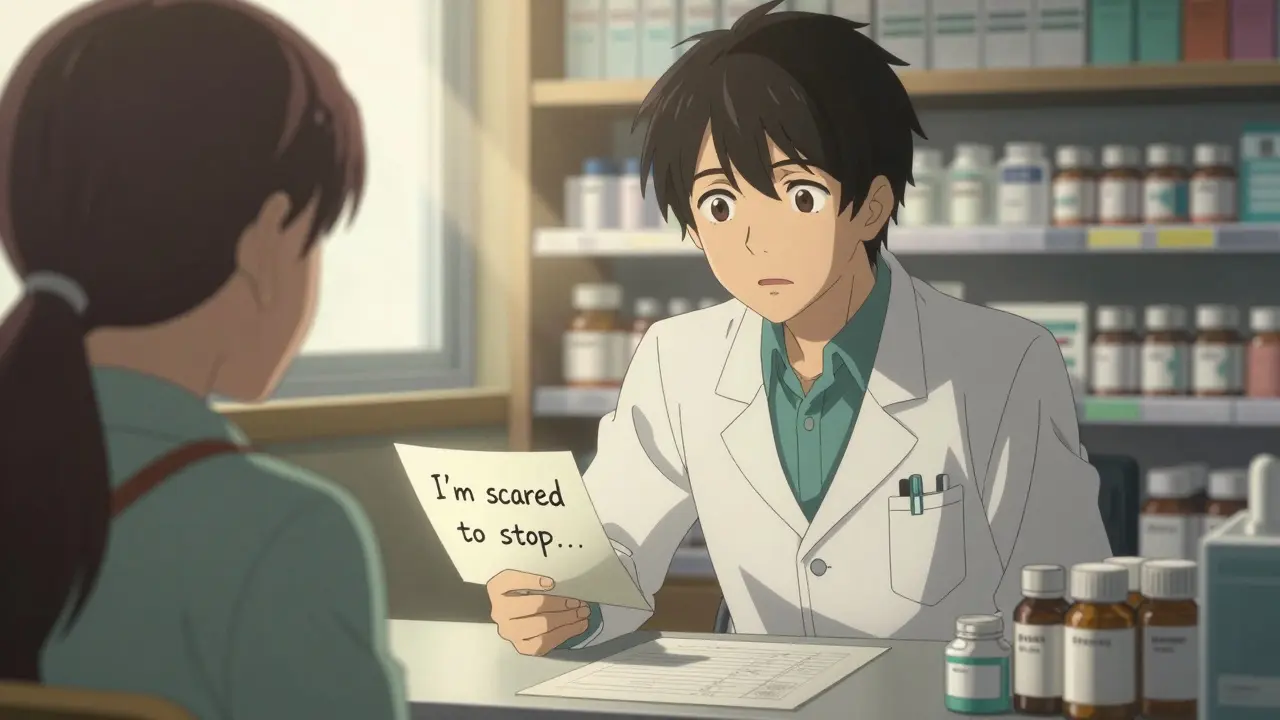
One of the most effective solutions? Pharmacist-led interventions. When pharmacists sit down with patients-not just to refill prescriptions, but to ask, “How are you feeling? What’s bothering you?”-adherence jumps by up to 40%. In one study, patients who got help managing side effects had an 89.3% adherence rate. Those who didn’t? Only 73.9%.
How do they do it?
- They listen first. Not to fix, not to lecture. Just to understand.
- They adjust. Maybe your blood pressure pill makes you cough. There are five other classes of drugs that won’t. They’ll talk to your doctor and switch you.
- They simplify. If you’re taking eight pills a day, can some be combined? Can you switch to once-daily dosing?
- They educate. “This nausea will likely fade in 7-10 days. Try taking it with food. If it doesn’t, call us.” That’s the difference between feeling abandoned and feeling supported.
Face-to-face support works best. Studies show 83% success with in-person visits. Phone calls? Only 38%. Why? Because when you’re sitting across from someone, you’re more likely to say, “I can’t take this anymore.” And they’re more likely to say, “Let’s figure this out.”
The Cost of Doing Nothing
Every time someone stops their meds because of side effects, the system pays. Hospitals pay. Insurance pays. Families pay. In the U.S., nonadherence costs between $949 and $44,190 per person each year. That’s not just money-it’s lost time, lost health, lost life.
But here’s the flip side: When adherence improves, savings are real. One study found that pharmacist-led programs saved $1,200 per patient annually. Fewer ER visits. Fewer hospital stays. Fewer readmissions. And better outcomes.
For chronic conditions like heart disease or diabetes, you need to take your meds at least 80% of the time to get real benefit. Half of patients with these conditions don’t even come close. And side effects are the biggest reason why.

What You Can Do Right Now
If you’re struggling to take your meds because of how they make you feel, here’s what to do:
- Don’t stop cold. Suddenly stopping can be dangerous. Call your pharmacist or doctor first.
- Write down your symptoms. When does the nausea happen? Is it after meals? At night? How bad is it on a scale of 1 to 10?
- Ask: “Is this normal?” Some side effects fade. Others don’t. Ask how long you should wait before calling back.
- Ask: “Are there alternatives?” There’s almost always another option. Maybe a different dose. Maybe a different drug. Maybe a combination pill.
- Ask for a follow-up. Don’t just get your refill. Ask for a check-in in two weeks. Say, “I’m having trouble with side effects. Can we talk again?”
And if you’re a caregiver, family member, or friend? Don’t just remind them to take their pills. Ask: “How are you feeling on it?” Listen. Really listen. You might be the reason they stay on track.
The Future Is Personal
Tomorrow’s solutions won’t be one-size-fits-all. AI is already being used to predict who’s at risk of stopping based on side effect patterns, past behavior, and even social factors. Imagine a system that texts you: “You’ve been skipping your pills on days you feel tired. Let’s try switching your dose to morning. Want to talk about it?”
That’s not science fiction. It’s coming. But even with AI, the human touch still matters most. No algorithm can replace a pharmacist who says, “I’ve seen this before. Let me help you.”
Medication adherence isn’t about discipline. It’s about dignity. It’s about being heard. It’s about knowing that your discomfort matters-and that there’s a way forward.
You don’t have to suffer through side effects to get better. You just have to speak up.
Why do so many people stop taking their medications even when they know it’s important?
The biggest reason isn’t forgetting or cost-it’s side effects. Many people feel worse when they start a new medication. Nausea, dizziness, fatigue, or mood changes can make them think the medicine is harming them more than helping. Without support, they assume it’s normal or that they’re just being weak. They stop taking it, not because they don’t care, but because they feel unheard.
Are side effects always temporary, or should I be worried if they last?
Some side effects fade within days or weeks-like mild nausea or drowsiness. But others don’t. If a side effect is severe, persistent (lasting more than two weeks), or getting worse, it’s not normal. You shouldn’t just “tough it out.” Talk to your pharmacist or doctor. There’s often another medication or dosage that won’t cause the same issue.
Can switching medications help if side effects are the problem?
Yes-often. For example, if a blood pressure pill causes a dry cough, switching to a different class of drug can eliminate it. If an antidepressant causes weight gain or sexual side effects, alternatives exist that don’t. Many patients assume they’re stuck with their current drug. But doctors and pharmacists have multiple options. The key is asking: “Are there other choices?”
Why do pharmacists play such a big role in improving adherence?
Pharmacists are the most accessible healthcare professionals. They see you every time you refill. They know your full list of meds. They can spot interactions, simplify regimens, and explain side effects in plain language. Studies show that when pharmacists proactively talk to patients about how they’re feeling, adherence increases by up to 40%. Face-to-face conversations are the most effective-far more than apps or texts.
What should I do if I can’t afford my medication or it’s hard to get?
Cost and access are major barriers, especially for chronic conditions. Talk to your pharmacist-they can often help you find generic versions, patient assistance programs, or mail-order options. Some insurance plans have copay cards. Medicare and Medicaid have programs to reduce out-of-pocket costs. Never stop taking your medicine because you can’t afford it. Ask for help. There are resources, and you’re not alone.
How can I tell if my side effects are serious enough to call my doctor?
Call your doctor or pharmacist if you experience: chest pain, trouble breathing, swelling of the face or throat, severe rash, unusual bleeding, confusion, or thoughts of self-harm. For less severe symptoms like nausea, fatigue, or mild dizziness, wait a week. If it doesn’t improve or gets worse, call. Don’t wait until you’ve stopped taking the medicine completely.
Is it true that taking meds less than 80% of the time makes them ineffective?
Yes, especially for chronic conditions like high blood pressure, diabetes, or cholesterol. These drugs work best when taken consistently over time. Missing even a few doses can cause your numbers to bounce back up, increasing your risk of stroke, heart attack, or kidney damage. It’s not about perfection-it’s about consistency. Aim for at least 80% adherence to get the full benefit.
Can technology like apps or reminders help with side effect-related nonadherence?
Reminders help with forgetting, but not with side effects. If you’re skipping pills because you feel awful, a phone alert won’t fix that. What works better is tech that connects you to a human-like a pharmacist who texts you: “You mentioned dizziness last week. Try taking your pill with food. Still bothering you?” Personalized, two-way communication beats automated alerts every time.
What’s the difference between not taking a pill once and stopping completely?
Missing one dose usually won’t cause harm-it’s part of being human. But stopping completely is different. That’s when side effects, fear, or frustration lead you to quit the whole regimen. That’s when risks spike: your condition worsens, hospital visits rise, and long-term damage becomes more likely. The key is catching early signs of nonadherence before it turns into full discontinuation.
Why don’t more doctors ask about side effects during appointments?
Time. Pressure. Assumptions. Many doctors assume patients will speak up if something’s wrong. Or they think side effects are “normal” and will pass. But patients often stay silent because they don’t want to be seen as difficult. That’s why pharmacists-more available and trained in medication management-are often the first to catch these issues. Advocating for yourself is still the best way to ensure you’re heard.







Write a comment
Your email address will be restricted to us