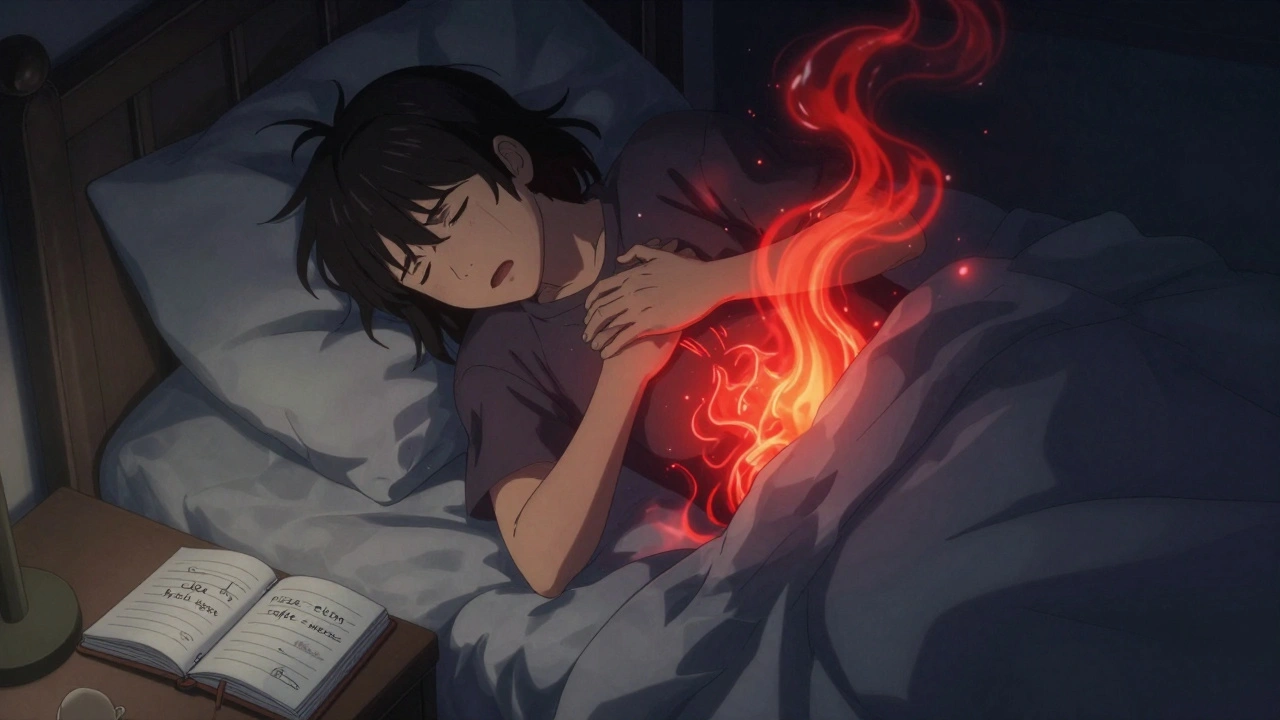
If you’ve ever woken up with a burning chest or a sour taste in your mouth, you’re not alone. About 20% of adults in the U.S. deal with GERD symptoms at least once a week. For many, it starts as occasional heartburn after a big meal - but when it happens twice a week or more, it’s no longer just discomfort. It’s gastroesophageal reflux disease, or GERD. And managing it isn’t just about popping a pill. It’s about understanding how your body works, what triggers it, and how to take back control - with or without medication.
What’s Really Happening in Your Esophagus?
GERD isn’t just “bad indigestion.” It’s a mechanical failure. Your lower esophageal sphincter (LES) - a ring of muscle at the bottom of your esophagus - is supposed to act like a one-way valve. It opens to let food into your stomach, then snaps shut to keep stomach acid from coming back up. In GERD, that valve doesn’t close right. Acid from your stomach (pH 1.5-3.5) leaks into your esophagus, which isn’t built to handle it. That’s what causes the burn.Heartburn is the most common symptom - a burning feeling behind your breastbone that can climb up your throat. But GERD doesn’t stop there. You might also get a chronic cough, hoarseness, bad breath, or feel like you have a lump in your throat. Some people don’t even feel heartburn - they just wake up choking or coughing at night. That’s because acid rises while you’re lying down, and your body doesn’t clear it as well.
Studies show that people with GERD have more than 5% of their 24-hour day exposed to stomach acid. That’s not normal. And if it goes on for years, it can lead to serious problems: esophageal strictures (narrowing), ulcers, or even Barrett’s esophagus - a condition where the lining of your esophagus changes and increases cancer risk. About 10-15% of long-term GERD patients develop it.
Why Lifestyle Changes Are the First Step - Not the Last Resort
Many people jump straight to medication. But the American College of Gastroenterology says lifestyle changes should come first. And for good reason. Weight loss alone can cut symptoms in half. Losing just 5-10% of your body weight reduces pressure on your stomach and helps your LES work better.Food triggers are another big piece. Coffee, tomatoes, alcohol, chocolate, fatty or spicy foods - these are the usual suspects. Research shows 70-80% of GERD patients see worse symptoms after eating these. But here’s the catch: triggers vary. One person can eat spicy food with no problem. Another gets heartburn from a slice of pizza. The key is tracking. Keep a food diary for two weeks. Note what you eat, when you eat it, and how you feel afterward. You’ll start seeing patterns.
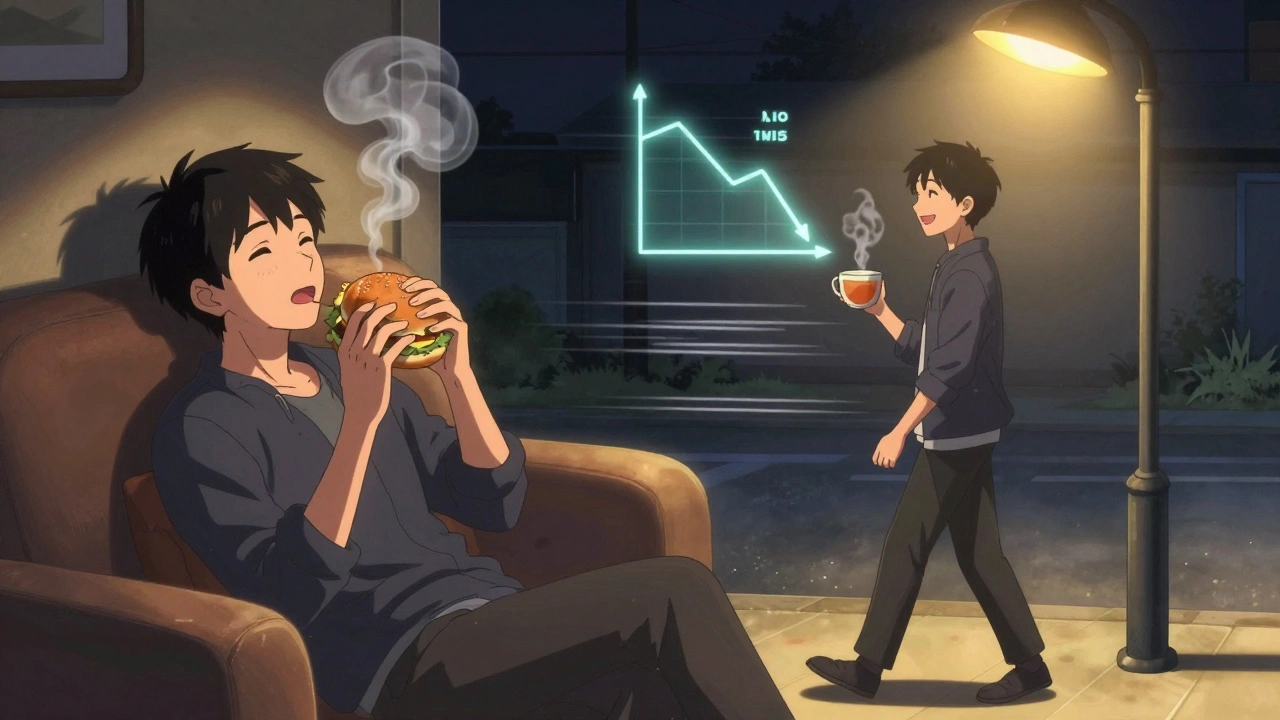
Timing matters too. Eating within two to three hours of bedtime is a major mistake. When you lie down, gravity stops helping. Acid flows back easily. Studies show avoiding late-night meals reduces nighttime acid exposure by 40-60%. Elevating the head of your bed by 6 inches also helps - it’s like giving your esophagus a slight incline so acid can’t rise as easily.
Smoking doubles your risk of GERD. It weakens the LES and reduces saliva production - and saliva helps neutralize acid. Quitting doesn’t just help your lungs; it helps your stomach too.
But here’s the hard truth: 41% of people struggle to stick with lifestyle changes. Social events, cultural habits, convenience - they all pull you away. That’s why small, sustainable shifts work better than drastic diets. Skip the midnight pizza. Swap soda for water. Eat dinner earlier. These aren’t punishments. They’re tools.
PPIs: Powerful, But Not Perfect
If lifestyle changes aren’t enough, proton pump inhibitors (PPIs) are the next step. These include omeprazole (Prilosec), esomeprazole (Nexium), and pantoprazole (Protonix). They don’t just reduce acid - they shut it down. PPIs block the final step of acid production in your stomach, cutting secretion by 90-98%. That’s why they heal erosive esophagitis in 70-90% of cases, compared to 50-60% with H2 blockers like famotidine.PPIs work best when taken 30-60 minutes before your first meal. That’s when your stomach starts preparing to digest. If you take them after eating, they’re less effective. Most people take them once daily. Some need twice daily if symptoms are severe.
But here’s what most people don’t know: PPIs aren’t harmless. Long-term use - especially over a year - comes with risks. Studies linked them to a 20-50% higher chance of intestinal infections like C. diff, vitamin B12 deficiency, and kidney problems. The FDA warns that taking high doses for three or more years may increase hip fracture risk in older adults. And when you stop PPIs suddenly, up to 44% of people get rebound acid hypersecretion - their symptoms get worse before they get better.
Patients report side effects too. Headaches, diarrhea, and low magnesium levels are common. One review of nearly 3,000 users found omeprazole had an average rating of 6.3 out of 10, with 32% quitting because of side effects. That’s why experts like Dr. David Johnson say: “Always ask yourself - do you still need this?”
When to Use PPIs - and When to Stop
PPIs are great for healing damage. If you have erosive esophagitis - meaning your esophagus is actually inflamed or burned - you need them. But if you just have heartburn with no visible damage, you might not need daily PPIs at all.The goal isn’t just symptom relief. It’s healing and preventing complications. But once your esophagus is healed, you should try to step down. Can you switch to an H2 blocker? Can you take PPIs only when you need them - like before a big meal or after a night out? Many people can. A 2023 Johns Hopkins study showed that a 12-week lifestyle program helped 65% of patients stop PPIs completely without symptoms returning.
If you’ve been on PPIs for over a year, talk to your doctor about tapering. Don’t just quit. Gradually reduce the dose over 4-8 weeks. Bridge with an H2 blocker if needed. This helps your stomach readjust without a rebound flare-up.
And don’t assume that no heartburn means no problem. You can feel fine but still have ongoing inflammation. That’s why follow-ups matter. If you’ve had GERD for more than five years, especially with other risk factors like obesity or smoking, an endoscopy might be recommended to check for Barrett’s esophagus.
New Options Beyond Pills
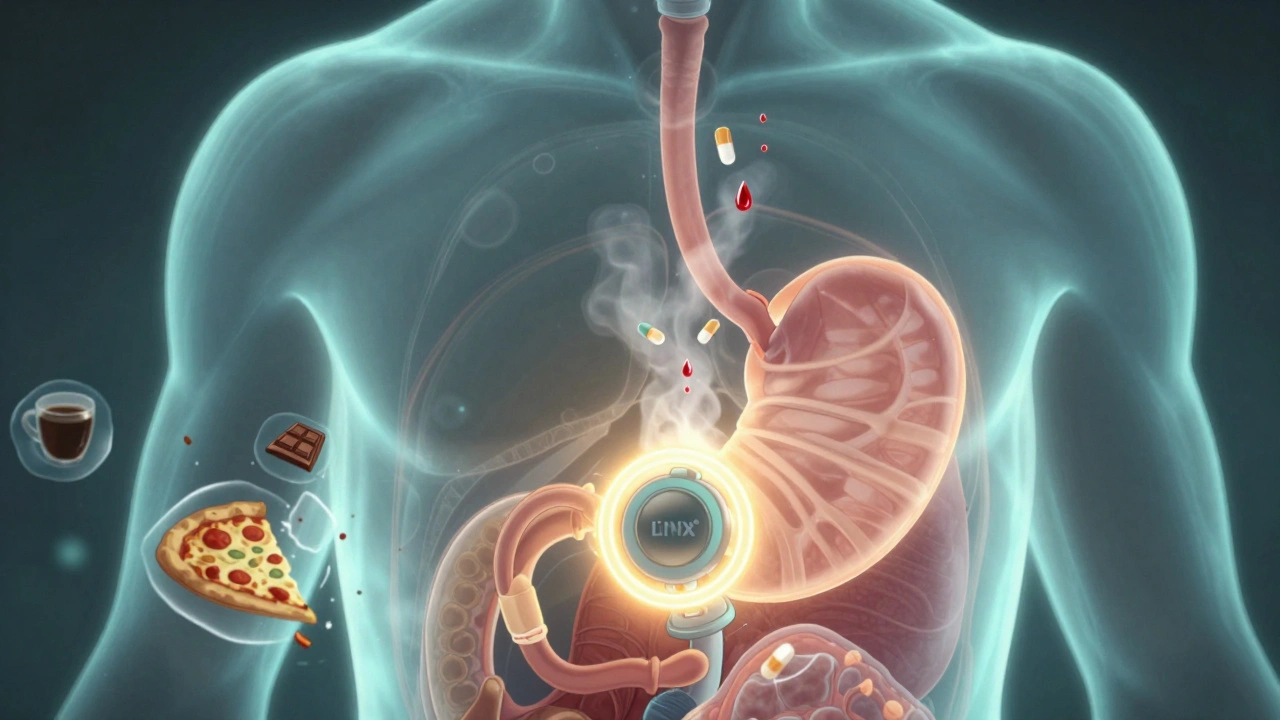
The GERD treatment world is changing. In 2023, the FDA approved vonoprazan (Voquezna), the first new acid-blocking drug class in 30 years. It works faster than PPIs and may be more effective for some. Early data shows 89% healing rates at 8 weeks - slightly better than PPIs.There are also non-drug options. The LINX® device is a small ring of magnetic beads placed around the LES during a minimally invasive surgery. It strengthens the valve without blocking food passage. Eighty-five percent of users report symptom reduction five years later.
Another option is transoral incisionless fundoplication (TIF). It rebuilds the valve from inside the stomach using an endoscope. Patients report higher quality-of-life scores than those on long-term PPIs.
These aren’t for everyone. But they’re options for people who’ve tried everything else - and still struggle.
The Real Win: Managing GERD Without Being Controlled by It
GERD isn’t a life sentence. It’s a condition you can manage - often without lifelong medication. The best outcomes come from combining smart lifestyle habits with smart medication use.Think of it this way: PPIs are like a bandage. They cover the wound so you can heal. But the bandage doesn’t fix why the wound opened in the first place. That’s where diet, timing, weight, and posture come in.
People who succeed with GERD aren’t the ones who follow the strictest diets. They’re the ones who find their balance. Maybe it’s giving up late-night snacks. Or switching from coffee to herbal tea. Or walking after dinner instead of collapsing on the couch. Small changes, repeated over time, add up.
And if you’re on PPIs? Don’t be afraid to ask: “Can I take less? Can I stop?” Your doctor should help you try. Too many people stay on them because no one ever asked them to reconsider.
GERD is common. But it doesn’t have to be permanent. You don’t need to live with heartburn. You just need the right plan - one that fits your life, not the other way around.
Can GERD be cured without medication?
Yes, for many people. Lifestyle changes - especially weight loss, avoiding trigger foods, and not eating before bed - can eliminate symptoms entirely. Studies show up to 58% of people get moderate to complete relief with diet and behavior changes alone. But if you have visible damage to your esophagus (erosive esophagitis), medication like PPIs is usually needed to heal it first.
How long should I take PPIs?
For most people, PPIs are prescribed for 4-8 weeks to heal inflammation. After that, you should work with your doctor to reduce or stop them. Long-term use (over a year) increases risks like infections, nutrient deficiencies, and bone fractures. Only take them daily if your symptoms are severe and lifestyle changes aren’t enough. Many people can switch to on-demand use or H2 blockers after healing.
What foods should I avoid with GERD?
Common triggers include coffee, alcohol, tomatoes, chocolate, citrus fruits, fatty or fried foods, spicy foods, garlic, onions, and carbonated drinks. But triggers vary. Keep a food diary for two weeks to find your personal ones. Eliminate one group at a time to see what makes a difference. Many people find cutting out coffee and late-night meals gives them the biggest improvement.
Why do I get worse symptoms when I stop PPIs?
This is called rebound acid hypersecretion. When you take PPIs long-term, your stomach makes more acid-producing cells to compensate. When you stop suddenly, those cells go into overdrive, causing worse heartburn. The fix is to taper slowly - reduce the dose over 4-8 weeks. Your doctor might suggest switching to an H2 blocker like famotidine during the taper to help control symptoms.
Is surgery ever needed for GERD?
Surgery is usually only considered if medications and lifestyle changes don’t work, or if you can’t tolerate long-term drug use. Procedures like fundoplication or LINX® can strengthen the LES. About 90% of people who have fundoplication stay symptom-free after 10 years. Newer endoscopic options like TIF are less invasive and have high satisfaction rates. But surgery isn’t a quick fix - it requires commitment to new eating habits even after the procedure.






Write a comment
Your email address will be restricted to us