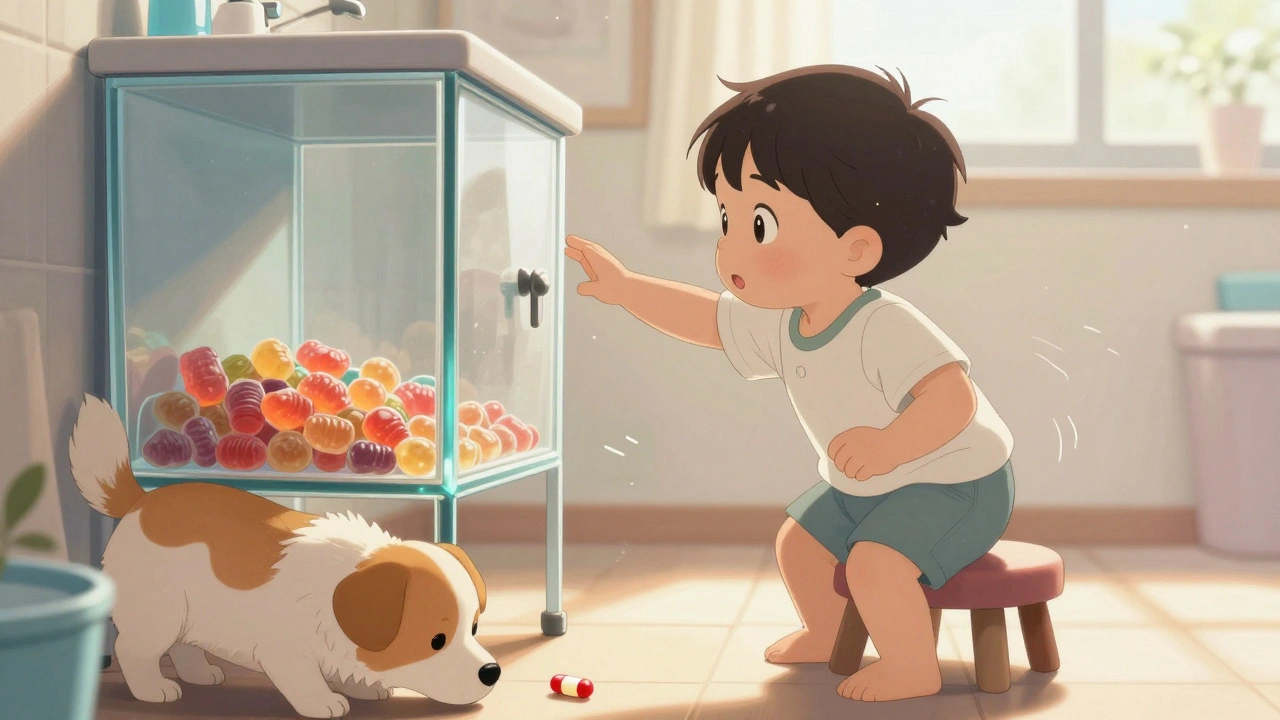
Every year, medication storage mistakes lead to thousands of emergency visits-not because of negligence, but because most people don’t realize how easy it is for a child or pet to get into pills, patches, or gummies. It’s not just about keeping things out of reach. It’s about understanding how curious, determined, and clever both kids and animals can be. A child who climbs on a chair. A dog that sniffs out a dropped pill between couch cushions. A cat that knocks over a bottle left on the counter. These aren’t rare accidents. They’re predictable-and preventable.
Why Your Bathroom Cabinet Is the Worst Place for Medicines
Most households store medicines in the bathroom. It’s convenient. The sink is right there. But humidity from showers and baths can ruin pills, turning them weak or ineffective. The CDC reports that 40% of parents still keep medications in bathroom cabinets, even though humidity levels there often hit 60-80%. That’s bad for the medicine-and bad for safety. Children can reach up to 4 feet high. A cabinet above the sink? That’s eye level for a 3-year-old. And if it’s clear glass or plastic? They see it. They want it. Gummy vitamins? To them, they’re candy. In 2024, the CDC found that gummy medications account for 30% of all childhood supplement ingestions-even though they make up only 15% of the market. Pets are even more dangerous to store near. Dogs have noses that can detect a single pill through plastic. Cats, though quieter, are just as curious. And here’s the twist: some human medications are deadly to pets. A single heart pill can cause kidney failure in a cat. A dog that eats a human NSAID like ibuprofen might need emergency surgery. Meanwhile, pet medications? They’re often flavored with chicken, beef, or fish-exactly what makes them irresistible to animals.Lock It Up-Not Just Child-Resistant, But Adult-Proof
Child-resistant caps are required by law. But they’re not child-proof. A 2023 study from Children’s Mercy Hospital showed that 65% of childhood poisonings involved over-the-counter meds left in unlocked cabinets, purses, or backpacks. Kids figure out caps. They use spoons. They pull open drawers. They climb. The real solution? Locked storage. Not just any lock. A combination lock box, a biometric safe, or a cabinet with a childproof latch. The VADIC Safe Storage Bag, measuring 11" x 6", is one approved option used by health departments. It’s small enough to fit on a shelf but strong enough to hold all your pills, patches, and inhalers. And here’s the key: lock it at 5 feet or higher. Not just high. High and out of sight. A cabinet in the bedroom closet, behind a closed door, or on top of a tall dresser. If your child can’t see it, they’re less likely to find it. And if they can’t reach it? Even better. For pets? Same rule. But add separation. Store human meds and pet meds in different locked containers. Don’t mix them. A dog’s arthritis pill isn’t safe for a toddler. And a child’s cough syrup isn’t safe for a cat. The FDA now requires pet medication labels to include separation warnings-starting in late 2024. But don’t wait for the label. Do it now.One Dose at a Time: The Two-Minute Rule
The biggest mistake? Leaving medicine out while you’re using it. You’re giving your kid a dose. You set the bottle down on the counter while you get water. You’re distracted. The baby crawls over. The dog jumps up. In less than 30 seconds, it’s over. Seattle Children’s Hospital found that 78% of pediatric poisoning cases happen because medicine was left unattended-even briefly. That’s why experts recommend the “two-minute rule”: After every use, put it back in the locked container. No exceptions. This isn’t about being perfect. It’s about building a habit. Make it part of your routine. After you give the medicine, lock it. Before you sit down to eat, lock it. Before you answer the door, lock it. That 10-second pause saves lives.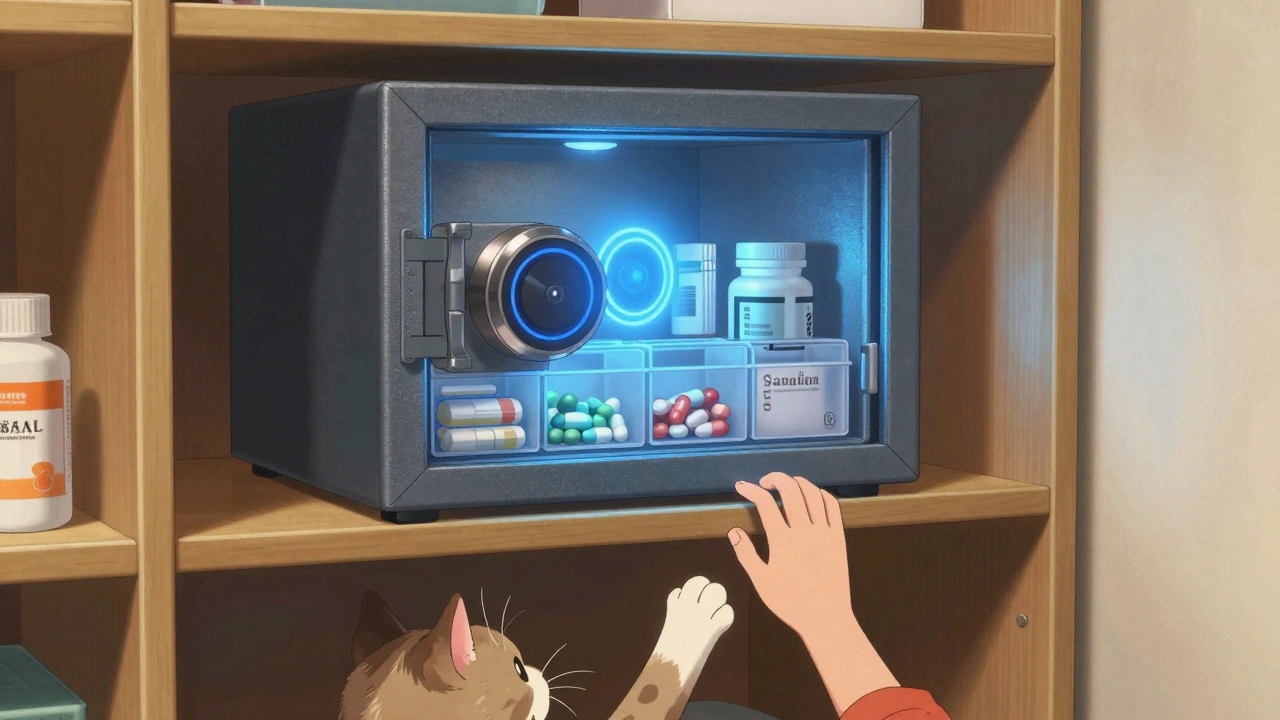
Three-Zone Storage for Households with Kids and Pets
If you have both children and pets, a simple system works best. Think of it as three zones:- Zone 1: Immediate Use - Only the next dose. Keep it on a flat, clear surface like a kitchen counter or table-never on a windowsill or shelf. Use a small, labeled pill cup. Never leave the whole bottle out.
- Zone 2: Short-Term Storage - All other current medications. Locked container. At least 5 feet high. Separate bins for human and pet meds.
- Zone 3: Long-Term Storage - Unused, expired, or backup meds. Locked and separate. Keep human meds in one container, dog meds in another, cat meds in a third. Label everything clearly. Even if you think you’ll use it soon, store it away.
Disposal: Don’t Flush, Don’t Trash-Mix and Seal
Expired or unused meds? Don’t toss them in the trash. Don’t flush them down the toilet. That pollutes waterways and can still be accessed by curious animals. The EPA says the safest way to dispose of pills is to mix them with something unappetizing: coffee grounds, cat litter, or dirt. Use a 1:1 ratio by volume. Put it in a sealed plastic bag. Then throw it in the trash. Why does this work? It makes the pills look like garbage. Dogs won’t dig through coffee grounds. Cats won’t sniff out a clump of litter with pills inside. And kids? They’re not going to dig through the bin for something that looks like used coffee. Some pharmacies offer take-back programs. Check with your local pharmacy. But if none are nearby, the mix-and-seal method is proven, simple, and effective.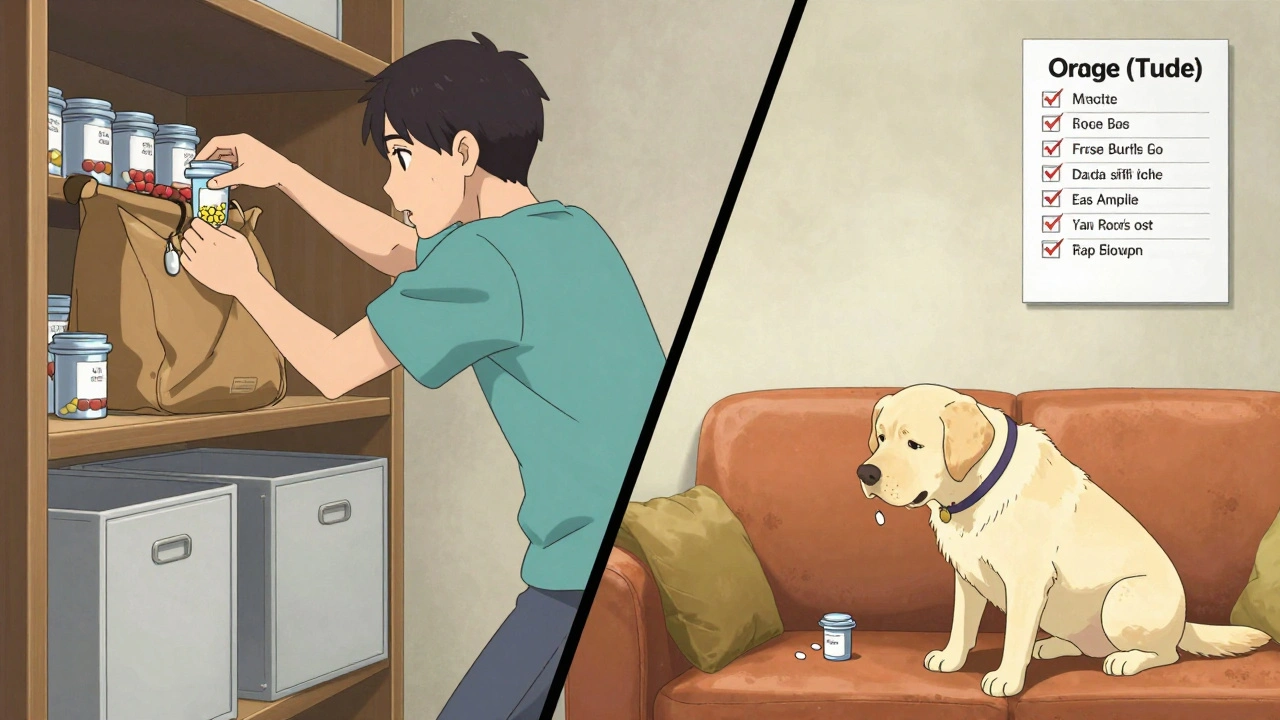
Real Stories, Real Risks
One parent on Reddit shared how their 3-year-old opened a “childproof” cabinet using a butter knife. After that, they bought a biometric safe. “It adds 10 seconds to my morning,” they wrote. “But I sleep better.” Another user on the American Kennel Club forum described how their Labrador found a dropped pill between couch cushions. The dog didn’t get sick-but it was a wake-up call. Now, they only open medication containers on the kitchen floor, never on the couch or bed. These aren’t extreme cases. They’re common. And they’re preventable.What’s Changing in 2025?
New rules are coming. The FDA now requires all pet medication labels to include clear separation instructions. By the end of 2024, every bottle of pet medicine sold in the U.S. must say: “Keep away from children and other animals.” There’s also a rise in smart storage tech. Bluetooth-enabled safes now send alerts to your phone if they’re opened. Adoption is still low-only 18% of high-risk households use them-but they’re growing fast. And schools and pediatricians are starting to talk about it. The American Academy of Pediatrics now recommends discussing medication safety during every well-child visit. Pilot programs in some U.S. states have cut medication poisonings by 35% just by adding this one conversation.Final Checklist: Your Quick Safety Plan
- Move all meds out of the bathroom.
- Store them at least 5 feet high and out of sight.
- Use a locked container-combination lock, biometric safe, or cabinet lock.
- Keep human and pet meds in separate containers.
- Never leave medicine out-even for two minutes.
- Dispose of old meds by mixing with coffee grounds or cat litter, then sealing in a bag.
- Check your home like a child or pet would: crawl on the floor, look from their eye level.
Can child-resistant caps really protect my child?
No. Child-resistant caps are designed to slow down access, not stop it. Studies show that most children under age 5 can open them within minutes using simple tools like spoons or keys. They’re a backup-not a solution. Always pair them with locked, elevated storage.
What if I need to carry medicine in my purse or bag?
Use a small, lockable pill case. If you don’t have one, keep the bottle inside a zipped inner pocket, not the main compartment. Never leave your purse on the floor or on a counter where a child or pet can reach it. Always return it to a secure location as soon as you get home.
Are gummy vitamins safer than pills?
No-they’re more dangerous. Gummies look and taste like candy. Children and pets are far more likely to eat them. The CDC reports that gummy supplements cause 30% of childhood ingestion cases. Store them the same way you store prescription pills: locked, up high, and out of sight.
Can pets really tell the difference between human and pet meds?
They don’t need to. They rely on smell and taste. Many pet medications are flavored with chicken, beef, or fish-flavors dogs and cats love. Human meds, especially chewables or syrups, can smell sweet too. To a pet, any pill that smells good is fair game. That’s why separation is non-negotiable.
How do I know if my pet has eaten medicine?
Signs include vomiting, drooling, lethargy, wobbling, or seizures. If you suspect ingestion-even if your pet seems fine-call your vet or the Pet Poison Helpline immediately. Don’t wait. Some toxins act within minutes. Keep the medicine bottle handy so you can tell the vet exactly what was taken.
Is it safe to store insulin or other refrigerated meds in the fridge?
Yes-but not on the door. Store them in the back of the fridge, in a sealed container, and lock the fridge if possible. Keep them away from food to avoid contamination. If you have young kids, make sure the fridge is out of their reach or has a child lock. Pets can open fridge doors. Don’t assume it’s safe just because it’s cold.






Write a comment
Your email address will be restricted to us