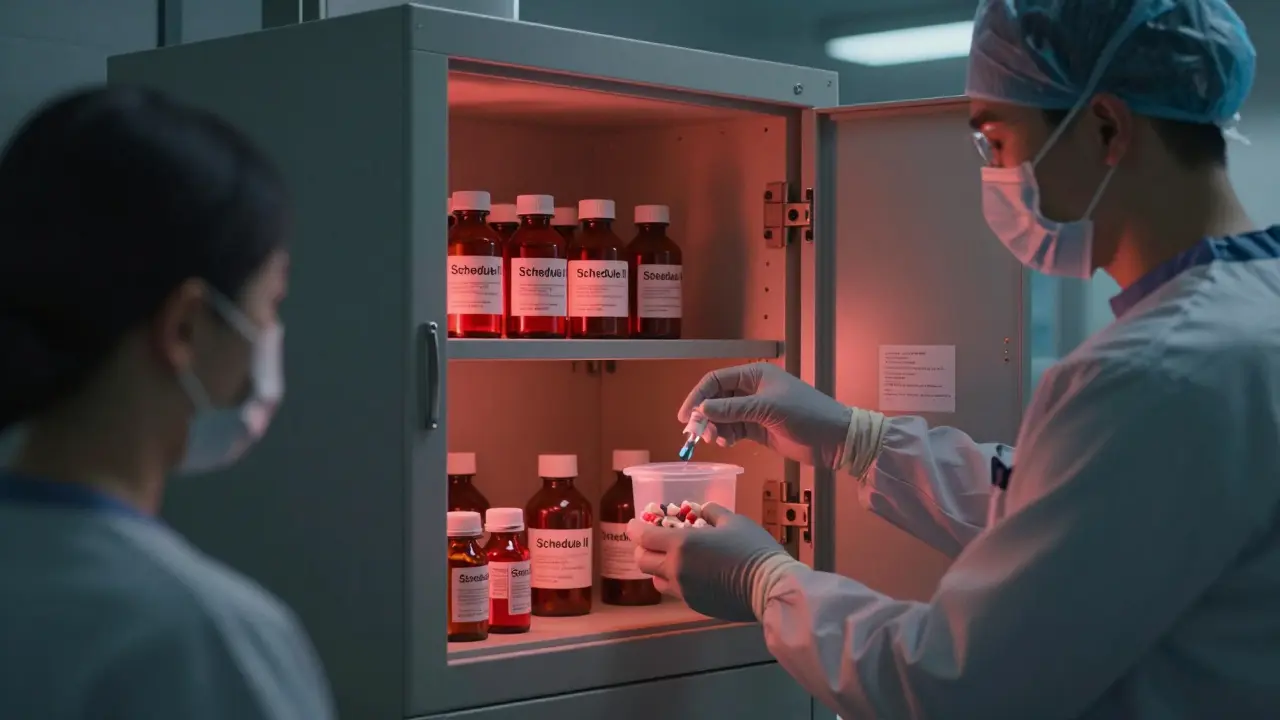
Expired controlled substances aren’t just old pills sitting in a cabinet-they’re potential hazards. If they fall into the wrong hands, they can fuel addiction, cause overdoses, or lead to legal trouble. The DEA doesn’t treat these like regular expired medications. You can’t flush them, throw them in the trash, or mix them with coffee grounds. Doing so violates federal law and puts public safety at risk.
Why You Can’t Just Throw Them Away
Controlled substances-especially Schedule II drugs like oxycodone, fentanyl, and Adderall-are tightly regulated because of their high abuse potential. Even if they’re expired, damaged, or no longer needed, they still carry legal weight. The DEA requires that these drugs be rendered non-retrievable. That means no one can recover them, extract the active ingredient, or misuse them. Simple disposal methods like flushing or dumping in the trash don’t meet this standard. In fact, the FDA explicitly says flushing is never acceptable for controlled substances, even if it’s okay for some other medications.What Counts as a Controlled Substance?
The DEA classifies controlled substances into five schedules based on their medical use and abuse potential:- Schedule I: No accepted medical use (e.g., heroin, LSD). These are rarely found in clinical settings.
- Schedule II: High abuse potential, severe dependence risk (e.g., morphine, hydrocodone, methamphetamine). Most common in hospitals and clinics.
- Schedule III: Moderate to low potential for dependence (e.g., ketamine, anabolic steroids, some combination painkillers).
- Schedule IV: Low potential for abuse (e.g., benzodiazepines like Xanax, tramadol).
- Schedule V: Limited abuse potential, often in cough syrups with codeine.
Each schedule has different disposal rules. Schedule II substances require the strictest handling. Schedule III-V can sometimes be handled differently, but only under specific conditions.
Two Main Paths: Inventory Disposal vs. Wastage
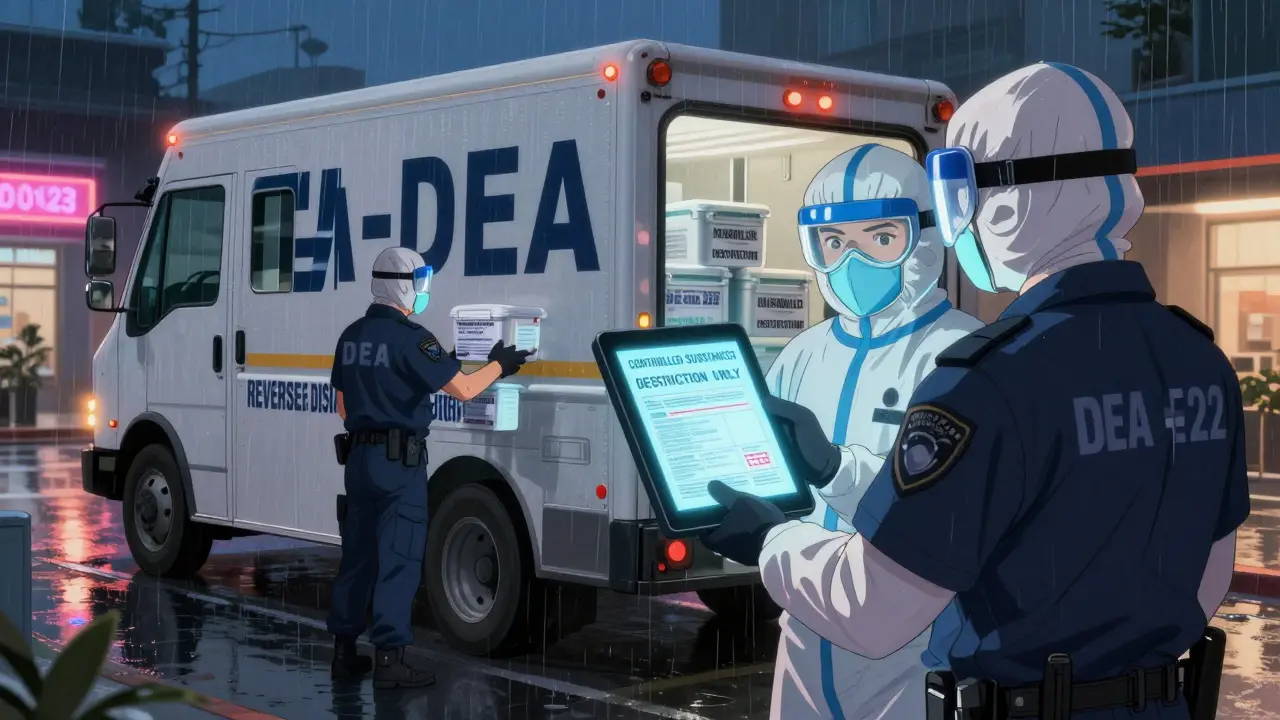
There are two legal ways to dispose of controlled substances: inventory disposal and wastage. They’re not the same, and mixing them up can get you fined.Inventory disposal applies when you’re getting rid of entire stocks-unused bottles, expired batches, or surplus inventory. This must be done through a DEA-registered reverse distributor. You can’t destroy these yourself. The reverse distributor picks them up, transports them to a licensed incineration facility, and destroys them under DEA supervision. Incineration is the only method approved by the DEA to make substances non-retrievable.
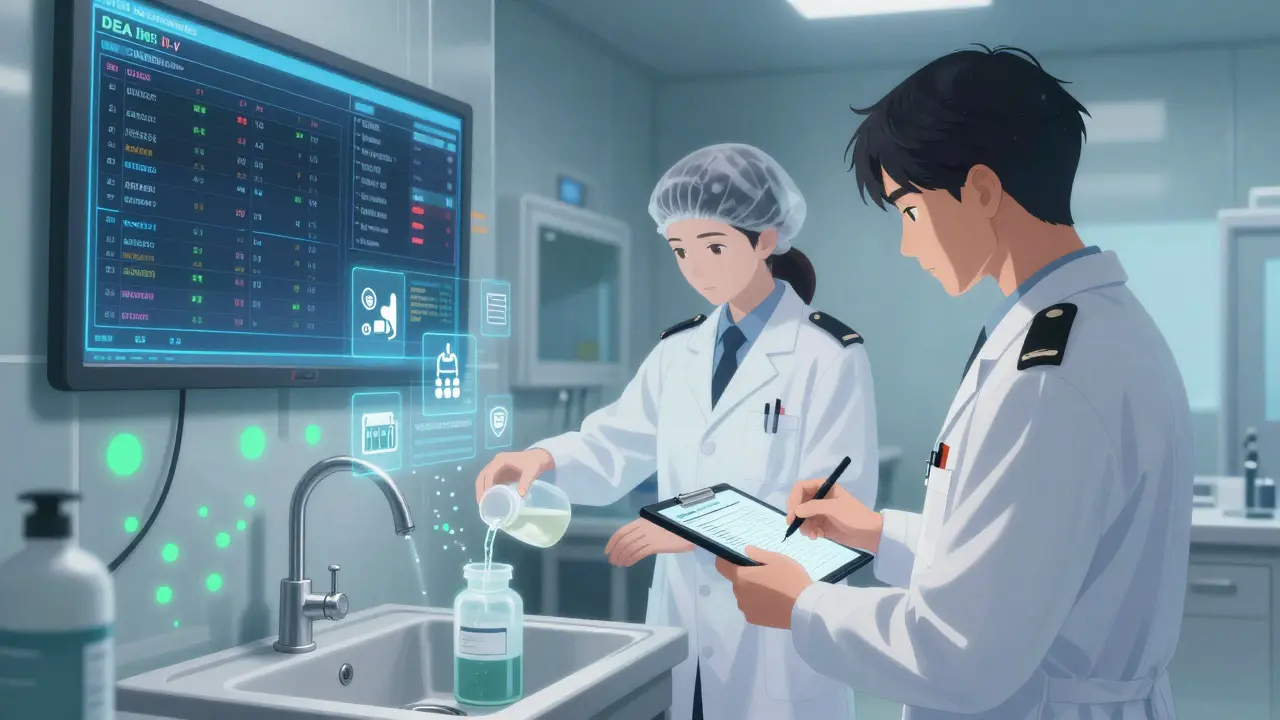
Wastage is for small amounts-like a few leftover tablets after a procedure, or a drop of liquid that couldn’t be used. In these cases, two authorized personnel must witness the destruction. One must be the DEA registrant or an authorized agent. They document the date, quantity, substance name, and signatures. Then, they physically destroy the substance by pouring it down a sink drain in a designated area (if allowed by state law) or using an approved neutralizing agent. But here’s the catch: you can’t use kitty litter, coffee grounds, or blue pads. Those are for non-controlled medications only.
How to Handle Schedule II Substances
Schedule II drugs are the most tightly controlled. You need a DEA Form 222 to transfer them to a reverse distributor. As of January 1, 2023, this form must be filed electronically through the DEA’s Electronic Registration System (ERS). Paper forms are no longer accepted. Processing used to take over a week. Now, it’s under two business days.Once the form is approved, you package the drugs securely-preferably in a tamper-evident container-and schedule a pickup. Reverse distributors like Stericycle, Daniels Health, or Drug and Laboratory Disposal, Inc. (DLD) handle this. Fees range from $250 to $500 per pickup, depending on volume and location. Smaller practices often complain about the cost, especially when they only have a few expired bottles. But skipping this step isn’t an option. A 2022 DEA audit found that 18.7% of dental practices using paper-based systems made errors in documentation, leading to compliance violations.
Documentation Is Non-Negotiable
Every disposal-whether inventory or wastage-requires detailed records. You must keep these for at least two years. For inventory disposal, that means keeping copies of DEA Form 222, the reverse distributor’s receipt, and your internal log. For wastage, you need a signed log with:- Date and time of disposal
- Name and DEA number of the registrant
- Names and signatures of two witnesses
- Drug name, strength, quantity, and schedule
- Method of destruction
Many institutions use digital systems like UCSF’s Research Inventory Online (RIO) to automate this. These systems reduce errors and make audits easier. A 2023 survey at UCSF showed 82.4% of users rated the system as “streamlined and efficient.” Smaller clinics still using paper logs are more likely to lose records or forget signatures-both red flags during a DEA inspection.
Who Can Perform Disposal?
Only trained, authorized personnel can handle controlled substance disposal. The DEA requires:- Initial 2-hour training on controlled substance handling and disposal
- Annual 1-hour refresher training
But here’s the problem: a 2022 DEA audit found only 67.3% of facilities met this requirement. That means more than one in three places are operating illegally. Training isn’t optional. It’s part of your DEA registration. If you’re a pharmacist, nurse, vet, or researcher handling these drugs, you’re legally responsible for knowing the rules.
Common Mistakes and How to Avoid Them
Even experienced staff make the same mistakes over and over:- Mixing controlled substances with general waste. That’s a violation. Use separate, labeled containers.
- Using blue pads or kitty litter. These are FDA-approved for non-controlled meds only. Not for narcotics.
- Waiting until the last minute. Reverse distributors often have long wait times. One University of Michigan survey found average pickup delays of 14.7 business days. Plan ahead.
- Forgetting witness signatures. One person signing isn’t enough. Two are required. No exceptions.
- Destroying drugs without documentation. If you didn’t write it down, the DEA assumes it didn’t happen.
Also, never dispose of controlled substances in sharps containers or animal waste. That’s not just improper-it’s dangerous and illegal.
What About Small Practices and Veterinarians?
Veterinary clinics and small dental offices often struggle with compliance. The American Animal Hospital Association found that only 41.7% of small veterinary practices properly dispose of controlled substances. Many don’t know where to find a reverse distributor. The DEA’s online disposal locator, updated in November 2022, helps. Type in your zip code and it shows licensed providers nearby.Some vets use take-back events like DEA National Take Back Day, which collected nearly 900,000 pounds of medication in October 2023. But these events are only held twice a year. For regular disposal, you still need a reverse distributor.
What’s Changing in the Next Few Years?
The DEA is moving toward real-time tracking. By 2025, the Electronic Inventory Management System (EIMS) will require all registrants to report disposals instantly. This means no more waiting for quarterly reports. Every bottle destroyed will be logged in real time.Enforcement is also tightening. In 2022, the DEA issued 327 warning letters and $2.47 million in fines for improper disposal-up 23.6% from the year before. The message is clear: compliance isn’t optional. The cost of a violation isn’t just financial. It’s reputational. It’s legal. It’s ethical.
What You Should Do Today
If you handle controlled substances, here’s your action plan:- Check your inventory. Label all expired, damaged, or unused drugs as “DO NOT USE” or “TO BE DISPOSED.”
- Separate them from active stock. Store them in a locked, secure cabinet.
- Determine if it’s inventory disposal (bulk) or wastage (small amounts).
- If it’s Schedule II, start the ERS Form 222 process immediately.
- If it’s wastage, train two authorized staff members and create a witness log template.
- Contract with a DEA-registered reverse distributor. Don’t wait until you’re out of space.
- Review your documentation. Make sure you have two years of records.
- Schedule annual training for all staff handling these drugs.
Don’t wait for an inspection to find out you’re out of compliance. The system is designed to protect patients, staff, and communities. Following it isn’t bureaucracy-it’s responsibility.
Can I flush expired narcotics down the toilet?
No. Flushing is never allowed for controlled substances, even if it’s recommended for some other medications. The DEA and FDA both prohibit it because the drugs can still be recovered from water systems. This poses environmental and public safety risks. Always use approved disposal methods through reverse distributors or witnessed wastage.
What happens if I don’t dispose of expired controlled substances properly?
You could face fines, loss of your DEA registration, or even criminal charges. In 2022, the DEA issued over 300 warning letters and collected $2.47 million in penalties for improper disposal. Beyond legal consequences, improper disposal contributes to drug diversion-where expired pills end up in the hands of people who misuse them. This puts lives at risk.
Can I give expired controlled substances to a patient?
Absolutely not. Even if the patient asks for them, giving out expired controlled substances is illegal and dangerous. Expired drugs may lose potency or degrade into harmful compounds. They also violate DEA regulations on distribution. Always dispose of them properly through authorized channels.
How much does it cost to dispose of expired narcotics?
Fees vary based on quantity and location. Reverse distributors typically charge $250-$500 per pickup for inventory disposal. Small practices often pay more per item because of fixed costs. Wastage disposal usually has no direct fee, but requires staff time and documentation. Some institutions bundle disposal into overhead costs. Always budget for it-it’s cheaper than a DEA fine.
Do I need training to dispose of controlled substances?
Yes. The DEA requires all personnel who handle controlled substances to complete a 2-hour initial training and a 1-hour annual refresher. This covers legal requirements, safe handling, and proper disposal methods. Failure to train staff is a common reason for DEA violations. Your registration is only valid if your team is trained.
Can I destroy Schedule III-V drugs myself?
Yes, under specific conditions. Small amounts (wastage) of Schedule III-V drugs can be destroyed in-house by two authorized personnel, with documentation. But you still can’t use kitty litter, coffee grounds, or pour them down the sink unless your state and facility policy allows it. Always confirm with your DEA registrant or institutional compliance officer before proceeding.
Where can I find a DEA-approved reverse distributor?
Use the DEA’s online Disposal Locator Tool, updated in November 2022. It lists registered reverse distributors by zip code. Major providers include Stericycle, Daniels Health, and Drug and Laboratory Disposal, Inc. (DLD). Always verify their current DEA registration before scheduling a pickup.
Are there any free disposal options?
Occasionally, yes. DEA National Take Back Days offer free, anonymous disposal at designated drop-off sites, usually held twice a year. But these are for public use and may not accept large institutional quantities. For regular disposal, reverse distributors charge fees. Some hospitals and universities absorb the cost as part of compliance operations.





Write a comment
Your email address will be restricted to us