
QTc Interval Calculator
Methadone QT Risk Assessment
This tool calculates your corrected QT interval (QTc) to assess cardiac risk while on methadone therapy. Based on guidelines from the article, risk levels are determined by QTc values and gender-specific thresholds.
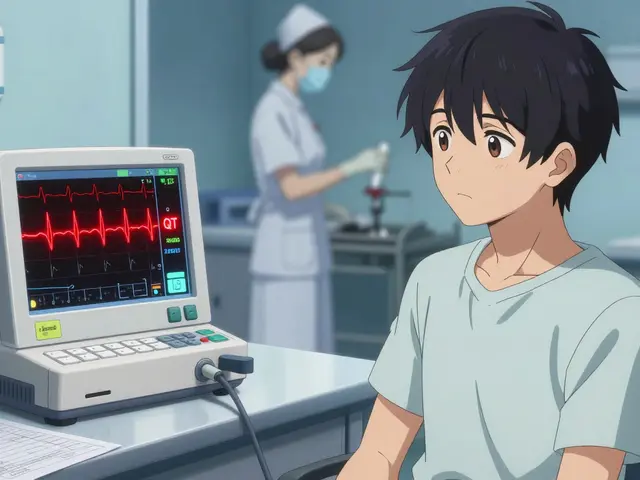
When someone starts methadone for opioid dependence, the focus is often on reducing cravings, preventing withdrawal, and rebuilding a life. But behind the scenes, a quiet but serious risk is growing: methadone can stretch the heart’s electrical cycle, leading to a dangerous condition called QT prolongation. Left unchecked, this can trigger a life-threatening arrhythmia called Torsades de Pointes - and sudden death. The good news? This risk is predictable, measurable, and manageable with the right ECG monitoring plan.
Why Methadone Affects Your Heart
Methadone works by binding to opioid receptors in the brain, but it doesn’t stop there. It also blocks a specific potassium channel in heart cells called hERG (KCNH2). This channel helps the heart reset after each beat. When it’s blocked, the heart takes longer to recover - and that delay shows up on an ECG as a longer QT interval. The longer the QT, the higher the chance of a chaotic, dangerous rhythm. This isn’t rare. Studies show that between 9% and 88% of people on methadone have some degree of QT prolongation. The risk isn’t just about the dose - though higher doses (especially above 100 mg/day) raise the odds - it’s also about what else is going on in the body. A 2017 study of 127 patients found nearly one in three had a prolonged QT interval. About one in 10 had a dangerously long one (over 500 ms).What’s a Normal QT Interval?
Not all QT prolongation is the same. Doctors use a corrected version called QTc, which adjusts for heart rate. Here’s what matters:- Normal: ≤430 ms for men, ≤450 ms for women
- Borderline: 431-450 ms (men), 451-470 ms (women)
- Significant prolongation: >450 ms (men), >470 ms (women)
- High risk: >500 ms - this quadruples the risk of sudden cardiac death
Who’s at Highest Risk?
Methadone doesn’t affect everyone the same. Certain factors stack the deck:- Gender: Women have 2.5 times higher risk than men, even at the same dose.
- Age: Over 65? Your heart doesn’t handle stress like it used to.
- Electrolytes: Low potassium (<3.5 mmol/L) or low magnesium (<1.5 mg/dL) make QT prolongation much worse.
- Heart health: History of heart failure, low ejection fraction (<40%), or prior heart attack increases risk.
- Other meds: Mixing methadone with antidepressants like amitriptyline, antipsychotics like haloperidol, or antibiotics like moxifloxacin can be dangerous.
- Drug interactions: Medications that slow methadone breakdown - like fluconazole, voriconazole, or fluvoxamine - can spike methadone levels by up to 50%.
- Sleep apnea: Roughly half of people on methadone have it. Nightly oxygen drops stress the heart and worsen arrhythmia risk.

When to Get an ECG - The Real-World Protocol
There’s no need to scan everyone’s heart every week. Smart monitoring means testing at the right times, based on your risk level.- Before you start: Get a baseline ECG. This is non-negotiable.
- After dose changes: Wait 2-4 weeks - that’s when methadone levels stabilize. Test again.
- Regular checkups: Based on your QTc and risk factors:
| Risk Level | QTc Criteria | Other Risk Factors | Monitoring Frequency |
|---|---|---|---|
| Low Risk | <450 ms (men), <470 ms (women) | None | Every 6 months |
| Moderate Risk | 450-480 ms (men), 470-500 ms (women) | 1-2 risk factors | Every 3 months |
| High Risk | >480 ms (men), >500 ms (women) | 3 or more risk factors | Monthly |
What to Do If Your QTc Is Too Long
If your QTc hits 500 ms or more - or if it jumped more than 60 ms from baseline - don’t wait. Act fast:- Check your potassium and magnesium levels. Correct any deficiency immediately.
- Review all your medications. Stop or replace any that prolong QT if possible.
- Consider lowering your methadone dose. Even a 10-20% reduction can make a big difference.
- Get a cardiology consult. They can assess whether you need a pacemaker or other intervention.
- Ask about switching to buprenorphine. It’s just as effective for opioid dependence but carries far less QT risk.

What Patients Are Saying
On forums like r/OpiatesRecovery, people talk about the frustration of inconsistent care. One survey of 142 users found 68% had no regular ECG monitoring. But here’s the flip side: 82% of those who did get regular tests felt safer. That confidence matters. When you know your heart is being watched, you can focus on recovery - not fear.Why This Isn’t Just About Opioid Treatment
Too often, sudden deaths in people on methadone are written off as overdose. But the FDA has documented 142 confirmed cases of Torsades de Pointes linked to methadone between 2000 and 2022. Underreporting is likely. Many deaths go unrecorded because no one checks the ECG. If you’re on methadone, your care team needs to know this isn’t just about addiction - it’s about heart health, too.Bottom Line: Don’t Skip the ECG
Methadone saves lives. But it can also end them - quietly, without warning - if the heart isn’t monitored. The solution isn’t to avoid methadone. It’s to monitor wisely. Baseline ECG. Repeat after dose changes. Adjust frequency based on your risk. Correct electrolytes. Avoid dangerous drug combos. And if your QTc creeps up - don’t ignore it. This isn’t about paranoia. It’s about prevention. With the right checks in place, you can stay on methadone safely - and keep living.How often should I get an ECG if I’m on methadone?
It depends on your risk level. If you’re low risk (QTc under 450 ms for men or 470 ms for women, no other risk factors), get checked every 6 months. If you’re moderate risk (QTc between 450-480 ms or 470-500 ms, or have one or two risk factors like low potassium or older age), get one every 3 months. If you’re high risk (QTc over 480 ms or 500 ms, or have three or more risk factors), you need monthly ECGs.
Can I still take methadone if my QT interval is prolonged?
Yes - but only with careful management. If your QTc is mildly prolonged (450-480 ms for men, 470-500 ms for women), your doctor may adjust your dose, fix electrolyte imbalances, or stop other QT-prolonging drugs. If it’s over 500 ms or jumped more than 60 ms from baseline, dose reduction or switching to buprenorphine is strongly recommended. Never stop methadone suddenly - always work with your provider.
Does methadone cause heart attacks?
Methadone doesn’t directly cause heart attacks (which are due to blocked arteries). But it can cause a different, equally deadly problem: Torsades de Pointes, a chaotic heart rhythm that can lead to sudden cardiac arrest. This isn’t a heart attack - it’s an electrical failure. It’s rare, but it’s preventable with proper ECG monitoring.
Are there alternatives to methadone with less heart risk?
Yes - buprenorphine is the main alternative. It’s just as effective for managing opioid dependence but has a much lower risk of QT prolongation. Many patients who develop QT issues on methadone switch successfully to buprenorphine. Talk to your provider if you’re concerned about heart risks.
Can I check my QT interval at home?
No. Accurate QT interval measurement requires a 12-lead ECG interpreted by a trained professional. Wearable devices like smartwatches can detect irregular rhythms, but they can’t reliably measure QTc. Don’t rely on them for safety decisions. Always get a clinical ECG if your provider recommends it.
Why do women have a higher risk of QT prolongation from methadone?
Women naturally have longer QT intervals than men, even without medication. Hormonal differences and variations in how heart cells handle potassium make them more sensitive to drugs that block the hERG channel. That’s why the threshold for concern is lower for women (470 ms vs. 450 ms for men). This isn’t a flaw - it’s a biological reality that needs to be accounted for in care.
What should I do if I feel dizzy or have palpitations on methadone?
Don’t ignore it. Dizziness, fainting, or a racing or fluttering heartbeat could be signs of a dangerous heart rhythm. Stop any physical activity, sit down, and call your provider immediately. If symptoms are severe or you feel like you might pass out, go to the emergency room. Bring a list of all your medications - including over-the-counter ones - because interactions can be the trigger.







Write a comment
Your email address will be restricted to us