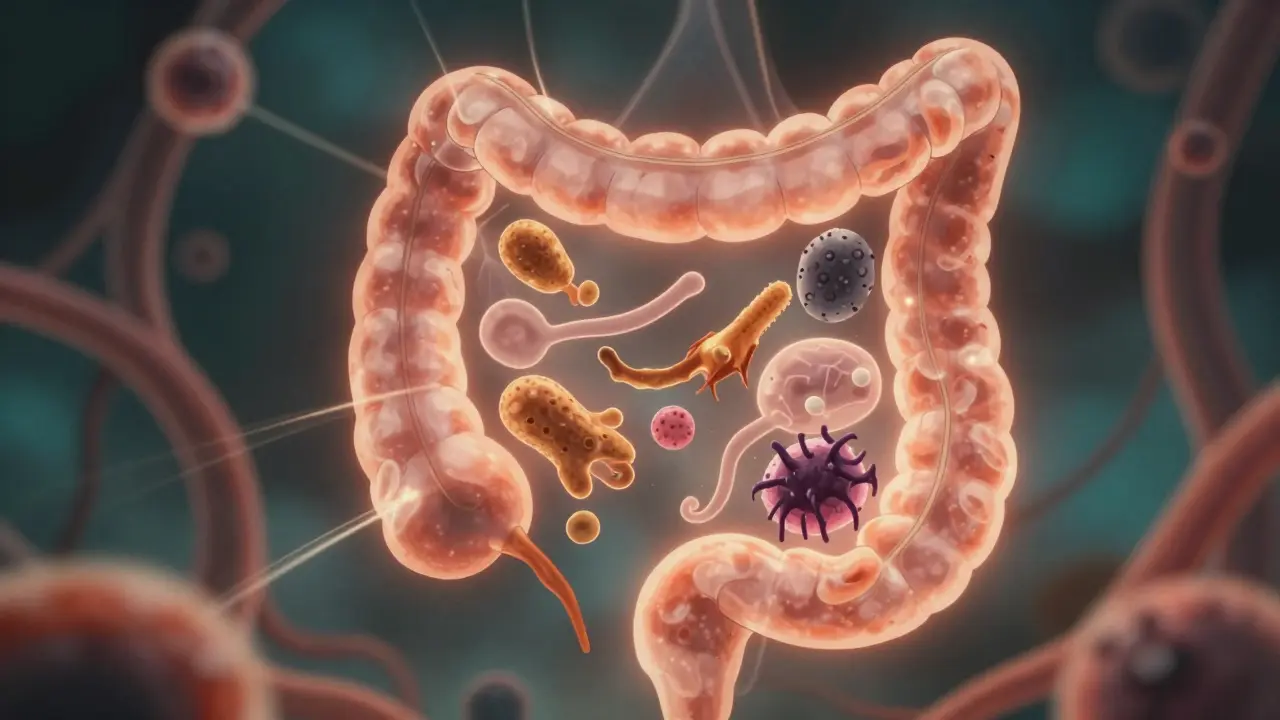
For years, doctors treated autoimmune diseases like rheumatoid arthritis, lupus, and type 1 diabetes as problems inside the immune system alone. But a growing body of research is turning that idea upside down. What if the real trigger isn’t just your immune system going rogue-but the trillions of bacteria living in your gut? As of 2025, scientists are no longer asking if the gut microbiome plays a role in autoimmunity. They’re asking how to use it to stop these diseases before they start.
What the Gut Microbiome Actually Does
Your gut isn’t just a digestive tube. It’s home to over 100 trillion bacteria, viruses, and fungi-collectively called the microbiome. These microbes help break down food, make vitamins, and train your immune system. Think of them as teachers for your body’s defense forces. When they’re balanced, they tell your immune system: "This is safe. This is foreign. Don’t attack your own cells." But when that balance breaks-what scientists call dysbiosis-those teachers start giving bad advice. Your immune system gets confused. It starts attacking your joints, your pancreas, your nerves. That’s when autoimmune disease kicks in.The Evidence: A Consistent Pattern Across Diseases
A 2025 meta-analysis of 47 studies involving nearly 13,000 patients with rheumatoid arthritis, multiple sclerosis, and type 1 diabetes found one startling pattern: everyone had less microbial diversity. On average, alpha diversity dropped by 23.7%. That means fewer types of good bacteria, and more of the bad ones. Two bacterial shifts showed up again and again:- Faecalibacterium prausnitzii dropped by 41.2% across all three diseases. This is one of the most important anti-inflammatory bacteria in your gut. Less of it = more inflammation.
- Ruminococcus gnavus increased by 37.5%. This bug isn’t just a bystander-it produces molecules that directly trigger immune cells to attack your tissues.
The Smoking Gun: When Gut Bacteria Leave the Gut
For a long time, scientists thought the gut microbiome only influenced autoimmunity from inside the intestine. Then Yale researchers found something shocking. They discovered that a specific gut bacterium-Enterococcus gallinarum-wasn’t staying put. It was escaping through the intestinal wall, traveling through the bloodstream, and showing up in the liver, spleen, and lymph nodes. In lupus patients, this bug was found in extraintestinal tissues in 63% of cases. In healthy people? Only 8%. Once outside the gut, E. gallinarum didn’t just hang out. It woke up immune cells that shouldn’t be activated. It triggered autoantibodies. It made lupus worse. This wasn’t correlation. It was direct cause. And it wasn’t just lupus. In mouse models of arthritis, the same bug boosted autoantibody production by 68%. In lupus-prone mice, it did the same. This means the same mechanism might be driving multiple autoimmune diseases.One Bacterium, Two Faces: Lactobacillus Reuteri
Not all gut bacteria are straightforward. Take Lactobacillus reuteri. In some studies, it’s protective. In others, it makes things worse. A 2025 study in Nature Immunology showed that in mice with experimental autoimmune encephalomyelitis (a model for multiple sclerosis), L. reuteri made CNS inflammation 28% worse. But other Lactobacillus strains-like L. casei and L. plantarum-reduced inflammation in the same models. This isn’t a contradiction. It’s a warning. You can’t treat the gut microbiome like a single switch. One strain does one thing. Another does the opposite. Blanket probiotics might help some people and hurt others.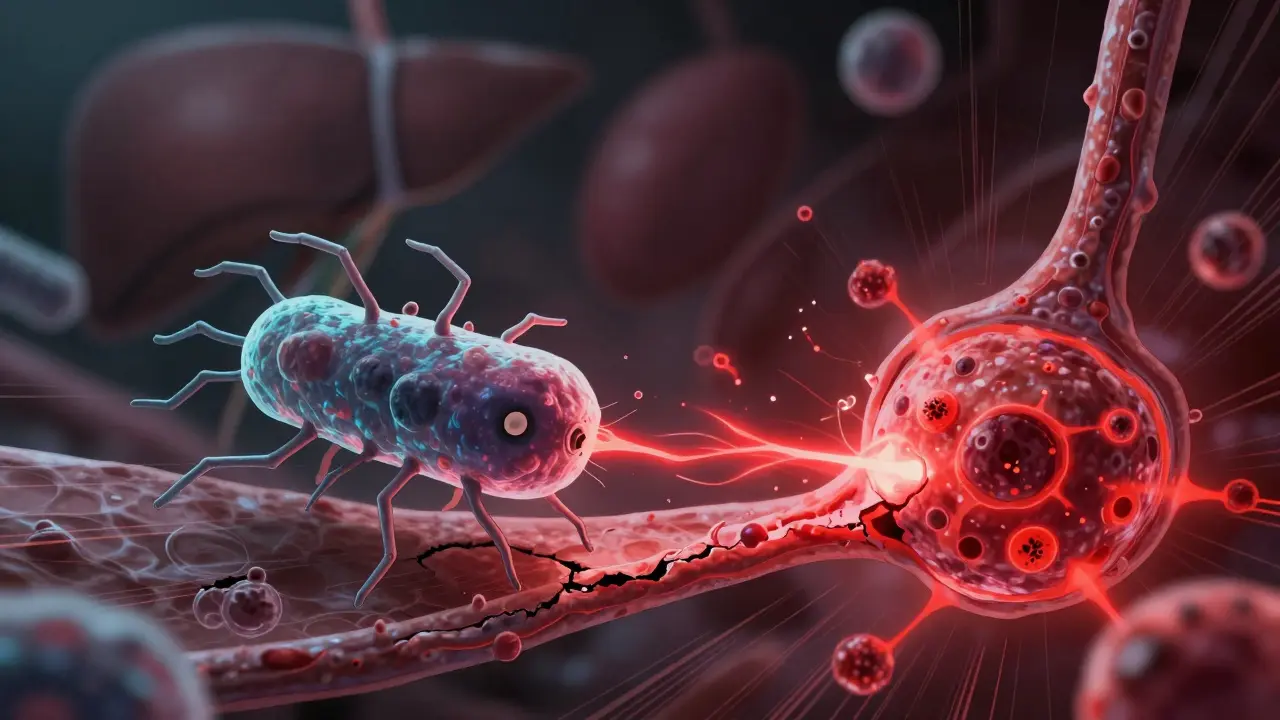
How the Gut Talks to the Immune System
The gut doesn’t just send chemical signals. It sends live immune cells. Researchers at Ohio State University found that segmented filamentous bacteria (SFB) in the gut directly influence a type of immune cell called T follicular helper (Tfh) cells. Tfh cells help B cells make antibodies. That’s normal. But in autoimmune disease, they help make auto-antibodies-antibodies that attack your own body. SFB exposure in mice caused Tfh cells to multiply, leading to a 68% spike in autoantibodies. These same Tfh cells were later found in the blood of rheumatoid arthritis patients. That’s a direct link: gut bacteria → Tfh cells → joint damage. It’s not just Tfh. Other cells like Th17 and regulatory T cells are also being manipulated by gut microbes. The gut is the control center. The immune system is the weapon. And when the control center gets corrupted, the weapon turns on the body.Therapies Already in the Works
The science is clear. Now the question is: can we fix it? There are three main approaches being tested:- Probiotics: 22 specific strains are now in clinical trials. Not your average store-bought yogurt probiotics-these are precision strains like VE202 (from Vedanta Biosciences) designed to restore immune balance.
- Prebiotics: These are food for good bacteria. Galactooligosaccharides (GOS) increased regulatory T cells by 34% in early rheumatoid arthritis trials. That’s a direct immune-calming effect.
- Targeted elimination: This is the most radical idea. If E. gallinarum triggers lupus, what if we kill it? Antibiotics aren’t the answer-they wipe out everything. But targeted antimicrobials or bacteriophages (viruses that eat specific bacteria) could remove just the bad actors. Yale researchers believe this could be the next frontier: treating lupus not just by suppressing immunity, but by removing the trigger.
Why This Isn’t Ready for Prime Time (Yet)
You might be tempted to buy a probiotic or do a gut test right now. But here’s the truth: most of this is still in labs and clinical trials. - It takes 78 days on average to get a full personalized microbiome profile. - A full metagenomic sequencing test costs $1,200 to $3,500-even though prices have dropped 63% since 2020. - Only 12% of human trials track patients longer than six months. We don’t know if benefits last. - 68% of studies use different methods to collect stool samples. That makes comparing results nearly impossible. And here’s the kicker: even if you get a test, no doctor in the U.S. or New Zealand can legally prescribe a microbiome therapy yet. The FDA and Medsafe haven’t approved any. These are still experimental.
Who’s Investing? And Where Is This Going?
This isn’t just academic curiosity. Billions are pouring in. In 2024, global funding for microbiome-autoimmunity research hit $847 million-up 22% from the year before. The NIH launched a $18.7 million initiative in January 2025 to develop three microbiome-based therapies by 2028. The Lupus Research Alliance gave $5.2 million to Yale for gut bacteria research. Forty-seven biotech companies are racing to build treatments. Vedanta Biosciences has 12 candidates. Seres Therapeutics has 9. Big pharma is watching closely. By 2030, 89% of experts believe microbiome profiling will be standard in diagnosing and treating autoimmune diseases. That means: a stool test, a blood test, and an immune profile-all used together to create a personalized treatment plan.What You Can Do Right Now
You can’t buy a microbiome therapy yet. But you can support your gut.- Eat more fiber: 30+ grams a day from vegetables, legumes, whole grains, and nuts. Fiber feeds good bacteria.
- Limit ultra-processed foods: They reduce microbial diversity and promote inflammation.
- Consider fermented foods: Sauerkraut, kimchi, kefir, and plain yogurt (unsweetened) add live cultures.
- Avoid unnecessary antibiotics: They wipe out good bacteria and can trigger long-term dysbiosis.
What’s Next
The future isn’t just about more drugs. It’s about personalization. Imagine a world where your autoimmune treatment plan includes:- A microbiome map showing which bacteria are missing or overgrown
- A blood test measuring your Tfh and Th17 cell activity
- A tailored blend of prebiotics and precision probiotics
- Maybe even a targeted bacteriophage to remove E. gallinarum
Can probiotics cure autoimmune diseases?
No. Current over-the-counter probiotics are not proven to cure or reverse autoimmune diseases. While some specific strains in clinical trials show promise-like VE202 or certain Bifidobacterium strains-most store-bought products contain bacteria that haven’t been tested for autoimmune conditions. Some may even make symptoms worse. Probiotics are not a substitute for medical treatment.
Is there a blood test for gut microbiome imbalance?
Not directly. You can’t test gut bacteria from blood. But you can test immune markers linked to gut health, like antibodies to specific bacteria (e.g., anti-Saccharomyces cerevisiae antibodies), or levels of inflammatory proteins like IL-17 and CRP. Stool testing remains the gold standard for microbiome analysis. Blood tests can show the immune system’s response to gut changes, but not the bacteria themselves.
Why do some people with bad gut bacteria never get autoimmune disease?
Genetics and environment matter. You need a combination: a genetic predisposition (like HLA-B27 for ankylosing spondylitis), a trigger (like infection or antibiotics), and gut dysbiosis. One alone isn’t enough. Two might be risky. All three together significantly raise the chance. That’s why autoimmunity isn’t just about your gut-it’s about your genes, your lifestyle, and your microbiome working together.
Can diet change your gut microbiome fast?
Yes, but not permanently. Studies show that switching to a high-fiber, plant-rich diet can shift your microbiome in as little as 3-5 days. But if you go back to processed foods, the bad bacteria return within weeks. Long-term change requires consistent habits-not quick fixes. The goal is to build a resilient microbiome that stays balanced over time.
Are fecal transplants being used for autoimmune diseases?
Not yet for autoimmune conditions outside of research trials. Fecal microbiota transplants (FMT) are approved for recurrent C. diff infections, but trials for lupus, RA, and MS are still early-phase. Safety is a concern-transplanting the wrong mix of bacteria could trigger new problems. Researchers are working on purified bacterial cocktails instead, which are safer and more controllable.








Write a comment
Your email address will be restricted to us