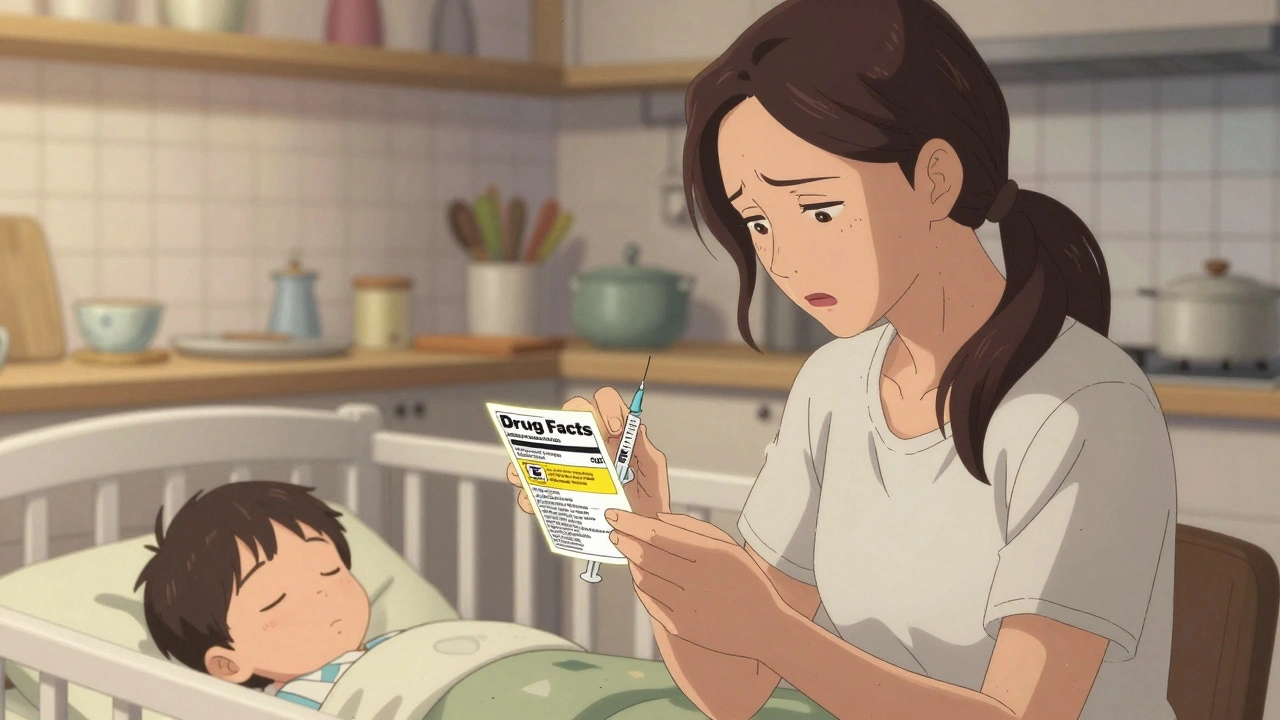
Why Reading Medicine Labels by Age and Weight Saves Lives
Every year, tens of thousands of children end up in emergency rooms because someone gave them the wrong dose of medicine. Not because the medicine was bad - but because the label wasn’t read correctly. The CDC reports that over 70,000 pediatric emergency visits each year are caused by medication errors. Most of these happen at home, often because parents use age alone to guess the dose - even when weight is a better, safer guide.
Here’s the truth: a 3-year-old who weighs 30 pounds needs a different dose than a 3-year-old who weighs 18 pounds. But if you only look at the age range on the bottle, you’ll give them the same amount. That’s where things go wrong. The gold standard isn’t age - it’s weight. And learning how to read the label properly takes less than 15 minutes. But if you skip it, you’re risking serious harm.
The Seven Parts of a Children’s Medicine Label You Must Understand
Every over-the-counter children’s medicine in the U.S. must follow the FDA’s ‘Drug Facts’ label format. It’s not just a design - it’s a safety system. Here’s what each section means:
- Active ingredient: This tells you what’s actually working in the medicine. For example, ‘acetaminophen 160 mg per 5 mL’ means every teaspoonful contains 160 milligrams of the pain reliever. This number is critical. Some products used to be stronger (like infant drops at 80 mg per 1.25 mL), but since 2011, most have been standardized to 160 mg/5 mL. Still, if you have an old bottle, double-check this line.
- Uses: What the medicine treats - fever, cough, runny nose. Don’t use it for something not listed.
- Warnings: This section tells you when NOT to use it. Look for phrases like ‘do not give to children under 2 years’ or ‘do not use with other products containing acetaminophen.’ Overdosing on acetaminophen is the #1 cause of liver damage in children.
- Directions: This is the most important part. It gives dosing instructions by both age AND weight. Always check both. If there’s a weight chart, use it. If there’s only an age chart, and your child is very small or large for their age, call your doctor.
- Inactive ingredients: These are fillers, flavors, or preservatives. If your child has allergies (like to dyes or high-fructose corn syrup), check here.
- Purpose: Explains the medicine’s role - ‘pain reliever,’ ‘fever reducer,’ ‘antihistamine.’
- Other information: Storage tips, expiration date, and manufacturer contact. Never use expired medicine.
Prescription labels are different. They include your child’s name, the doctor’s name, the pharmacy’s phone number, and exact instructions like ‘take 5 mL three times daily.’ Always read both the prescription bottle and the printed sheet that comes with it.
Why Weight Beats Age Every Time
Doctors and pharmacists agree: weight is the best way to dose children’s medicine. Why? Because a child’s body processes medicine based on how much they weigh, not how old they are. A 4-year-old weighing 15 kg (33 lbs) needs less medicine than a 4-year-old weighing 22 kg (48 lbs). Age-based charts treat them the same - and that’s dangerous.
A 2021 study from Penn State found that using weight instead of age reduces dosing errors by nearly 38%. The American Academy of Pediatrics says this isn’t just a suggestion - it’s the standard of care. A 2023 study in JAMA Pediatrics showed that parents who used both age and weight instructions cut their dosing mistakes by over half.
Here’s how to do it:
- Know your child’s current weight in kilograms (kg) or pounds (lbs). If you only have pounds, divide by 2.2 to get kg. Example: 44 lbs ÷ 2.2 = 20 kg.
- Find the weight range on the label. Look for lines like ‘10-15 kg: 5 mL’ or ‘20-25 kg: 7.5 mL’.
- If your child’s weight falls between two ranges, round down - it’s safer than overdosing.
- If the label doesn’t list weight, call your pediatrician. Don’t guess.
Don’t rely on growth charts from the doctor’s office unless they’re current. Children grow fast. A weight from six months ago might be wrong now.

Common Dosing Rules for Key Medications
Here are the standard doses for the most common children’s medicines, based on current guidelines from the FDA, AAP, and Children’s Hospital of Philadelphia:
- Acetaminophen (Tylenol): 10-15 mg per kg of body weight, every 4-6 hours. Max 75 mg per kg per day. That means a 15 kg child can get up to 1,125 mg total in 24 hours - divided into 4-5 doses.
- Ibuprofen (Advil, Motrin): 5-10 mg per kg, every 6-8 hours. Max 40 mg per kg per day. A 20 kg child can get up to 800 mg total per day.
- Antihistamines (like Benadryl): Not recommended for children under 2 unless directed by a doctor. Dosing is highly weight-dependent and can cause dangerous drowsiness or agitation.
Important: Never combine medicines. Many cold and flu products contain acetaminophen. Giving Tylenol plus a ‘fever and cough’ syrup could mean double-dosing - and that’s how liver damage starts.
The Right Way to Measure: Forget the Spoon
Household spoons are the #1 cause of dosing errors. A teaspoon from your kitchen might hold 4 mL or 7 mL - it’s not exact. The FDA found that 68% of errors happen because parents use spoons instead of proper tools.
Use only what comes with the medicine:
- Oral syringe: Best for babies and toddlers. Look for one marked in 0.1 mL increments. Draw the dose, hold it at eye level, and read the bottom of the liquid curve.
- Dosing cup: Good for older kids. Make sure it has clear markings. Don’t use a regular cup.
- Measuring spoon: Only if it’s labeled ‘medicinal tsp’ or ‘5 mL.’ Never use a regular teaspoon.
Pro tip: If the label says ‘1.5 mL,’ don’t guess. Use a syringe. If you only have a 5 mL syringe, fill it halfway - it’s easier than estimating 1.5 mL with a cup.
Also: never mix medicine with a full bottle of juice or milk. If your child doesn’t drink it all, you don’t know how much they got.
What to Do When You’re Not Sure
Confused? You’re not alone. A 2022 survey found that 75% of parents have given the wrong dose at least once. Here’s what to do:
- Call your pharmacist. They’re trained to explain labels. Most pharmacies offer free counseling when you pick up a new prescription.
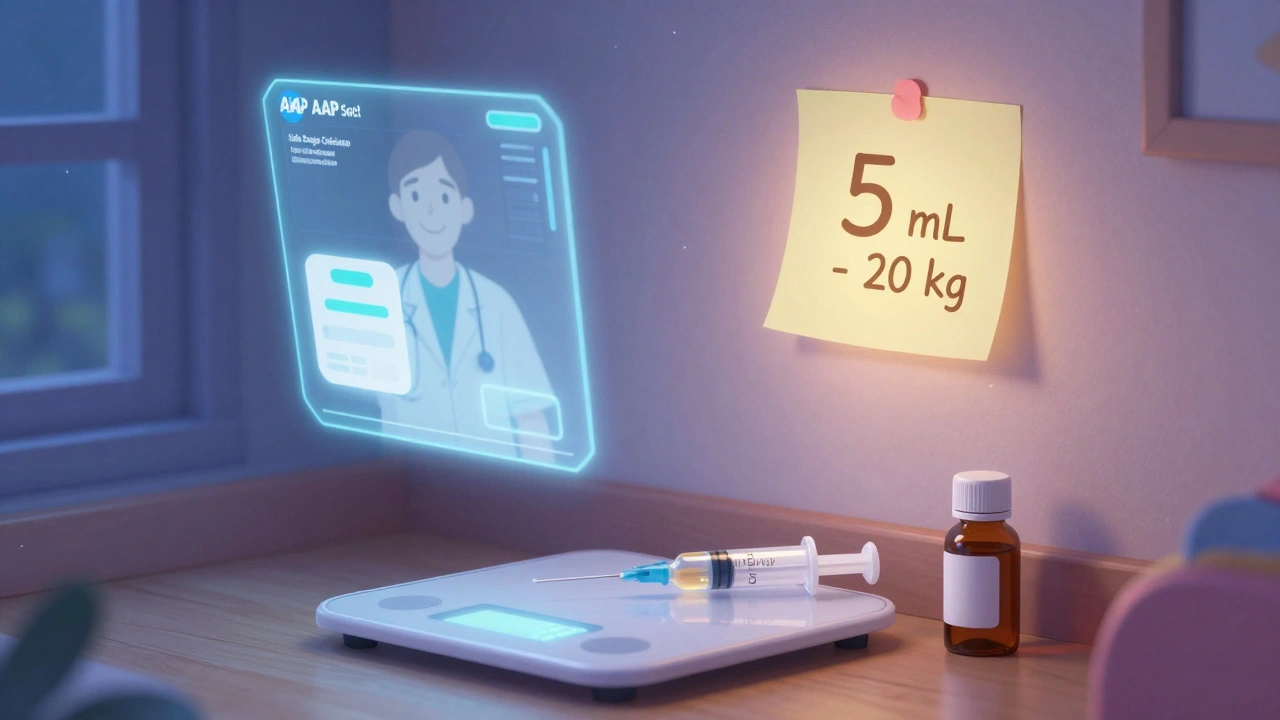
- Use the AAP’s Safe Dosage Calculator app. It’s free, updated for 2025, and lets you input weight and medicine to get the exact dose.
- Ask your pediatrician during checkups. Bring the medicine bottle. Say, ‘Can you show me the right dose for my child’s weight?’
- Don’t use old medicine. Labels change. What was safe last year might not be safe now.
For children under 2 years: always consult a doctor before giving any medicine. Their bodies process drugs differently. Even small overdoses can cause serious harm.
What’s Changing in 2025
Since 2023, the FDA has required all children’s OTC medicines to include both age and weight dosing on the label. If you see a bottle without weight instructions, it’s not compliant - and shouldn’t be on the shelf. By the end of 2024, non-compliant products were pulled from stores.
Newer bottles may even have QR codes. Scan them with your phone and you’ll get a short video showing how to use the syringe correctly. Walmart and CVS started testing these in 2023 - and 87% of parents said they helped.
Smart bottle caps that record when medicine was given are in testing. They won’t be on shelves yet, but they’re coming. The goal? To stop accidental double-dosing.
Your Quick Safety Checklist
Before you give any medicine, ask yourself these five questions:
- Is this medicine for my child’s name? (Check the prescription label.)
- Do I know the active ingredient? (No mixing - especially with acetaminophen.)
- Have I checked the dose by weight, not just age?
- Am I using the right measuring tool? (Syringe or dosing cup - not a spoon.)
- Is the medicine expired? (Look for the date on the bottle.)
If you answer ‘no’ to any of these, stop. Call your doctor or pharmacist. It’s better to wait 10 minutes than risk an emergency room visit.
Final Thought: You Don’t Need to Be a Doctor
You just need to be careful. Reading a medicine label isn’t hard - it just takes attention. Most parents think they know how to do it. But when they’re tired, stressed, or in a hurry, mistakes happen. That’s why the rules exist: to protect your child when you’re not at your best.
Keep the medicine bottle in a visible spot. Write the dose on a sticky note if you need to. Use the syringe every time. And never, ever guess. Your child’s safety isn’t about luck - it’s about knowing what’s on the label.







Write a comment
Your email address will be restricted to us