
Every year, over 1.3 million people in the U.S. end up in the emergency room because of bad reactions to their medications. About 12% of those cases involve something you might not expect: what you ate for breakfast. If you’re taking more than one medication-especially if you’re over 40-you’re at risk. A simple, homemade food and medication interaction checklist can stop these reactions before they start. It’s not complicated. It’s not expensive. And it could save your life.
Why Your Medications Don’t Play Nice With Food
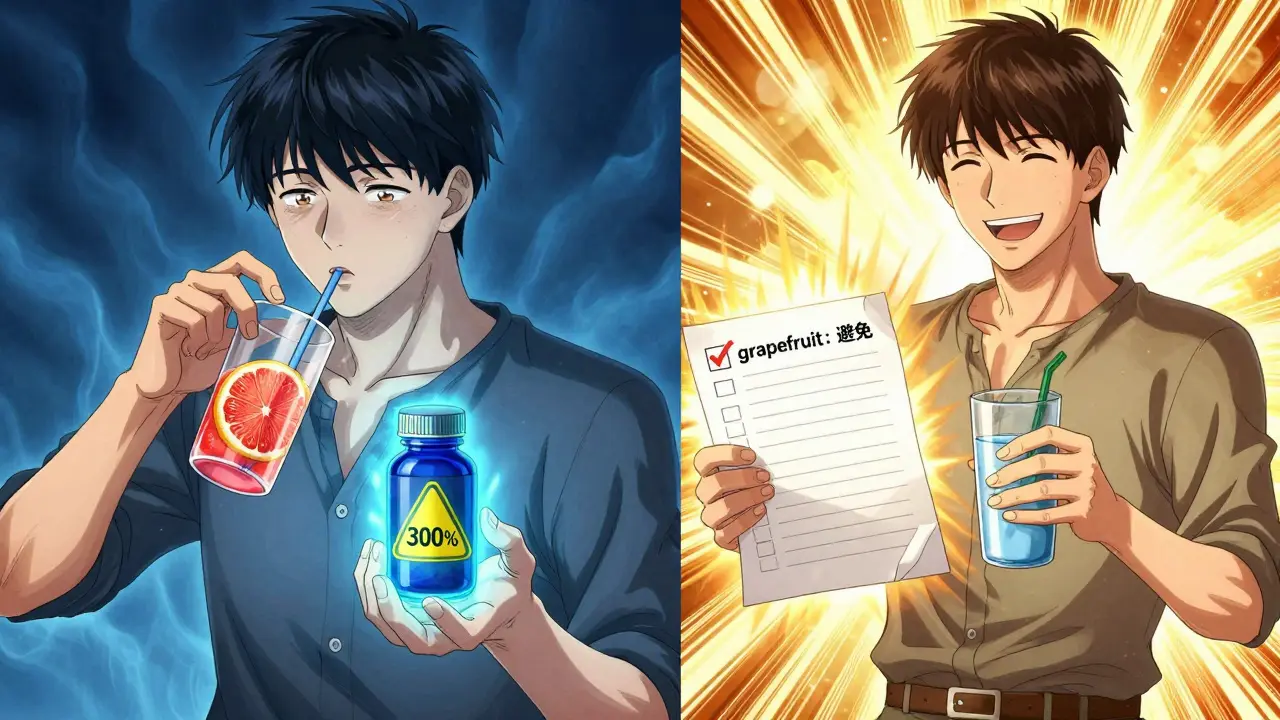
Your body doesn’t treat food and medicine the same way. Some foods block your body from absorbing a drug. Others make it absorb too much. Grapefruit juice, for example, can make statins like atorvastatin become 300-500% more potent. That’s not a typo. That’s enough to cause muscle damage or kidney failure. Warfarin, a blood thinner, works differently depending on how much vitamin K you eat. If you eat a big salad one day and nothing green the next, your blood can clot dangerously or bleed too much. Dairy products like milk and yogurt can bind to antibiotics like ciprofloxacin and stop them from working at all.The problem isn’t just what you eat. It’s when you eat it. Medsafe in New Zealand says you need to wait at least two hours between taking ciprofloxacin and drinking milk. Some interactions are high risk-like eating aged cheese with MAO inhibitors (used for depression), which can spike your blood pressure to dangerous levels. Others are moderate, like eating spinach with warfarin: you can still eat it, but you have to keep the amount steady every day.
What Your Checklist Must Include
A good checklist isn’t just a list of pills. It’s a living document that tells you exactly what to avoid, when, and why. Here’s what each entry needs:- Medication name (both brand and generic, e.g., "Lipitor (atorvastatin)")
- Dosage and schedule (e.g., "10mg once daily at 8 AM")
- Purpose (e.g., "lowers cholesterol")
- Prescribing doctor and contact info
- Food or drink interaction (e.g., "grapefruit juice, Seville oranges")
- Risk level (High, Moderate, Low)
- Timing rule (e.g., "avoid entirely" or "wait 2 hours after taking pill")
- Source (e.g., "NZ Formulary, updated July 15, 2024")
- Last updated date (critical-68% of errors come from outdated lists)
Don’t forget supplements. Many people don’t realize that fish oil, garlic pills, or St. John’s wort can interact with blood thinners, antidepressants, or birth control. Include them the same way you include prescription drugs.
How to Build Your Checklist Step by Step
Step 1: Gather everything. Pull out every pill bottle, capsule box, and supplement jar in your medicine cabinet. Include over-the-counter painkillers, antacids, and herbal teas. Don’t skip anything-even if you think it’s "not important." Step 2: Write down each medication. Use the 12-point framework from the FDA’s "My Medicines" template. Don’t guess. If you don’t know the generic name, check the bottle or call your pharmacy. Write down exact doses. "One pill" isn’t enough. "5mg warfarin" is. Step 3: Look up interactions. Use trusted sources only:- The New Zealand Formulary interaction checker (free online, updated monthly)
- Section 4.5 of each medication’s official data sheet (ask your pharmacist for a copy)
- The SEFH Drug-Food/Herb Interaction Guide (2024 edition, available as laminated cards)
- Official FDA Drug Safety Communications (search by drug name on fda.gov)
Avoid random websites or apps that aren’t linked to health authorities. A 2024 FDA report found 62% of unregulated AI tools give wrong interaction advice.
Step 4: Rate the risk.- High Risk: Avoid completely. Examples: grapefruit juice with simvastatin, tyramine-rich foods (aged cheese, cured meats) with linezolid.
- Moderate Risk: Separate by time. Examples: dairy with ciprofloxacin (wait 2 hours), leafy greens with warfarin (keep intake consistent).
- Low Risk: Monitor. Examples: caffeine with albuterol (may increase heart rate slightly).
Paper vs. Digital: Which One Works Better?
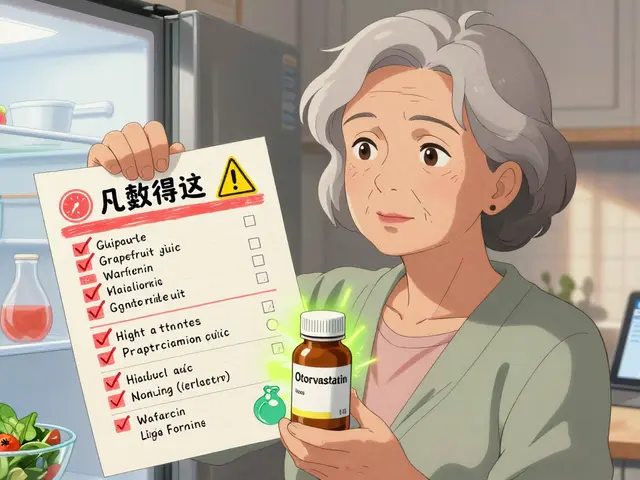
There’s no one-size-fits-all. Your choice depends on your life.Paper checklist (like the FDA’s printable template) is simple, reliable, and works during power outages or emergencies. 92% of seniors over 75 use paper lists. Keep it on your fridge. Use red for high-risk items. A University of Florida study found 82% of people who kept their list visible remembered to avoid dangerous foods.
Digital apps like Medisafe or MyTherapy can remind you when to take pills and warn you if you scan a new food item. They update automatically. But they need Wi-Fi, batteries, and a smartphone. Only 63% of seniors use them. And some apps don’t recognize cultural foods-like how your bok choy might act like spinach with warfarin.
Best solution? Use both. Keep a printed copy on the fridge. Use an app to track doses and get alerts. When you see your doctor, bring the paper version. It’s clearer, and they’ll trust it more.
Real Stories: What Happens When People Use This
One user on Reddit shared how their checklist saved them. They were taking tacrolimus after a kidney transplant. They drank grapefruit juice daily, thinking it was healthy. Their checklist flagged the interaction. They stopped-and later found their drug levels had been dangerously high. Their doctor said it could’ve caused kidney failure. Another person, a 72-year-old woman in Christchurch, kept a paper list for warfarin. She ate a small bowl of kale every morning. Her INR levels stayed steady. When she switched to spinach (thinking it was the same), her levels spiked. She checked her list, saw the note: "All dark leafy greens affect warfarin. Keep amount consistent." She went back to kale and stayed safe.On the flip side, a 2023 FDA report found 28% of checklist errors happened because people didn’t update their lists after changing meds. If you stop taking a drug, cross it out. If you start a new one, add it the same day.

How to Keep It Updated and Useful
This isn’t a one-time task. Treat it like your car’s oil change.- Review your checklist every time you refill a prescription.
- Set a monthly calendar reminder: "Check food-med list."
- Bring it to every doctor or pharmacist visit. Ask: "Has anything changed?"
- Update the "last updated" date every time you change something.
- Include preparation notes: "Cooked spinach has 70% less vitamin K than raw." That matters.
Don’t rely on memory. Even doctors forget. A 2024 University of Michigan study found patients who reviewed their lists with a pharmacist during a Medication Therapy Management (MTM) session had 92% accuracy. Those who did it alone? Only 67%.
What to Do Next
Start today. Take 30 minutes. Grab your pill bottles. Open the NZ Formulary website. Write down your top three medications and their biggest food risks. Print it. Tape it to the fridge. That’s it.You don’t need to be an expert. You just need to be consistent. The goal isn’t perfection. It’s awareness. If you know grapefruit juice can mess with your blood pressure pill, you won’t drink it. If you know dairy blocks your antibiotic, you’ll wait two hours. Small changes. Big results.
By 2026, most electronic health records will ask patients to upload their food-medication lists. The sooner you start, the easier it’ll be. And if you’re helping an older relative? Help them make theirs. It’s one of the most powerful things you can do for their health.
Can I just rely on my pharmacist to warn me about food interactions?
Pharmacists are trained to catch interactions, but they can’t know everything about your daily habits. If you eat grapefruit every morning and don’t mention it, they won’t know. Your checklist gives them the full picture. It’s your responsibility to tell them what you eat-and your checklist makes that easy.
What if I don’t know the generic name of my medication?
Look at the bottle. The generic name is always listed. If it’s not clear, call your pharmacy. They’ll give you the name for free. Never guess. "I take my blood pressure pill" isn’t enough. "Lisinopril 10mg" is.
Are all fruit juices dangerous with medications?
No. Only grapefruit, Seville oranges, pomelos, and sometimes pomegranate juice cause serious problems. Apple, orange, and cranberry juice are usually safe. But always check. Some antibiotics and cholesterol drugs react with other juices too. Don’t assume.
Do I need to avoid all leafy greens if I’m on warfarin?
No. You can eat spinach, kale, broccoli, and Brussels sprouts. But you must eat about the same amount every day. If you normally eat half a cup of cooked spinach, don’t suddenly eat two cups. That’s what throws off your blood levels. Consistency is key-not avoidance.
What if I travel or eat out? How do I use the checklist then?
Keep a small printed copy in your wallet or phone case. When eating out, ask: "Is this dish cooked with grapefruit juice?" or "Does it have aged cheese?" If you’re unsure, skip it. Your checklist is your safety net-even when you’re not at home.
Can I use an app instead of paper?
Yes-if you’re comfortable with technology. Apps like Medisafe and MyTherapy are good, but only if they pull data from trusted sources like the NZ Formulary or FDA. Avoid apps that just ask you to log food without checking interactions. Many give false warnings or miss critical ones. Always double-check with a reliable source.
How often should I update my checklist?
Update it every time your meds change-new prescription, stopped drug, new supplement. Also update it every three months, even if nothing changed. That’s when your body’s needs or your diet might have shifted. Always write the new date at the top.






Write a comment
Your email address will be restricted to us