
After a colonoscopy finds polyps, many people assume they’ll need another one in five years. But that’s not always true. In fact, for most people with small, low-risk polyps, the next colonoscopy might not be needed for 7 to 10 years. The old rule of thumb-five years for everything-is outdated. New guidelines, updated in 2020, are based on solid data showing that extending intervals reduces unnecessary procedures without increasing cancer risk.
What Determines Your Next Colonoscopy?
Your next colonoscopy isn’t based on a fixed schedule. It’s based on what was found during your first procedure. Four key factors decide your interval: the number of polyps, their size, their type, and how completely they were removed.
Let’s break it down. If you had one or two small adenomas (precancerous growths) that were 10 mm or smaller, your next colonoscopy should be in 7 to 10 years. That’s a change from the old 5-year recommendation. Why? Studies show people with these polyps have nearly the same long-term cancer risk as people with no polyps at all. The 2020 US Multi-Society Task Force on Colorectal Cancer confirmed this after reviewing data from over 200,000 patients.
But if you had three or four small adenomas, the interval shortens to 3 to 5 years. Five or more polyps of any size? That’s a 3-year follow-up. The logic is simple: more polyps mean higher risk. It’s not about fear-it’s about matching surveillance to actual risk.
High-Risk Polyps Need Closer Monitoring
Not all polyps are created equal. Some carry a much higher chance of turning into cancer. These are called high-risk adenomas. They include any adenoma that’s 10 mm or larger, has villous features (finger-like projections), shows high-grade dysplasia (severe cell changes), or is a traditional serrated adenoma.
If any of these features are present, your next colonoscopy should be in 3 years-no exceptions. These polyps grow faster and are more likely to progress. Missing a 3-year window increases your chance of developing cancer later.
Then there are serrated polyps. These are trickier. Sessile serrated lesions (SSLs) are the real concern. Even if they’re small (under 10 mm), if you have three or four of them, you need a colonoscopy in 3 to 5 years. Five or more? Back in 3 years. SSLs are harder to spot during colonoscopy, and they can hide in folds or under mucus. That’s why experts recommend stricter follow-up.
Hyperplastic polyps (HPs) are usually harmless-but only if they’re small and in the lower colon. If you have a hyperplastic polyp 10 mm or larger, especially in the right side of the colon, your doctor should treat it like a potential SSL. In that case, 3 to 5 years is the recommended interval. If there’s any doubt about the diagnosis or if the polyp wasn’t fully removed, go with the 3-year mark.
What About Large Polyps That Were Removed in Pieces?
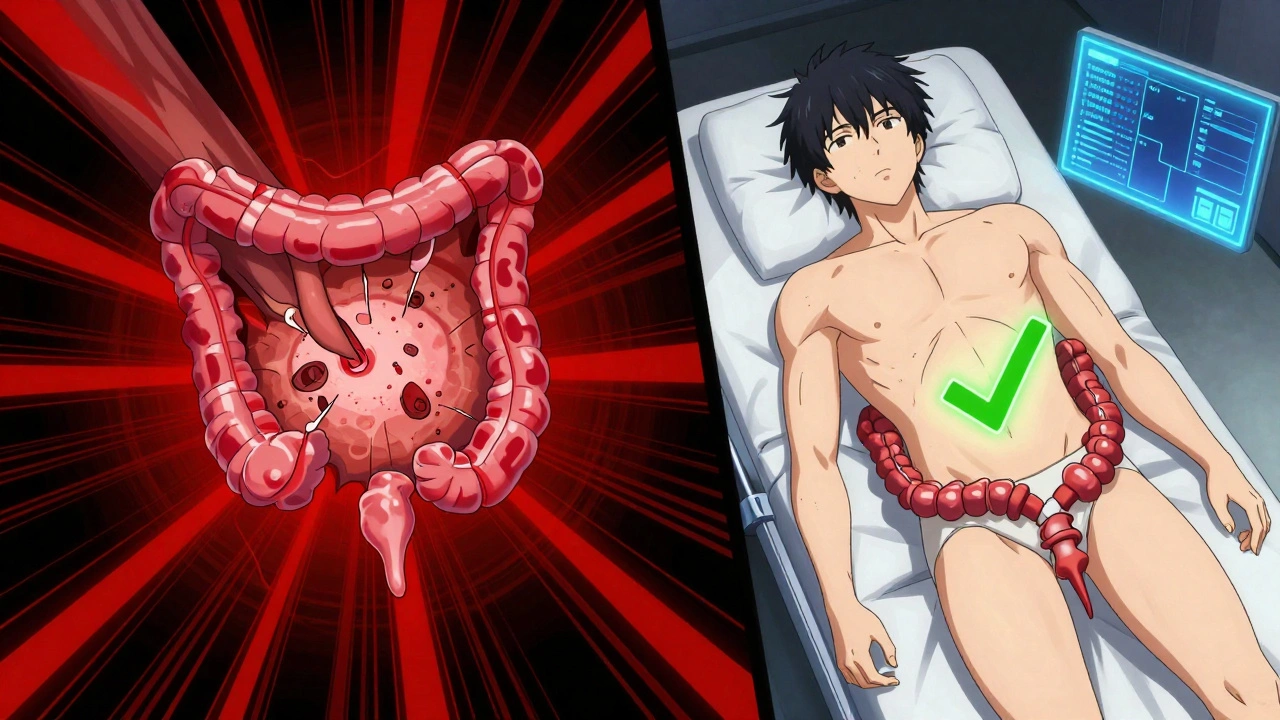
When a polyp is larger than 20 mm, it’s often too big to remove in one piece. That’s called piecemeal resection. And it changes everything.
Residual tissue can remain, and cancer can develop in the scar. That’s why follow-up is urgent. The U.S. guidelines (USMSTF) say: come back in 6 months. So do the Japanese and Korean societies. But in Europe, the recommendation is more flexible: 3 to 6 months. Why the difference? European data shows some patients need a second look sooner if the margins look unclear or if the polyp was very flat.
Here’s what matters most: if your polyp was removed piecemeal and was 20 mm or larger, don’t wait. Schedule your follow-up within 6 months. This isn’t optional-it’s critical. A 2021 study in Gastroenterology found that 12% of post-resection cancers occurred because the follow-up was delayed beyond 6 months.
Serrated Polyposis Syndrome: A Special Case
If you have serrated polyposis syndrome (SPS), you’re not just dealing with a few polyps. You have dozens, sometimes hundreds, scattered throughout your colon. This is a genetic condition that dramatically raises your cancer risk.
Guidelines vary slightly. The Japanese Society recommends annual colonoscopies. In the UK, the recommendation is every 1 to 2 years until age 75. But here’s the key: if you’ve had two consecutive colonoscopies with no polyps larger than 10 mm, you might be able to stretch the interval to 2 years. Still, annual checks are safer.
SPS isn’t rare-it affects about 1 in 300 people with multiple serrated polyps. If you’ve been diagnosed, make sure your doctor knows. This isn’t a routine follow-up. This is ongoing, high-risk monitoring.
Why Are So Many People Getting Colonoscopies Too Soon?
Here’s the shocking part: even though the 2020 guidelines have been out for years, most doctors still recommend 5-year intervals for low-risk polyps. A 2020 study at a Veterans Affairs hospital found only 18.6% of gastroenterologists followed the new 7-10 year rule. Over 80% stuck with the old 5-year standard.
Why? Fear. Doctors worry about lawsuits if they miss something. Patients panic and demand earlier repeats. Primary care providers don’t always know the updated guidelines and tell patients, “You need another one in five years.”
But the data doesn’t lie. A 2022 study showed that waiting 7.9 years after finding 1-2 small adenomas reduced cancer risk by 43-48%. That’s just as effective as doing it every 5 years. Extending the interval doesn’t mean skipping care-it means smarter care.
Tools That Help You Get the Right Interval
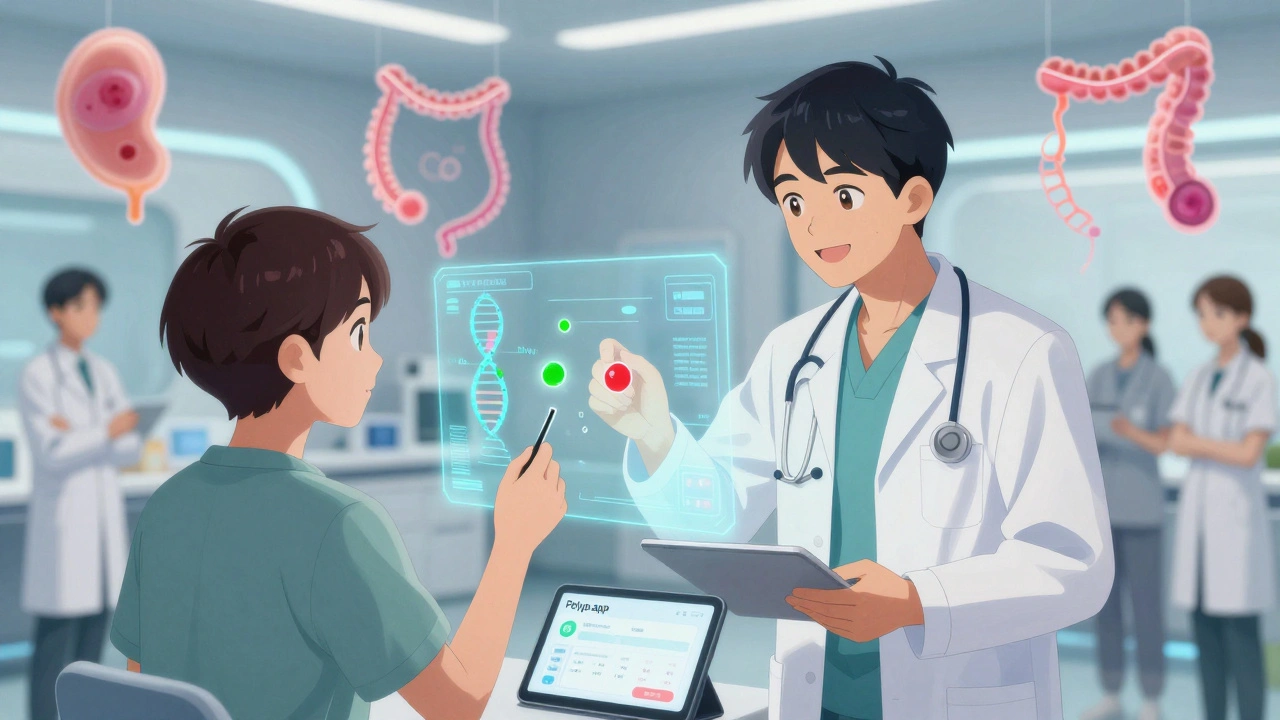
There’s an app called Polyp.app, developed by gastroenterologists at Massachusetts General Hospital. It’s free, easy to use, and built directly from the 2020 USMSTF guidelines. You plug in your polyp details-number, size, type-and it tells you exactly when to return.
Many hospitals now have these tools built into their electronic health records. Epic and Cerner systems can auto-populate your next colonoscopy date based on what your endoscopist documented. But if you’re not in one of those systems, don’t rely on memory. Write it down. Ask your doctor for the specific interval. Get it in writing.
And if you’re unsure? Ask: “Based on what was found, what’s my exact risk category?” Don’t let vague answers like “We’ll see you in five” slide. Push for the specifics.
What About Molecular Testing in the Future?
The future of colonoscopy surveillance isn’t just about counting polyps. Researchers are now testing blood and stool samples for DNA methylation markers-chemical changes that signal early cancer risk. Clinical trials are underway to see if these markers can replace or refine current guidelines.
Imagine a future where your next colonoscopy isn’t based on how many polyps you had, but on your personal molecular profile. One person with two small adenomas might need a 5-year follow-up because their DNA shows high risk. Another with the same polyps might safely wait 10 years because their markers are clean.
That’s not science fiction. It’s happening. By 2027, some clinics may offer these tests as part of routine follow-up. For now, stick to the guidelines. But know this: the future is personalizing surveillance, not standardizing it.
What If You Miss Your Window?
Life happens. You forget. You’re busy. You delay. If you’re a year or two late for your follow-up, don’t panic. But don’t ignore it either.
Studies show that even a 12-month delay increases your risk of finding advanced polyps. The longer you wait beyond your recommended interval, the more likely you are to need more invasive treatment later.
If you’re overdue, call your doctor. Don’t wait for a reminder. Schedule it now. It’s not about guilt-it’s about protection.
How long should I wait for my next colonoscopy after having one small adenoma removed?
If you had one or two small adenomas (10 mm or smaller), the current U.S. guidelines recommend waiting 7 to 10 years before your next colonoscopy. This applies only if the polyps were completely removed and you have no other high-risk features. Many doctors still recommend 5 years out of habit, but the evidence supports the longer interval.
Are all polyps the same? Do I need a colonoscopy sooner if I had a serrated polyp?
No, not all polyps are the same. Sessile serrated lesions (SSLs) are more dangerous than regular adenomas, even if they’re small. If you had one or two SSLs under 10 mm, you should return in 5 to 10 years. If you had three to four, come back in 3 to 5 years. Five or more? You need a colonoscopy in 3 years. SSLs are harder to detect and can turn into cancer faster than adenomas.
What if my polyp was removed in pieces because it was too big?
If a polyp was larger than 20 mm and had to be removed in pieces (piecemeal resection), you need a follow-up colonoscopy in 6 months. This is non-negotiable. Residual tissue can grow back and turn into cancer. Waiting longer than 6 months significantly increases your risk. Don’t wait for a reminder-schedule it yourself.
Why do some doctors say I need a colonoscopy in 5 years when my report says 7-10 years?
Many doctors still follow old guidelines out of habit or fear of missing something. A 2020 study found only 18.6% of U.S. gastroenterologists correctly followed the new 7-10 year rule for low-risk polyps. Ask your doctor to check the 2020 US Multi-Society Task Force guidelines. If they’re unsure, request a copy of your pathology report and ask them to explain your specific risk category.
Can I skip my next colonoscopy if I feel fine?
Colorectal cancer often has no symptoms until it’s advanced. Feeling fine doesn’t mean you’re cancer-free. Polyps grow slowly, but they don’t disappear. Skipping your recommended colonoscopy-even if you feel perfectly healthy-could mean missing a chance to catch something early. Follow your timeline. It’s not about how you feel. It’s about preventing cancer.
Next Steps: What to Do Today
Find your colonoscopy report. Look for these details: number of polyps, size (in millimeters), type (adenoma, SSL, hyperplastic), and whether they were removed completely. If you’re unsure, call your endoscopist’s office and ask for clarification.
Write down your recommended interval. Don’t trust your memory. Put it in your calendar with a reminder six months before it’s due. Use the Polyp.app tool if you need help interpreting your results.
If you’re over 75, talk to your doctor about whether continued screening is right for you. Guidelines suggest stopping after age 75 for most people, unless you have a history of advanced polyps or cancer.
And if you’ve never had a colonoscopy? Don’t wait until you have symptoms. Start at age 45. Prevention isn’t optional. It’s the best way to avoid colon cancer.






Write a comment
Your email address will be restricted to us