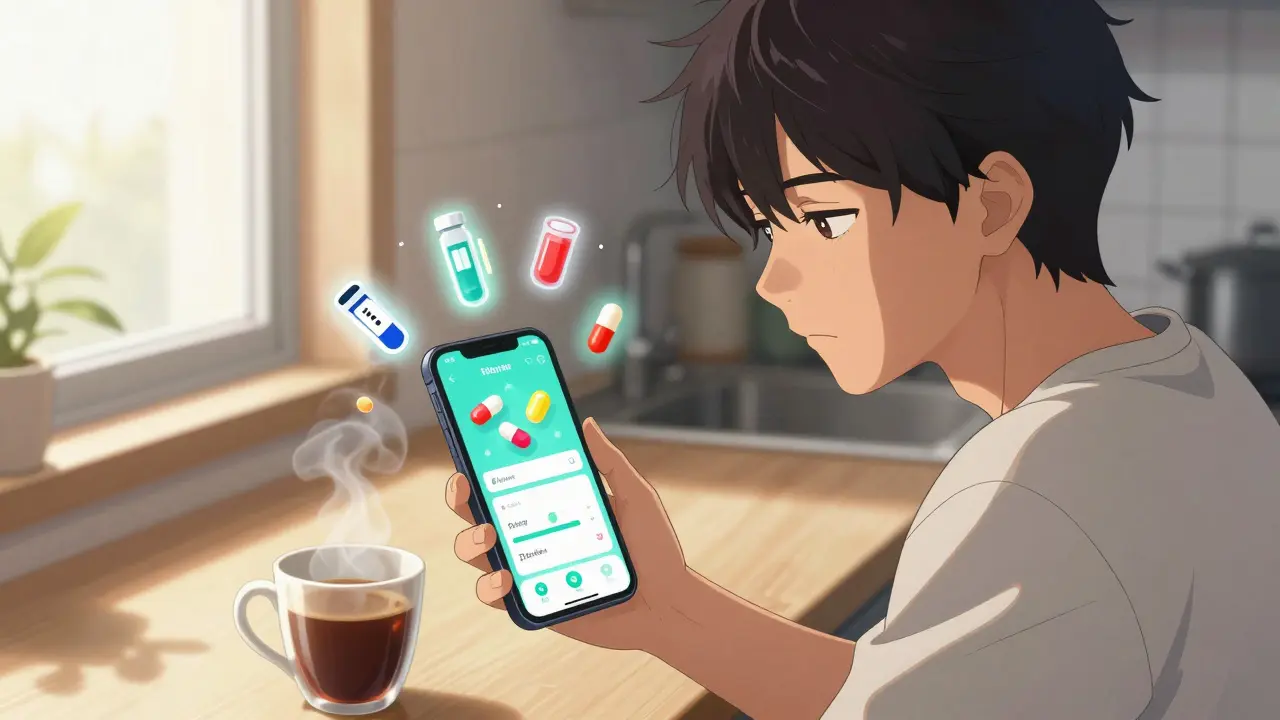
Missing a pill. Forgetting a dose. Skipping a week because it’s too much to keep track of. If you’ve ever done this-whether for blood pressure meds, diabetes drugs, or antibiotics-you’re not alone. About half of people with chronic conditions don’t take their meds as prescribed. That’s not laziness. It’s not carelessness. It’s often just too hard to remember, especially when you’re juggling multiple pills, different times, and side effects that make you feel worse before they make you better.
Enter medication timers and apps. These aren’t fancy gadgets from sci-fi movies. They’re simple tools on your phone that help you take your meds on time. And the data shows they work. In 14 clinical trials between 2023 and 2025, patients using these apps improved their adherence by a measurable, meaningful amount-enough to lower hospital visits, prevent complications, and even save lives.
How These Apps Actually Help
At their core, medication apps do three things: remind you, track you, and show you progress. That’s it. No magic. No complex tech. Just smart reminders that pop up when you need them, logs that show whether you took your pill, and dashboards that turn a confusing pile of pills into a clear, daily routine.
Most apps let you add each medication by name, dose, and time. You can set multiple alarms per day-for example, one for your morning insulin, another for your afternoon blood thinner, and a third for your night-time sleep aid. Some even let you tag pills with photos so you don’t mix them up. If you forget to tap "taken," the app will nudge you again. And if you’re running late? It’ll adjust the next reminder automatically.
What makes these apps better than old-school pill organizers? For one, they’re always with you. A plastic box with compartments doesn’t know if you skipped your 2 p.m. dose. But your phone does. And it can send a text to your caregiver, log the miss, or even suggest why you might’ve forgotten-like if you were in the shower or at work.
What Makes a Good App?
Not all apps are created equal. Out of the 217 medication apps available, only a handful deliver real results. The best ones share a few key features:
- Customizable reminders-with sound, vibration, and repeat options. 92% of top apps include this.
- Digital pill log-so you can see your history. Was it 8 out of 10 doses this week? That’s progress.
- Medication interaction checker-alerts you if your new antibiotic might clash with your blood pressure pill.
- Progress dashboard-shows weekly adherence rates, streaks, and trends. Seeing a 90% streak can be motivating.
- Sync with pharmacy-apps like Medisafe can auto-request refills when you’re running low.
- Secure and private-HIPAA-compliant, encrypted, with biometric login. Your health data isn’t for sale.
Apps like Medisafe, MyTherapy, and Round Health lead the pack. They’ve been tested in real-world studies with thousands of users. One user with type 2 diabetes reported their HbA1c dropped from 8.2 to 6.9 after six months using Medisafe. That’s not luck. That’s consistency.
Who Benefits Most?
These tools work best for people managing multiple medications-like someone on five pills a day for heart disease, diabetes, and high cholesterol. They’re also great for people with memory issues, busy schedules, or those recovering from surgery. But they’re not a one-size-fits-all fix.
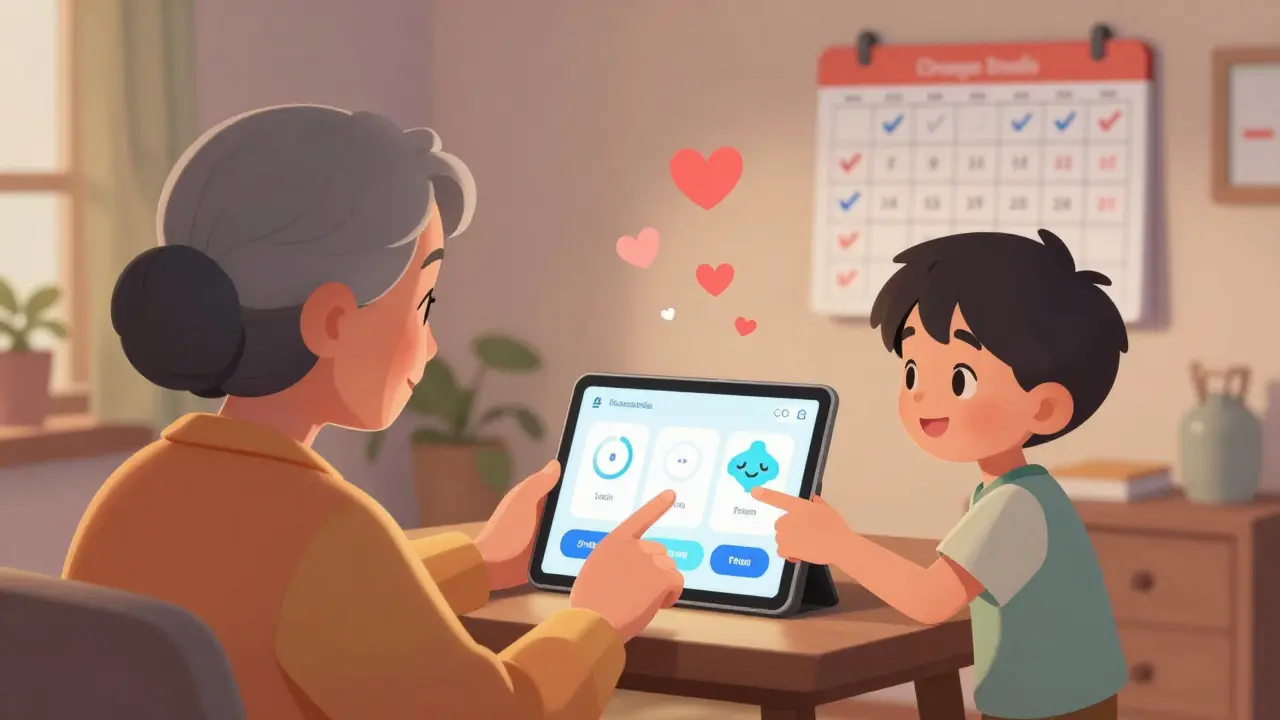
Studies show they’re less effective for older adults who aren’t comfortable with smartphones. One study found people over 65 took 42 minutes to set up an app versus 18 minutes for people under 45. That’s not because they’re slow-it’s because the interface wasn’t designed for them. The best apps now offer larger fonts, voice-guided setup, and simplified menus.
They also struggle with people who have severe cognitive decline. If you can’t remember to turn on your phone, a reminder won’t help. In those cases, family caregivers using shared access features are often the real key.
And here’s something important: the apps work best when they’re used for more than just reminders. The top-performing apps include short educational videos-like "Why this pill lowers your stroke risk"-or motivational messages. One study found users who engaged with these features were 30% more likely to stick with the app long-term.
Cost and Accessibility
Most apps are free to download. But the best ones have premium tiers. Medisafe Premium, for example, costs $4.99 a month and includes 24/7 chat support, custom care plans, and pharmacy sync. Free versions still work great for basic reminders, but you’ll get email support only-and responses can take days.
Cost isn’t the only barrier. About 20% of people in low-income groups don’t have reliable smartphones or internet access. That’s a real problem. In Medicaid populations, only 19% use these apps, compared to 39% among those with private insurance. If you’re in this group, talk to your doctor or pharmacist. Some clinics give out free tablets with the app preloaded.
And here’s good news: more insurance plans are covering them. In 2024, over 40% of Medicare Advantage plans started offering adherence apps as a free benefit. Check your plan’s website or call customer service. You might already have access.
What About Privacy?
It’s normal to worry. Your health data is personal. But the top apps follow strict rules. They’re HIPAA-compliant, meaning your info can’t be shared without your permission. They use end-to-end encryption, so even if someone hacks the server, they can’t read your data. Biometric login-fingerprint or face ID-means no one else can open your app.
Still, only 64% of apps clearly state their security practices. If you’re unsure, look for apps from well-known health tech companies or those recommended by hospitals. Avoid random apps with vague privacy policies or ads for weight loss supplements. If it feels sketchy, it probably is.
Why People Stop Using Them
Here’s the catch: many people quit after three months. Why? Notification fatigue. Too many alerts. Too many pop-ups. Too many "You missed your pill!" messages.
The fix? Customize. Turn off non-essential notifications. Use focus modes on your phone to silence alerts during meetings or sleep. Set reminders only for critical meds. If you’re on 10 pills, maybe only 3 need alarms. The rest can be tied to daily habits-like brushing your teeth or eating breakfast.
Another reason people drop off? The setup feels overwhelming. Don’t try to add all your meds at once. Start with one or two. Get comfortable. Then add the rest. Most apps let you edit your list anytime.
And if you miss a dose? Don’t panic. The app won’t judge you. It’ll just log it. That data helps your doctor adjust your plan-not punish you.

What’s Next?
The field is moving fast. In early 2024, Medisafe launched an AI feature called "Adherence Coach" that predicts when you’re likely to miss a dose-based on your past behavior, weather, calendar events, even your phone usage patterns. It’s 84% accurate in testing.
Google is working on a voice-activated assistant called "Med Buddy"-coming late 2025-that lets you say, "Hey Google, did I take my metformin?" and get a reply. Pfizer is testing blockchain systems to verify adherence in clinical trials. And the FDA just approved the first digital therapeutic app for high blood pressure that actually prescribes treatment adjustments based on your data.
These aren’t gimmicks. They’re tools built on real science. And they’re getting smarter.
How to Get Started
You don’t need to be tech-savvy. Here’s how to begin:
- Ask your doctor or pharmacist for app recommendations. They know what works for your condition.
- Download one of the top apps: Medisafe, MyTherapy, or Round Health.
- Open it and tap "Add Medication." Type in your first pill name. The app will suggest common doses and times.
- Set a reminder for your most important dose. Make it loud, clear, and at a time you won’t miss-like right after your morning coffee.
- Tap "taken" after you take it. Do this for three days.
- Look at your dashboard. See your streak? That’s your win.
- Add more meds one at a time. Don’t rush.
It takes 10 to 25 minutes to set up. Less time than it takes to refill a prescription.
Final Thought
Medication adherence isn’t about willpower. It’s about systems. Your body doesn’t care if you’re tired, busy, or confused. It just needs the right dose at the right time. Apps don’t replace your doctor. They don’t replace your memory. But they do give you a reliable, always-available helper-right in your pocket.
For many, these tools mean fewer ER visits. Better lab results. More energy. More control. And that’s not just data. That’s quality of life.
Do medication adherence apps really work?
Yes. Fourteen clinical trials between 2023 and 2025 showed that people using these apps improved their medication adherence by a statistically significant amount-on average, 0.57 points higher on the 8-item Morisky scale. That’s enough to reduce hospitalizations and improve health outcomes for conditions like diabetes, heart disease, and HIV.
Are these apps free?
Most apps are free to download and use basic features like reminders and logs. Premium versions-like Medisafe Premium at $4.99/month-add features like pharmacy sync, 24/7 support, and personalized coaching. Many insurance plans, especially Medicare Advantage, now cover these apps for free.
Can older adults use these apps?
Yes, but setup takes longer-about 42 minutes on average for people over 65 versus 18 minutes for younger users. Look for apps with large buttons, voice guidance, and simple layouts. Some clinics offer free tablets with apps preloaded for seniors. Family members can also help set up shared access so they get alerts if a dose is missed.
What if I forget to tap "taken"?
The app will usually send a second reminder. If you still don’t respond, it will log the missed dose-but it won’t penalize you. That data helps your doctor understand your pattern, not judge you. You can always go back and edit your log later if you remember.
Do these apps work for people with multiple chronic conditions?
They’re especially helpful. People on five or more medications daily benefit the most. Apps can handle complex schedules, flag dangerous drug interactions, and show you exactly when each pill is due. One study found users with three or more conditions improved adherence by 27% compared to those using pill organizers alone.
Is my data safe in these apps?
Top apps like Medisafe and MyTherapy are HIPAA-compliant, use end-to-end encryption, and require biometric login. Always check the app’s privacy policy. Avoid apps that sell data or show ads for unrelated products. Stick with apps recommended by hospitals or major health organizations.
Can I share my progress with my doctor?
Yes. Most apps let you export your adherence report as a PDF or share it directly through secure messaging. Some even connect to your electronic health record (EHR) via HL7/FHIR standards. Bring your weekly report to your next appointment-it gives your doctor a clear picture of how you’re doing.
What if I don’t have a smartphone?
You can still use simple medication timers-those small devices that beep when it’s time to take a pill. But they don’t track, log, or alert caregivers. If you don’t have a smartphone, ask your pharmacist or clinic if they offer a free device or tablet with the app preloaded. Some community health programs provide them.







Write a comment
Your email address will be restricted to us