
Getting your medications right isn’t just about picking up a prescription. It’s about understanding what you’re taking, why, and how to take it safely. But when you’re tired, overwhelmed, or dealing with memory issues, it’s easy to miss details during a 10-minute doctor visit. That’s where bringing someone with you-whether it’s a family member, friend, or professional advocate-can make all the difference.
Why You Need Someone With You
More than 1.5 million people in the U.S. suffer medication errors every year, according to the Institute of Medicine. Many of these happen during appointments when patients are asked to recall a list of pills they’re taking-or worse, when they’re given a new prescription without fully understanding the instructions. A 2022 Johns Hopkins study found that 12.3% of prescriptions had dosage errors, and patients often didn’t catch them. Having a second set of ears helps. Caregivers and advocates can spot inconsistencies, ask questions you didn’t think of, and remember what the doctor said afterward. In fact, research from the National Consumer Voice for Quality Long-Term Care shows that 30% of Medicare beneficiaries used an advocate during medication visits in 2022-and those who did had fewer errors and better adherence.Who Can Be Your Advocate
You don’t need a medical degree to be an advocate. The best person is someone who:- Knows your medical history
- Is calm under pressure
- Has time to prepare and follow up
How to Prepare Before the Appointment
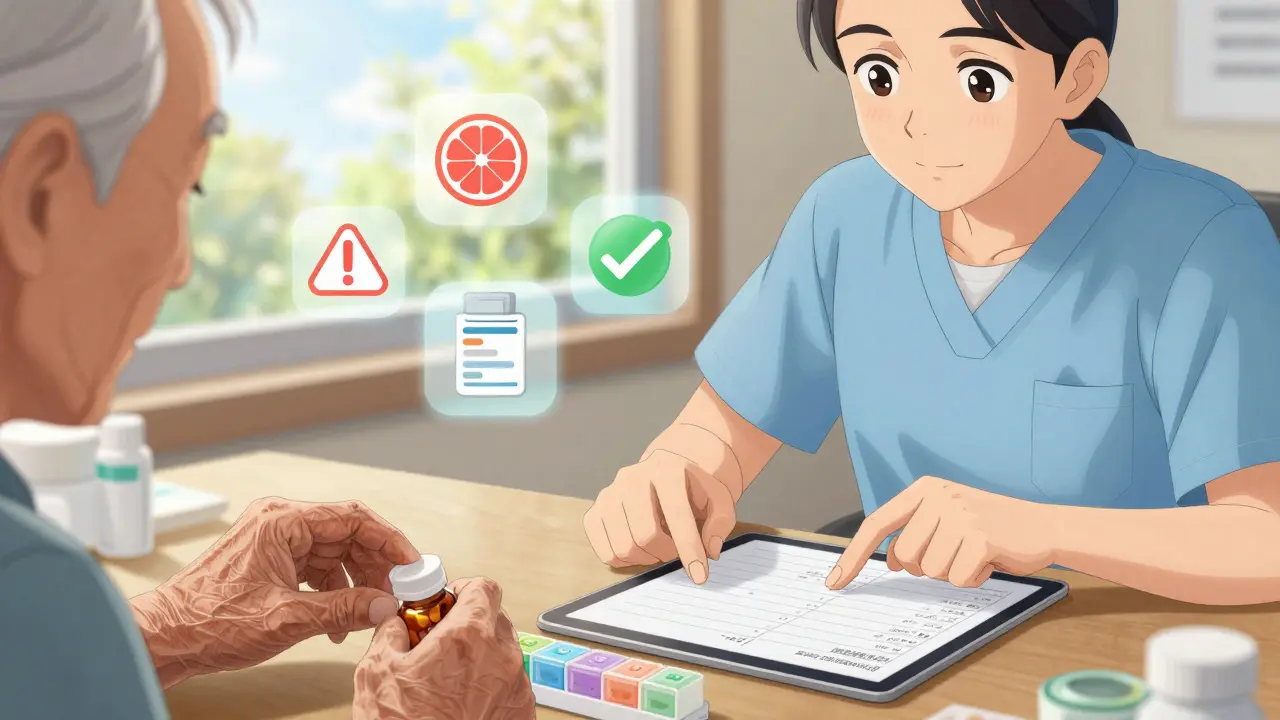
Preparation is the biggest factor in success. Don’t wait until the day of the appointment. Start three days before. Step 1: Gather every medication you take Bring the actual bottles-not just a list. The FDA found that 23% of medication errors come from inaccurate written lists. Check expiration dates. Note if you’ve skipped doses or changed how you take them. Step 2: Write down your symptoms Track when symptoms happen in relation to your meds. For example: “Dizziness started two days after starting the new blood pressure pill” or “Stomach upset always happens after taking the antibiotic at night.” Use a simple notebook or a free app like Medisafe. Step 3: Know your insurance Call your pharmacy or check your plan’s website 48 hours before the appointment. Ask: “Is this medication covered? Is there a cheaper generic?” CVS Health reports that 18% of prescriptions are delayed because coverage issues weren’t checked ahead of time. Step 4: Prepare your questions Use the “Ask Me 3” framework:- What is my main problem?
- What do I need to do?
- Why is it important?
What to Do During the Appointment
When you’re in the room, your advocate’s job is to listen, ask, and clarify. Use SBAR to structure questions SBAR stands for:- Situation: “I’m here because my mom has been dizzy since starting this new pill.”
- Background: “She’s on five medications, including warfarin and metformin.”
- Assessment: “We think the dizziness started two days after the new prescription.”
- Recommendation: “Can we check if this interacts with warfarin?”
- Dosage (e.g., “5 mg, not 50 mg”)
- Frequency (“once daily” vs. “twice daily”)
- Duration (“take for 10 days” vs. “take until gone”)
- Special instructions (“take with food,” “avoid grapefruit”)
What to Do After the Appointment
The appointment doesn’t end when you walk out. The real work begins after. Review notes immediately As soon as you get home, go over what was said. Did the doctor change anything? Did they say to stop a pill? Start a new one? Write it down. Create a visual medication schedule Take photos of each pill with its label. Print them out and tape them to a weekly chart. GoodRx found this reduces identification errors by 67%. Many older adults mix up pills because they look similar. A picture makes it impossible to confuse. Set up a “medication buddy” Pick someone to double-check doses with you once a week. It could be a neighbor, a home care worker, or even a pharmacy technician who calls to confirm. This simple step improves adherence by 41%, according to GoodRx’s 2023 study. Call the pharmacy Don’t assume the pharmacist got the same instructions. Call and say: “I just had an appointment. Can you confirm the dose and instructions for this new prescription?” Pharmacists are trained to catch errors-and they’re often the last line of defense.
What If the Doctor Says No?
Some providers still resist having someone else in the room. They might say: “HIPAA doesn’t allow it.” That’s false. The American Medical Association’s 2022 policy update (H-280.955.1) clearly states: patients have the right to bring an advocate to any appointment. And 92% of large health systems now require staff to accommodate this. If you’re turned away:- Politely say: “I’ve been told this is my right under federal policy. Can we please schedule a time when my advocate can join?”
- Ask to speak with a patient advocate or ombudsman.
- If you’re on Medicare, report it to Medicare.gov-their 2024 HEDIS guidelines now require providers to document advocate involvement in high-risk cases.
What’s Changed Recently
The rules around medication advocacy have gotten stronger. Since 2021, the American Rescue Plan funded patient navigation programs in 78% of Federally Qualified Health Centers. Medicare Advantage plans now offer some form of medication advocacy support to 62% of members-up from 38% in 2020. In January 2024, the American Pharmacists Association launched a new “Medication Advocate Certification” program. Over 4,200 pharmacists have already completed it. These aren’t just volunteers-they’re trained to spot dispensing errors, which cause 45% of medication mistakes. And now, Medicare’s Quality Payment Program requires doctors to document advocate involvement in patient records. If they don’t, they lose money. That’s a powerful incentive.Final Tip: Start Small
You don’t need to bring someone to every appointment. Start with the next one where you’re getting a new medication, changing a dose, or adding a new condition. That’s when the risk is highest. Bring your bottles. Write your questions. Ask for clarification. And if you’re unsure, ask again. There’s no such thing as a dumb question when it comes to your health.Can I bring someone to my medication appointment even if they’re not family?
Yes. Federal law and AMA policy protect your right to bring anyone you trust-whether they’re a friend, neighbor, professional advocate, or community health worker. You just need to give the provider verbal or written permission to discuss your health information with them. Many clinics have a simple form you can fill out ahead of time.
What if my advocate doesn’t speak English well?
You still have the right to bring them. But if communication is a barrier, ask the clinic for a free interpreter. Under the Affordable Care Act, healthcare providers receiving federal funds must offer language assistance. Don’t rely on family members to interpret medical info-it can lead to dangerous misunderstandings. Use the clinic’s official interpreter service instead.
Do I need to pay for a professional advocate?
Not necessarily. Professional advocates cost $75-$200 per hour, but many people don’t need one. Family members can be just as effective with basic training. Some Medicare Advantage plans now include free medication advocacy as a benefit. Check your plan’s website or call customer service. Nonprofits like the Patient Advocate Foundation also offer free guidance.
Can I bring an advocate to a telehealth appointment?
Absolutely. In fact, virtual visits make it easier. Your advocate can join from another room or even another city. Make sure they have access to your medication list and can hear clearly. Some platforms allow multiple people to join the call-ask the clinic ahead of time how to include them.
What if I’m afraid my advocate will make the doctor angry?
Most doctors appreciate advocates. They know patients forget details. A 2022 study from the University of Chicago showed that when advocates used structured communication (like SBAR), medication errors dropped by 63%. If a provider reacts negatively, it’s not about your advocate-it’s about their communication style. You have the right to be heard. If you feel disrespected, ask to speak with a supervisor or file a complaint through the clinic’s patient relations office.









Write a comment
Your email address will be restricted to us