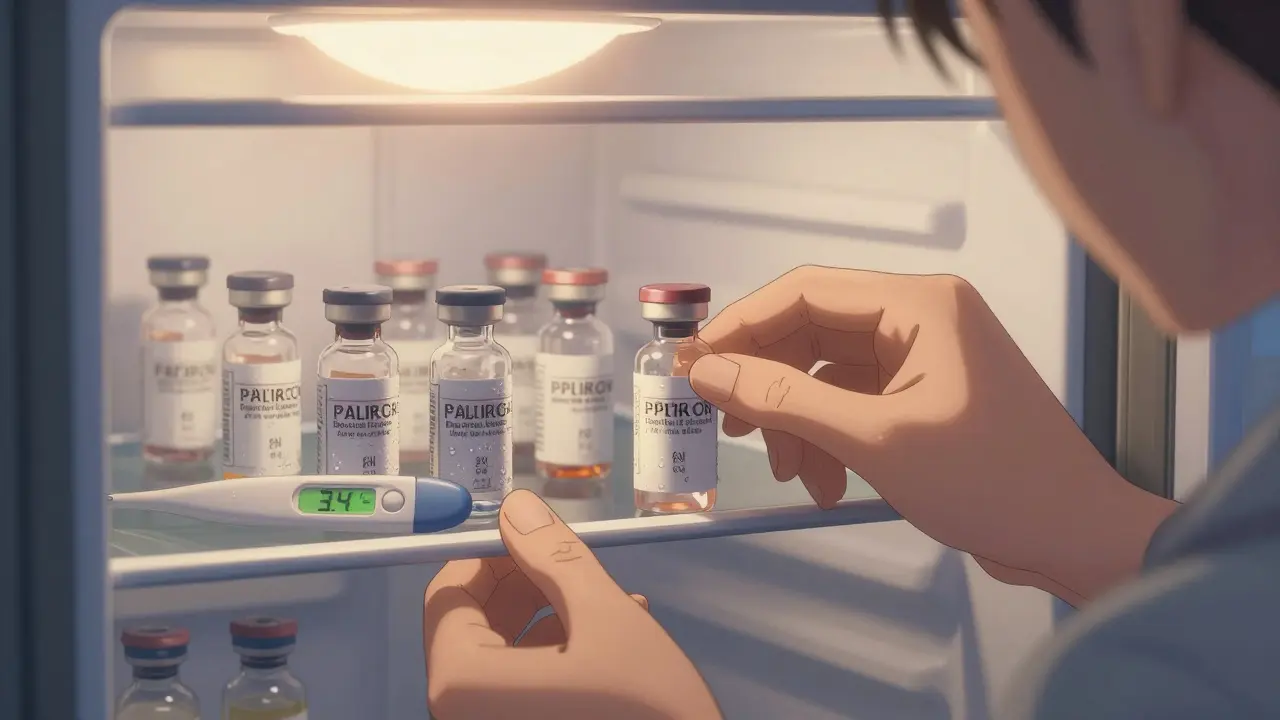
Did you know that leaving your insulin in the car on a warm day could make it useless - or even dangerous? It’s not just about keeping your meds cold. It’s about keeping them safe. If your medication needs refrigeration, getting it wrong can mean higher blood sugar, failed treatments, or worse. And most people have no idea how to do it right.
What Medications Actually Need to Be Refrigerated?
Not all meds need the fridge. But if yours does, it’s usually because it’s a biologic - a complex protein-based drug that breaks down easily. Common examples include:- Insulin (Lantus, Humalog, NovoLog, etc.)
- Biologics for autoimmune diseases (Remicade, Enbrel, Humira)
- Vaccines (flu shots, COVID boosters, shingles vaccine)
- Some antibiotics (like certain injectable forms)
- Injectable hormones (growth hormone, certain fertility drugs)
These aren’t pills you can stash in a drawer. They’re fragile. Heat, light, or freezing can wreck their structure. Once that happens, they won’t work - and you won’t know until it’s too late.
The Right Temperature: 2°C to 8°C (36°F to 46°F)
This isn’t a suggestion. It’s the official standard set by the U.S. Pharmacopeia, the FDA, and the WHO. Anywhere outside this range, and your medication starts losing power. Studies show some biologics can lose half their strength in just 24 hours at room temperature. Insulin exposed to 37°C (98.6°F) for two days? Up to 40% potency gone.But here’s the catch: your kitchen fridge isn’t designed for this. The back wall might be perfect - around 3.4°C. But the door? It can hit 11°C. That’s way too warm. And the freezer? Even a few minutes in there can freeze your insulin. Frozen insulin? It’s ruined. No thawing fixes it.
Where to Store Medications in Your Fridge
If you’re using your regular fridge, put your meds on the middle shelf - not the door, not the back wall. The door swings open, letting warm air in. The back wall can freeze things. The middle? It’s the sweet spot.Keep them in their original packaging. That protects them from light and gives you access to the expiration date and storage instructions. Don’t dump them into a random container. Don’t stack them under a gallon of milk. Keep them separate, visible, and easy to find.
Insulin: A Special Case
Insulin is the most common refrigerated medication. But its rules change after you open it.- Unopened: Always refrigerate between 2°C and 8°C.
- Opened: Can be kept at room temperature (up to 30°C) for 28 to 30 days. Check your specific brand - some last 14 days, others 42.
- Never freeze. Even if it looks normal after thawing, it’s damaged.
- Don’t use if cloudy or clumpy. Clear insulin should look clear. If it’s cloudy, grainy, or has particles, throw it out.
Many people think insulin lasts longer than it does. Manufacturers list conservative dates to cover liability. But if your blood sugar suddenly spikes without reason, old or warm insulin could be why.
What Happens When You Get It Wrong?
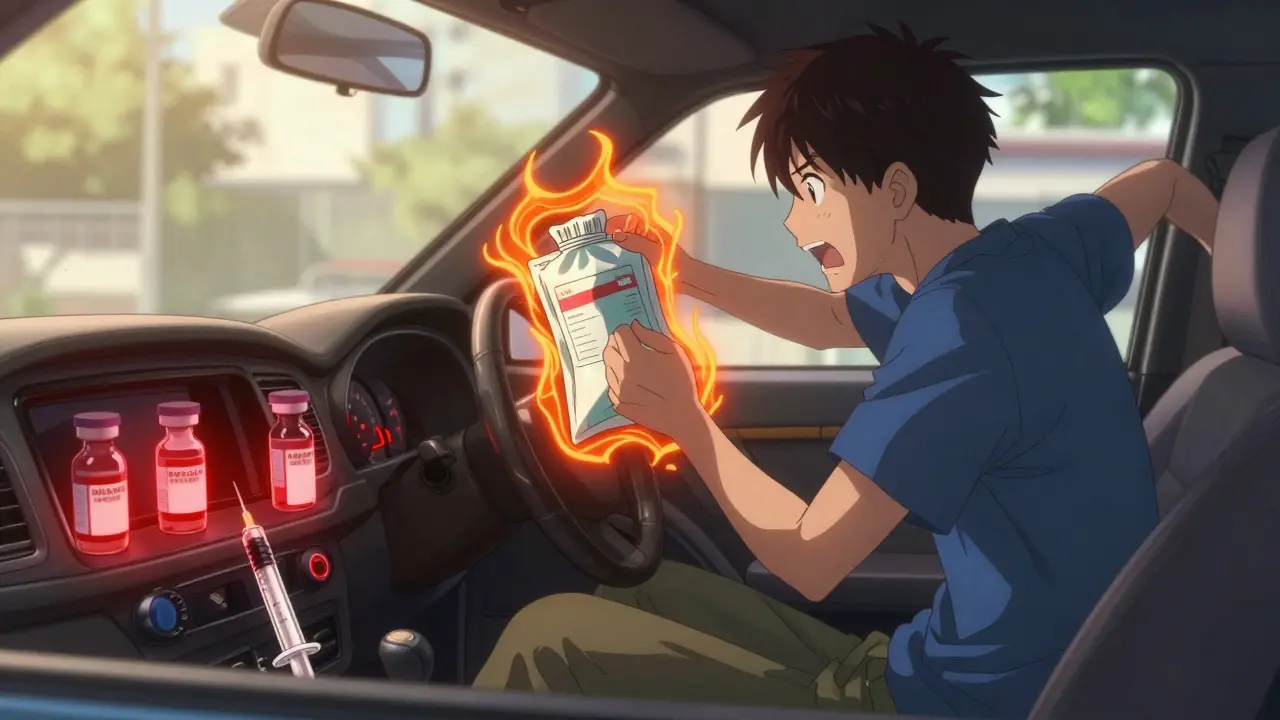
It’s not just about wasted money. Improper storage leads to real health risks.In 2021, the FDA documented a case where someone used insulin that had been left in a hot car. The result? Diabetic ketoacidosis - a life-threatening condition requiring hospitalization. That’s not rare. A 2023 GoodRx survey of 1,247 insulin users found that 68% had experienced at least one episode of unexplained high blood sugar they later linked to temperature issues.
And it’s not just insulin. Biologics like Humira or Enbrel can lose potency so fast that patients with rheumatoid arthritis or Crohn’s disease flare up without knowing why. They think the disease is worsening - when really, their meds are dead.
Household Fridges Are Not Reliable
A 2022 study in the Journal of the American Pharmacists Association tested 100 home refrigerators. Only 32% stayed within the 2°C-8°C range all day. The rest had spikes up to 10.2°C - and cold spots near freezing.That’s why 62% of patients say they don’t trust their fridge. And 58% admit they’ve never checked the temperature.
Here’s the fix: buy a standalone digital thermometer - the kind with a memory function. Put it in the fridge next to your meds. Check it once a week. If it goes above 8°C or below 2°C, move your meds immediately.
What About Traveling?
You can’t always carry your fridge with you. But you don’t have to risk it.- Use an insulated cooler with a cold pack (not ice - ice can freeze your meds).
- Look for travel kits like TempAid MediCool or MedCooler - they’re designed to hold 2°C-8°C for up to 48 hours.
- For flights, always carry meds in your carry-on. Checked baggage can freeze in the hold.
- For road trips, keep meds in the AC vent, not the glove box.
And if you’re flying? Bring a letter from your doctor. TSA doesn’t require it, but it helps avoid delays.
Power Outages? Here’s What to Do
If the power goes out, keep the fridge closed. A full fridge can stay cold for up to 24 hours. A half-full one? About 12 hours.Don’t open it unless you have to. If the outage lasts longer than 24 hours, and you don’t have a backup, move your meds to a cooler with ice packs. Don’t use dry ice - it’s too cold. Stick to gel packs designed for medicine.
And if you’re unsure? When in doubt, throw it out. It’s cheaper than a hospital visit.
Dedicated Medication Fridges: Worth It?
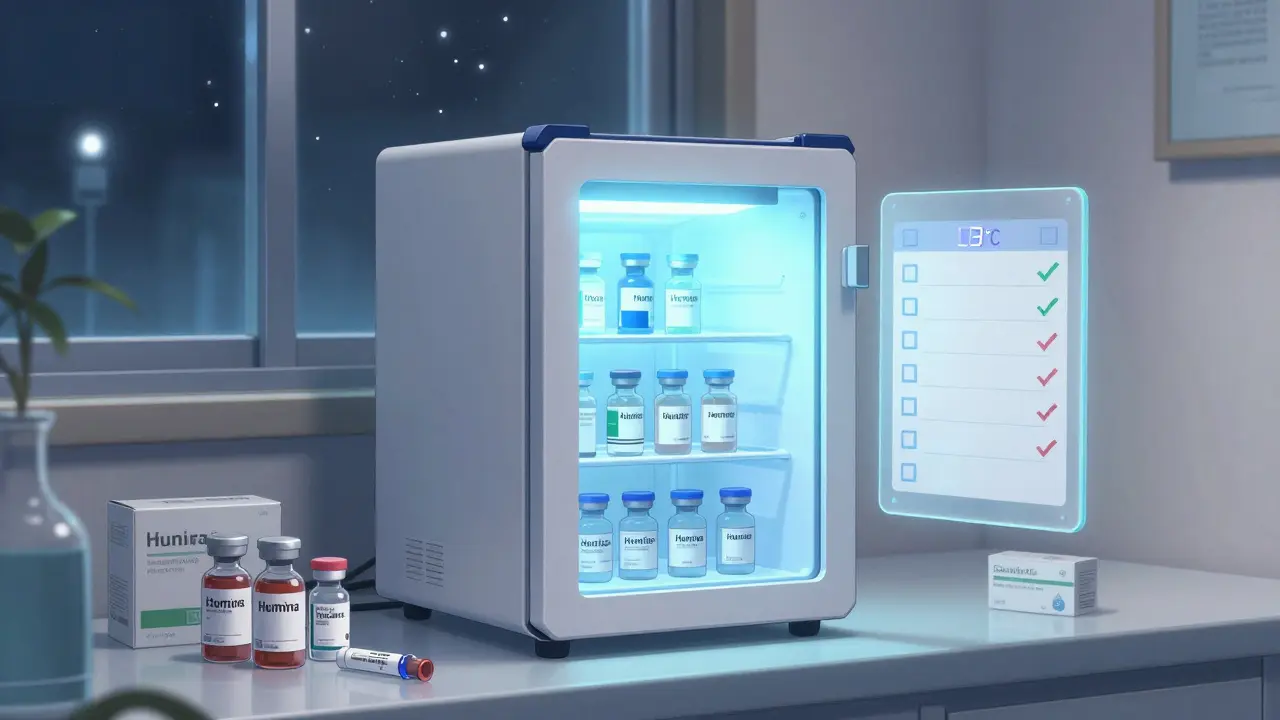
Yes - if you’re on multiple refrigerated meds, or if you’re on insulin and have had issues before.These aren’t your average mini-fridge. They’re designed for one thing: holding 2°C-8°C within ±1°C. Brands like Helmer Scientific and B Medical Systems have alarms that beep if the temp drifts. They’re expensive - $500 to $2,500 - but many insurance plans cover them if your doctor writes a letter.
For most people, a $150-$200 medical-grade fridge like the Whynter FM-50G is enough. It’s quiet, fits on a countertop, and keeps meds safe.
What About Vaccines?
Vaccines are the most temperature-sensitive of all. MMR, shingles, and flu shots can lose effectiveness in hours if left out. The CDC says 15-25% of vaccines stored at home experience temperature excursions.Always store vaccines in the middle shelf. Never store them with food. Use a dedicated fridge if you’re giving vaccines at home (like for children on special schedules). And always use a digital data logger - not a basic thermometer. The CDC updated its guidelines in March 2023 to require this.
What’s Changing in 2026?
Newer insulins are more stable. Novo Nordisk’s latest versions can handle 37°C for up to 7 days - that’s a big step forward. And Samsung just launched a refrigerator with a built-in “medication mode” that locks in 3°C-5°C.But don’t assume your meds are safe just because they’re new. Always check the label. Manufacturers still warn against heat and freezing - and for good reason.
By 2030, the American Society of Health-System Pharmacists predicts 30% of all prescriptions will need refrigeration. That means more people will need to learn this. Don’t wait until it’s too late.
Final Checklist: Are You Storing Your Meds Right?
- Is your medication on the middle shelf - not the door?
- Do you know the exact temperature range for your drug? (2°C-8°C)
- Have you checked your fridge’s temperature with a digital thermometer this week?
- Are you using original packaging with expiration dates visible?
- Do you know how long your opened meds last at room temperature?
- Do you have a backup plan for power outages or travel?
- Have you thrown out cloudy, clumpy, or frozen meds?
If you answered “no” to any of these, fix it today. Your health depends on it.
Can I store my insulin in the freezer to make it last longer?
No. Freezing insulin permanently damages its structure. Even if it thaws and looks normal, it won’t work properly. Once frozen, throw it away. Never use it.
How do I know if my insulin has gone bad?
Clear insulin should look like water. If it’s cloudy, has clumps, or looks grainy, it’s damaged. Also, if your blood sugar spikes without reason, or you need more than usual, your insulin may have lost potency. When in doubt, replace it.
Can I leave my biologic medication in the car for an hour?
No. Even a short time in a hot car can destroy biologics. Temperatures inside a parked car can hit 50°C (122°F) in summer. That’s enough to ruin your medication in under 30 minutes. Always bring it inside with you.
Do I need a special fridge for my meds?
You don’t *need* one, but if you take multiple refrigerated drugs, or have had problems with temperature, it’s worth it. A basic medical fridge costs $150-$200 and gives you peace of mind. Your health is worth the investment.
What should I do if my meds were left out overnight?
If it was above 8°C for more than 24 hours, or below 0°C, assume it’s damaged. Contact your pharmacist or doctor. Don’t use it. For insulin or biologics, it’s safer to replace it than risk a health crisis.
Can I use ice packs to keep my meds cold while traveling?
Yes - but not regular ice. Use gel packs designed for medications, or phase-change materials that stay between 2°C and 8°C. Regular ice can freeze your meds. Always use an insulated cooler, and check the temperature before using the medication.







Write a comment
Your email address will be restricted to us