
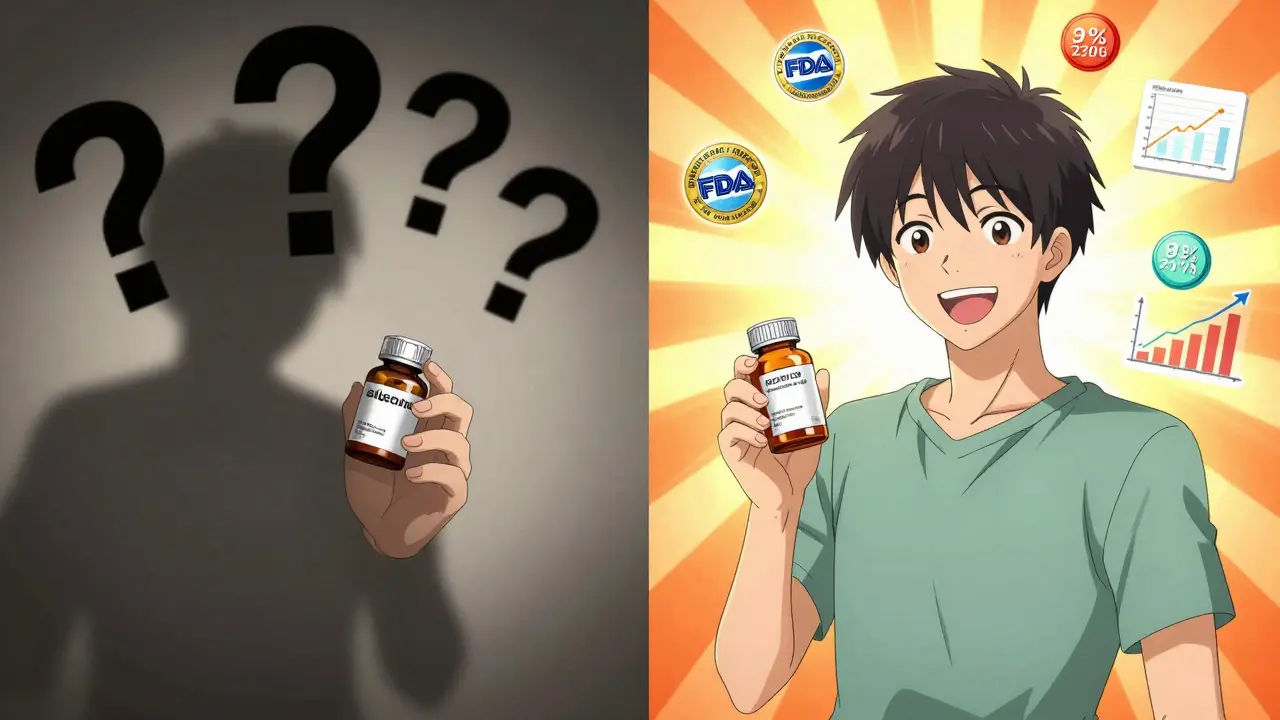
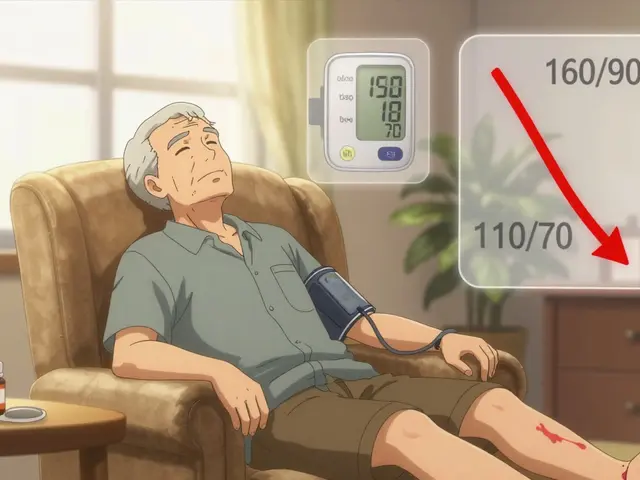
When you pick up a prescription, you might see two options: the brand-name pill you’ve always taken, or a cheaper generic version. Many people wonder - does switching to a generic drug change how it interacts with other medications you’re taking? Is the risk of dangerous side effects higher? The short answer: no. For the vast majority of drugs, the risk of interactions is exactly the same whether you take the brand or the generic.
Why the confusion exists
It’s easy to see why people worry. Generic drugs look different. They have different shapes, colors, and sometimes even different names. They cost less. And you hear stories - someone switched to a generic blood pressure pill and felt dizzy, or a generic antidepressant made them more sleepy than the brand. These experiences feel real. But here’s the thing: those differences aren’t usually caused by the active drug itself. The active ingredient - the part that actually treats your condition - is identical in both brand and generic versions. If your brand-name drug contains 10 mg of lisinopril, so does the generic. The same goes for metformin, simvastatin, or sertraline. That’s not a guess. It’s a legal requirement enforced by the U.S. Food and Drug Administration (FDA). To get approval, a generic drug must prove it delivers the same amount of active ingredient into your bloodstream at the same rate as the brand. This is called bioequivalence. The FDA requires generics to fall within 80% to 125% of the brand’s absorption levels. That sounds wide, right? But in practice, most generics are within 5% of the original. The goal isn’t perfection - it’s consistency. If two drugs get the same job done in your body, they’ll interact with other drugs the same way.What actually causes drug interactions
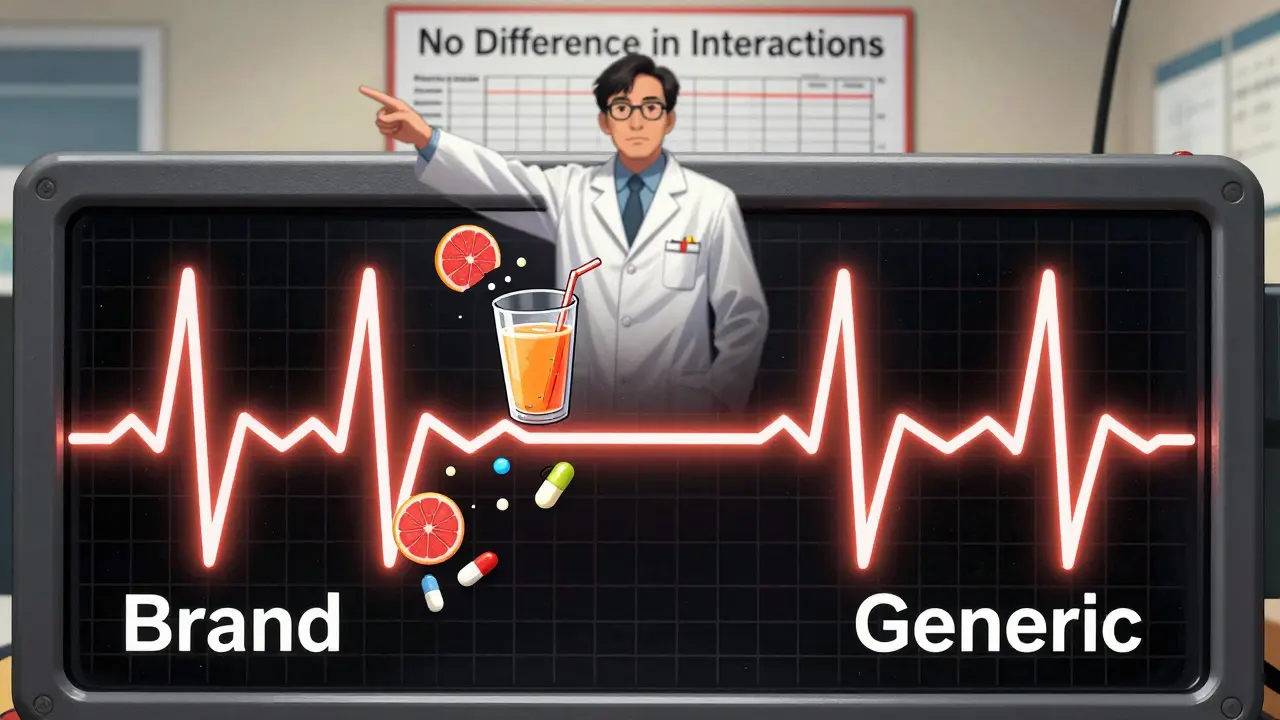
Drug interactions happen because of chemistry - not branding. They occur when one substance changes how your body absorbs, breaks down, or uses another drug. For example:- Grapefruit juice can block enzymes that break down statins, causing dangerous buildup.
- Antibiotics like clarithromycin can slow the metabolism of blood thinners like warfarin.
- St. John’s wort can reduce the effectiveness of birth control pills and antidepressants.
What about those inactive ingredients?
This is where things get tricky - but not dangerous for most people. Generics can use different fillers, dyes, preservatives, or binders. These are called excipients. They don’t treat your condition. But they can cause issues in rare cases. For example:- A generic version of a pill might contain lactose. If you’re severely lactose intolerant, you could get bloating or diarrhea - not a drug interaction, but a reaction to the filler.
- Some generics use different dyes. If you’re allergic to a specific dye (like FD&C Yellow No. 5), you might get a rash.
- One generic might use a slower-releasing coating, which could slightly delay absorption - but not enough to change how it interacts with other drugs.
What about narrow therapeutic index drugs?
There’s one group of drugs where even tiny changes matter: drugs with a narrow therapeutic index (NTI). These are medications where the difference between a safe dose and a toxic one is very small. Examples include:- Warfarin (blood thinner)
- Levothyroxine (thyroid hormone)
- Phenytoin (seizure medication)
- Cyclosporine (organ transplant drug)
What do the numbers say?
Let’s look at real data:- The FDA’s Adverse Event Reporting System (FAERS) from 2015 to 2020 showed 0.78% of brand-name drug cases reported interaction-related side effects. For generics, it was 0.82%. The difference wasn’t statistically meaningful.
- A 2022 survey by Consumer Reports found 18% of people believed generics had higher interaction risks - but only 4% had actually experienced a change after switching.
- On Reddit’s r/pharmacy community, 68% of users said they noticed no difference between brand and generic interactions. Only 22% reported changes - and many of those were later traced to placebo effects or unrelated lifestyle changes.
What do experts say?
Dr. Aaron Kesselheim, a professor at Harvard Medical School, summed it up in JAMA Internal Medicine: “The vast majority of evidence suggests that generic drugs are therapeutically equivalent to their brand-name counterparts, including regarding drug interaction profiles.” The FDA’s Center for Drug Evaluation and Research states clearly: “Differences in inactive ingredients are not expected to affect how the drug works or cause different drug interactions.” Even Dr. Philip Garrison from UCSF, who’s cautious about excipients, agrees: “Allergic reactions may occur because of different fillers - but that’s not a drug interaction. The way the active ingredient behaves in your body? That’s unchanged.”What should you do?
If you’re considering switching from brand to generic:- Ask your pharmacist to confirm the active ingredient matches.
- Check the label for common allergens like lactose, gluten, or dyes if you have known sensitivities.
- Don’t panic if you feel slightly different at first - give it two weeks. Many reported side effects fade as your body adjusts.
- If you’re on a narrow therapeutic index drug (like warfarin or levothyroxine), ask your doctor to monitor your levels after switching.
- Never stop or change your dose without talking to your provider.
Why this matters
Generic drugs save the U.S. healthcare system over $1.6 trillion a decade. That’s billions in out-of-pocket savings for patients. If people avoid generics out of fear of interactions, they’re not just paying more - they’re risking their health by skipping doses or not filling prescriptions at all. The science is clear: the risk of drug interactions doesn’t increase with generics. The active ingredient is the same. The interaction profile is the same. The safety is the same. What changes is the price - and that’s a good thing.Are generic drugs as safe as brand-name drugs when it comes to interactions?
Yes. Generic drugs contain the same active ingredient as brand-name drugs, and they’re required by the FDA to be bioequivalent. This means they work the same way in your body and interact with other medications in the same way. The risk of drug interactions is not higher with generics.
Can different generic versions of the same drug have different interaction risks?
Not from the active ingredient. All approved generics must meet the same bioequivalence standards. However, if you switch between two different generic manufacturers, you might notice slight differences in how fast the drug is absorbed - but this rarely affects interaction risks. For drugs with a narrow therapeutic index (like warfarin or levothyroxine), your doctor may recommend sticking with one manufacturer to avoid small fluctuations.
Why do some people feel worse after switching to a generic?
Most often, it’s not the drug itself. Differences in inactive ingredients (like dyes or fillers) can cause minor side effects - such as stomach upset or skin rashes - in people with allergies or sensitivities. Sometimes, it’s psychological. Studies show that when people expect a generic to be less effective, they may report more side effects - even if there’s no real change. This is called the nocebo effect. Give it time. If symptoms persist, talk to your pharmacist or doctor.
Do generics have more side effects than brand-name drugs?
No. Large studies, including one published in Scientific Reports analyzing over 17,000 patients, found that generic drugs had similar or even lower rates of adverse events compared to brand-name versions. Side effects are tied to the active ingredient, not the brand. The FDA and European regulators have found no evidence that generics cause more side effects.
Should I avoid generics if I’m on multiple medications?
No. If you’re on multiple medications, generics are still safe. Drug interactions depend on the active ingredients you’re taking - not whether they’re generic or brand. Your pharmacist can check for potential interactions regardless of the brand. In fact, using generics can improve adherence, meaning you’re more likely to take your meds as prescribed - which reduces overall risk.






Write a comment
Your email address will be restricted to us