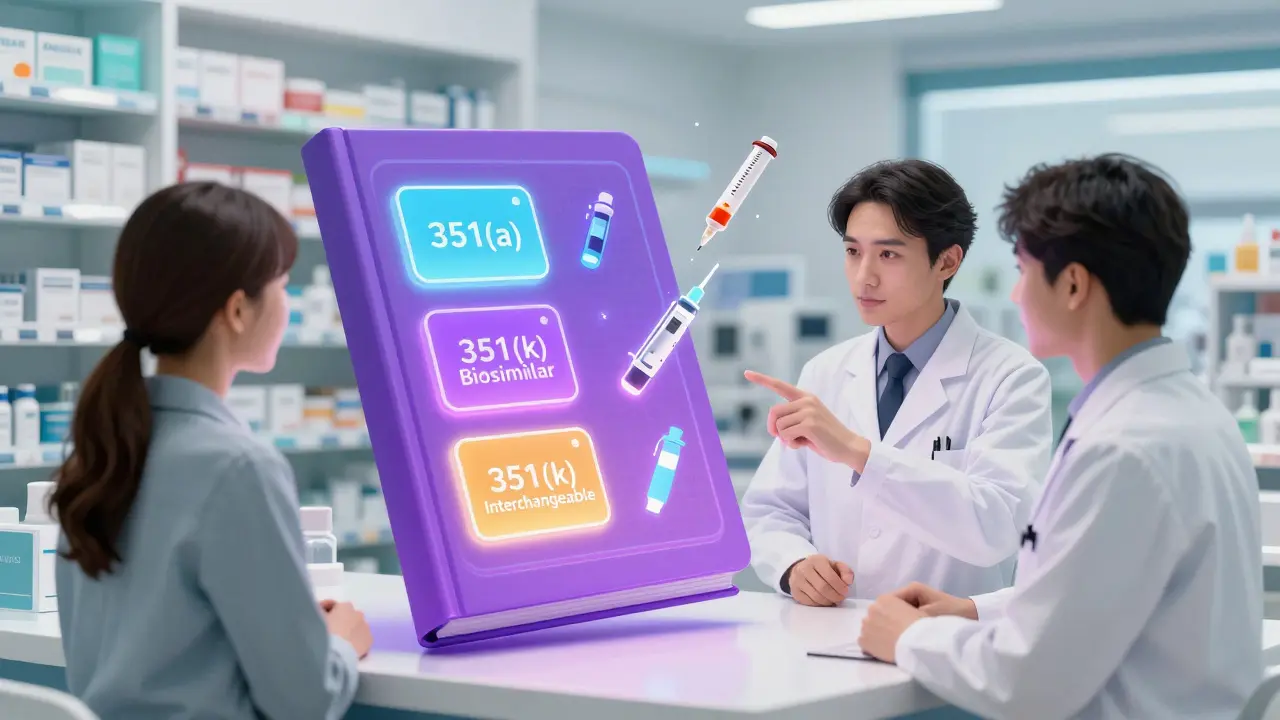
The Purple Book isn’t a book you read cover to cover. It’s a living, searchable database run by the FDA that tells you exactly which biological medicines are approved, which ones are biosimilars, and which ones can be swapped out like generics. If you’re a pharmacist, a doctor, or even a patient trying to understand why your insulin changed, this is the tool that clears up the confusion.
What the Purple Book Actually Is
The Purple Book is the FDA’s official list of all licensed biological products in the U.S. That includes everything from insulin and rheumatoid arthritis drugs to vaccines and cancer treatments. But it doesn’t just list names. It tells you which ones are the original reference products, which ones are biosimilars, and which ones have been approved as interchangeable. Before 2020, this information was split across two separate lists-one for drugs handled by CDER and another for biologics handled by CBER. That made it messy. Now, it’s one clean, searchable database. You can type in a drug name like "Humira" or "Enbrel," and instantly see all the biosimilars linked to it, along with their status. The color-coded product cards make it easy: same color means they’re tied to the same reference product. No guesswork.Biosimilar vs. Interchangeable: The Key Difference
Not all biosimilars are created equal. A biosimilar is a biological product that’s highly similar to an approved reference product. The FDA says there are no clinically meaningful differences in safety, purity, or potency. That means it works the same way. But being a biosimilar doesn’t mean you can swap it in automatically at the pharmacy. Interchangeable is the higher bar. An interchangeable biosimilar has passed extra tests proving that switching back and forth between it and the original product won’t increase risk or reduce effectiveness. Imagine a patient gets the reference drug for six months, then switches to the biosimilar for another six. Then they switch back. The FDA requires data showing that their response stays consistent through all those switches. That’s not required for regular biosimilars. Think of it this way: all interchangeable products are biosimilars, but only a few biosimilars are interchangeable. As of late 2023, only seven products had earned that designation. Two are insulin products. Three treat inflammatory conditions like Crohn’s or psoriasis. Two are for eye diseases. Each one had to clear a higher scientific hurdle.Why Interchangeability Matters at the Pharmacy
Here’s where it gets real for patients. If a drug is labeled as interchangeable, a pharmacist can substitute it for the brand-name product without asking the doctor-just like swapping generic aspirin for brand-name. But only if state law allows it. That’s the catch. The FDA gives the federal green light for interchangeability. But each state sets its own rules for what pharmacists can do. As of 2023, 47 states and Puerto Rico let pharmacists substitute interchangeable biosimilars without contacting the prescriber. The rest require a doctor’s approval or extra paperwork. Some states require the patient to be notified. Others require the substitution to be documented in the pharmacy record. This patchwork system creates confusion. A patient in Texas might get an interchangeable biosimilar automatically. The same patient in New York might need a new prescription. The Purple Book doesn’t change state laws. It just gives pharmacists the facts they need to follow them.
How the Purple Book Helps You Make Decisions
For healthcare providers, the Purple Book answers three questions: Is this drug approved? Is it a biosimilar? Is it interchangeable? That’s it. No marketing fluff. No corporate spin. Just FDA data. If you’re a pharmacist checking a prescription, you can look up the brand name and instantly see which biosimilars are approved and which ones you’re legally allowed to swap. If you’re a doctor prescribing a biologic, you can see which alternatives are available and whether they’re interchangeable. If you’re a patient, you can ask your pharmacist: "Is this biosimilar interchangeable?" and they can check the Purple Book right then and there. The database also shows when a product was licensed, whether it’s protected by exclusivity, and how it’s delivered-autoinjector, pre-filled syringe, vial. That’s useful for patients who need specific delivery methods.What the FDA Says About Safety and Effectiveness
There’s a myth that interchangeable biosimilars are "better" than non-interchangeable ones. They’re not. The FDA is clear: interchangeability doesn’t mean safer or more effective. It just means you can switch between them without added risk. The approval process for both biosimilars and interchangeable products is rigorous. Both go through extensive lab testing, clinical trials, and real-world data review. The only difference is the switching studies required for interchangeable status. These studies look at what happens when a patient alternates between the reference product and the biosimilar over time. The data must show no drop in effectiveness or rise in side effects. The FDA also warns against calling interchangeable biosimilars "unbranded biologics." That’s not a legal term. An unbranded biologic is just a version without a brand name-it’s not necessarily interchangeable. Only products marked as "351(k) Interchangeable" in the Purple Book have earned that status.
What’s Next for Biosimilars and the Purple Book
More companies are applying for interchangeable status. The pipeline is growing, especially for insulin, autoimmune drugs, and eye treatments. The FDA is updating its guidance on labeling to make sure the names and information on packaging are clear and consistent. That’s important because patients and providers need to know exactly what they’re getting. As more interchangeable biosimilars enter the market, the cost savings could be huge. Biological drugs are expensive-some cost over $100,000 a year. Biosimilars can cut that by 15% to 35%. Interchangeable ones could drive even deeper discounts by allowing automatic substitution, just like generic pills. But adoption depends on education. Many prescribers still don’t know how the Purple Book works. Pharmacists need training on state laws. Patients need to understand that a biosimilar isn’t a "cheap copy." It’s a scientifically proven alternative. The Purple Book is the foundation. It doesn’t solve everything. But without it, there’s no way to know what’s approved, what’s interchangeable, or what’s safe to use.How to Use the Purple Book
You don’t need special training. Go to the FDA’s website and search for "Purple Book." The database is free and open to the public. Here’s how to use it:- Search by the brand name of the reference product (like "Humira" or "Enbrel").
- Look for the product cards. Same color = same reference product.
- Check the designation: "351(a)" means the original. "351(k) Biosimilar" means it’s similar. "351(k) Interchangeable" means it can be swapped.
- Click on a product to see its approval date, exclusivity status, and delivery method.
- Use the filters to narrow results by manufacturer, therapeutic area, or status.
What is the Purple Book and why does it matter?
The Purple Book is the FDA’s official database of all approved biological products, including biosimilars and interchangeable products. It matters because it tells doctors, pharmacists, and patients which biologics are approved, which ones are biosimilars, and which ones can be legally substituted at the pharmacy. Without this tool, there’s no clear way to know what options are available or what’s allowed under federal and state law.
Is every biosimilar interchangeable?
No. All interchangeable products are biosimilars, but not all biosimilars are interchangeable. To be interchangeable, a product must prove through clinical studies that switching between it and the original drug multiple times doesn’t increase risk or reduce effectiveness. Only seven products had this designation as of late 2023. Most biosimilars are approved for use but can’t be automatically substituted without a doctor’s approval.
Can pharmacists substitute interchangeable biosimilars without asking the doctor?
It depends on the state. The FDA approves interchangeability at the federal level, but state pharmacy laws control what pharmacists can do. As of 2023, 47 states and Puerto Rico allow pharmacists to substitute interchangeable biosimilars without contacting the prescriber. In the other states, the pharmacist may need to get permission from the doctor, notify the patient, or fill out extra paperwork. Always check your state’s rules.
Are interchangeable biosimilars safer or more effective than regular biosimilars?
No. The FDA explicitly states that interchangeable designation does not mean a product is safer or more effective. Both biosimilars and interchangeable biosimilars must meet the same high standards for similarity to the reference product. The only difference is that interchangeable ones have extra data proving you can switch back and forth without harm. They’re not better-they’re just approved for automatic substitution.
How often is the Purple Book updated?
The FDA updates the Purple Book regularly-usually every few weeks-as new products are approved or status changes occur. It’s a live database, not a static list. If you’re using it for clinical or pharmacy decisions, always check the latest version on the FDA website. Don’t rely on old printouts or screenshots.
Can I use the Purple Book to find cheaper alternatives to my biologic drug?
Yes. If you’re on a brand-name biologic like Humira or Enbrel, you can search the Purple Book to see which biosimilars are approved for it. If any are labeled as interchangeable, those may be available as automatic substitutions at your pharmacy. Even non-interchangeable biosimilars are often less expensive. Talk to your doctor or pharmacist about whether switching is an option for you.
What’s the difference between a biosimilar and a generic drug?
Generics are exact copies of small-molecule drugs like aspirin or metformin. Biosimilars are highly similar to complex biological drugs made from living cells, like insulin or antibodies. Because biological products are much more complex, biosimilars can’t be exact copies-they’re "highly similar" with minor differences in inactive ingredients. That’s why they need special approval pathways and why not all are interchangeable. Generics don’t require clinical studies to prove equivalence; biosimilars do.
Does the Purple Book include vaccines and gene therapies?
Yes. The Purple Book includes all FDA-licensed biological products, regardless of therapeutic area. That means vaccines, cellular and gene therapies, blood products, and allergen extracts are all listed. The database is organized by the center that approved them-CDER for most drugs, CBER for biologics like vaccines and gene therapies-but they’re all searchable in one place.






Write a comment
Your email address will be restricted to us