REMS Requirement Simulator
Risk Assessment Tool
Loading assessment...
Assessment Result:
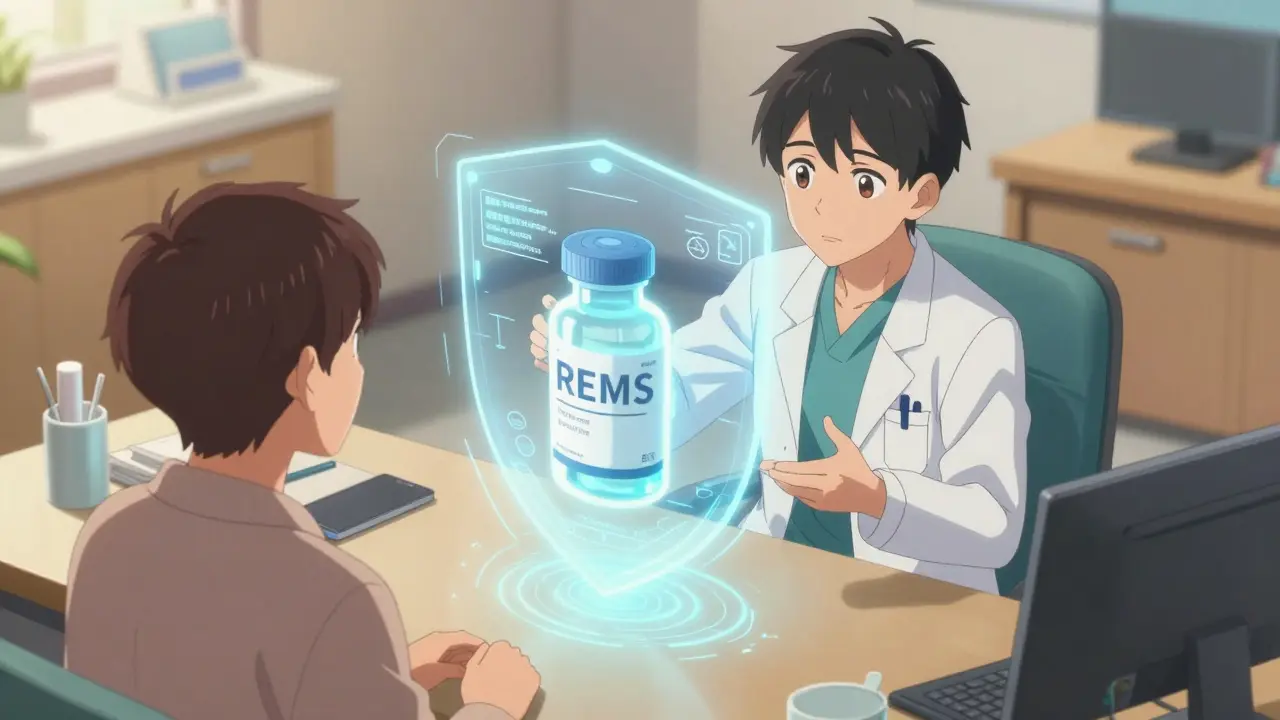
If you've ever wondered why some prescriptions require a special registry, a certified doctor, or a specific clinic for administration, you've encountered a REMS program. It isn't about eliminating risk-which is often impossible for life-saving drugs-but about managing it so patients stay safe while getting the treatment they need.
How REMS Differs From Standard Drug Labels
Most medications follow a standard path: the FDA reviews the data, approves the drug, and requires a label that lists potential side effects. For about 95% of approved drugs, this is sufficient. However, some drugs are too dangerous to leave to a simple piece of paper.
While standard labeling is passive-telling you what *might* happen-REMS is active. It doesn't just communicate risk; it creates a system to prevent that risk from becoming a reality. For instance, whereas a label might say "do not take during pregnancy," a REMS program for a drug like Isotretinoin (used for severe acne) might require the patient, the doctor, and the pharmacist to all verify the patient's pregnancy status through a secure portal before a single pill is dispensed. This is the core of the 2007 Food and Drug Administration Amendments Act (FDAAA), which formalized these requirements to protect public health.
The Core Components of a REMS Strategy
Not every REMS program looks the same. The FDA tailors the requirements based on the drug's specific dangers, the population using it, and the expected benefit. Depending on the risk, a program might include one or several of these elements:
- Medication Guides: Paper handouts given to patients that explain the most serious risks in plain language.
- Communication Plans: Specific educational materials sent to healthcare providers to ensure they know how to spot and treat adverse reactions.
- Elements to Assure Safe Use (ETASU): These are the "heavy lifting" requirements. They might include mandatory prescriber certification, requiring the drug be dispensed only in certain settings (like hospitals), or requiring patients to undergo regular lab tests.
Take Zyprexa Relprevv as a concrete example. Because this antipsychotic carries a risk of post-injection delirium sedation syndrome, the FDA requires it to be administered only in certified facilities. Patients must be observed for at least three hours after the shot to ensure they don't enter a coma or suffer from severe delirium. A warning label cannot enforce a three-hour observation period; a REMS program can.
| Feature | Standard Labeling | REMS Programs | EU Risk Management Plans (RMP) |
|---|---|---|---|
| Scope | Almost all approved drugs | Select high-risk drugs | All new medicines |
| Approach | Informational (Passive) | Interventional (Active) | Systemic monitoring |
| Requirement | Patient/Doctor reads label | Certification, Registries, Lab tests | Standardized safety reports |
| Responsibility | FDA / Prescriber | Pharmaceutical Sponsor | Manufacturer |
The Real-World Impact on Patients and Doctors
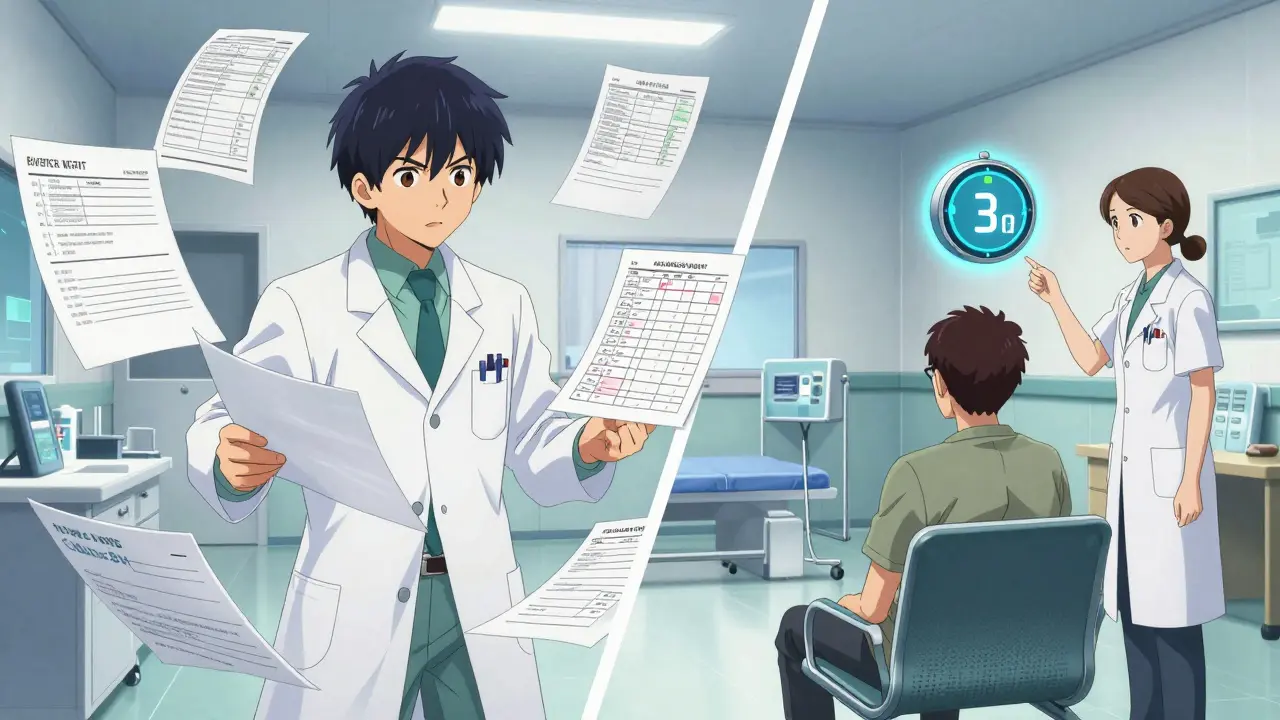
While the goal is safety, these programs aren't without friction. In a 2022 survey of 1,250 physicians, the American Medical Association found that 68% of doctors reported delays in starting medications because of REMS requirements. In some cases, these delays aren't just annoying-they can actually hurt patient outcomes.
Pharmacists often feel the brunt of this administrative weight. Managing a drug like Clozapine-which requires weekly blood monitoring for the first six months-can add several hours of paperwork to a pharmacist's week. Many professionals on forums like Reddit have described the iPLEDGE program for acne as a "nightmare" due to the multiple verification steps that can delay treatment by up to a week.
For people with rare diseases, the burden is even higher. The National Organization for Rare Disorders (NORD) has pointed out that these programs often ignore the reality of patients who have to travel hundreds of miles to see a specialist. When a REMS program requires a specific clinic visit or a timed registration, it can create a massive barrier for someone who already struggles with transportation and scheduling.
How the FDA Decides Which Drugs Need REMS
The FDA doesn't just guess which drugs need a REMS program. They use a specific set of criteria to decide if a drug's risk profile justifies the administrative burden. Key factors include:
- The seriousness of the potential adverse event: Will the side effect be a mild rash or a permanent birth defect?
- Background incidence: How common is this risk in the target population?
- Therapeutic benefit: Is the drug treating a mild condition or a terminal illness?
- Treatment duration: Is this a one-time dose or a lifelong commitment?
Interestingly, the FDA is now moving toward a "sunset" approach. In August 2023, the agency removed the REMS requirements for Thalidomide after 20 years. They decided that because the medical community now understands the risks so well, the formal REMS structure was no longer necessary. This shows that REMS is intended to be a bridge to safety, not necessarily a permanent hurdle.

The Future of Risk Mitigation: Digital Health
The pharmaceutical industry spends about $1.2 billion annually on REMS, but much of that is spent on outdated manual processes. As of 2023, only 35% of these programs are integrated directly into Electronic Health Records (EHR). This means doctors are often jumping between a patient's medical chart and a separate REMS web portal, which leads to errors and frustration.
To fix this, the FDA's 2024-2026 Strategic Plan focuses on modernization. We are seeing the start of pilot programs that use smartphone apps for real-time patient monitoring, specifically for certain anticoagulant medications. Instead of a patient filling out a paper log, an app can track their data and alert the provider immediately if a risk threshold is hit.
We can also expect to see more REMS programs in the oncology space. Analysts at Evaluate Pharma project that by 2027, nearly 45% of new cancer drugs will require some form of REMS. As therapies become more targeted and potent, the risk profiles become more complex, making active mitigation more important than ever.
Does a REMS program mean a drug is unsafe?
Not necessarily. It means the drug has specific, serious risks that can be managed. The FDA approves these drugs because the benefit of treating the condition outweighs the risk, provided that the REMS safeguards are followed. Many life-saving medications have REMS programs.
Who is responsible for running a REMS program?
The responsibility falls on the product sponsor, which is the pharmaceutical company that makes the drug. They must develop, implement, and maintain the program and provide regular reports to the FDA to prove the program is actually working.
What happens if a company doesn't follow REMS rules?
The FDA enforces compliance strictly. They can issue warning letters or impose heavy fines. For example, in 2022, a generic drug manufacturer paid a $2.1 million settlement for failing to properly implement a REMS program for Clozapine.
Can a doctor prescribe a REMS drug if they aren't certified?
If the program includes "Elements to Assure Safe Use" (ETASU) that require prescriber certification, then no. The pharmacist will be unable to dispense the medication unless the prescriber's certification is verified in the REMS system.
Are generic drugs subject to REMS?
Yes. If the active ingredient requires a REMS program, it applies to both the brand-name version and any approved generic versions of that medication.
Next Steps for Healthcare Providers and Patients
If you are a provider starting a patient on a REMS-required drug, the best move is to check the FDA REMS Dashboard early. Don't wait until the day of the appointment to find out you need a two-hour certification course. Integrating the registration process into your onboarding workflow can prevent the 5-day delay often seen with these medications.
For patients, be proactive. Ask your doctor exactly what the REMS requirements are-whether it's a monthly blood test or a registry sign-up-and keep a folder of your verification documents. This helps avoid the "pharmacy bottleneck" where a prescription is held up because a single piece of verification is missing.







Write a comment
Your email address will be restricted to us