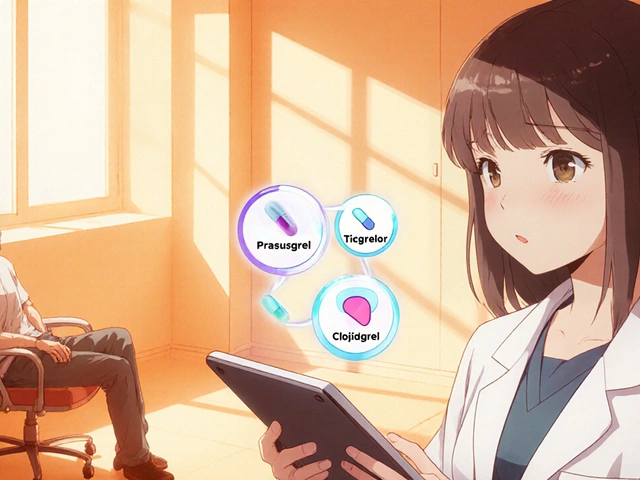
Imagine waking up with a throbbing headache, your eyes burning in bright light, and vision that looks like it’s seen through frosted glass. For the fewer than 200,000 people in the United States living with autoimmune uveitis, a chronic inflammatory condition of the eye caused by the immune system attacking healthy tissue, this is not a hypothetical scenario-it is daily reality. This rare condition, classified as an orphan disease, poses a unique challenge for doctors and patients alike. The standard treatment works fast, but staying on it long-term can damage your eyes even more. That is why understanding steroid-sparing therapy, treatment strategies designed to reduce or eliminate the need for corticosteroids while controlling inflammation is critical for preserving your sight.
The Hidden Threat of Autoimmune Eye Inflammation
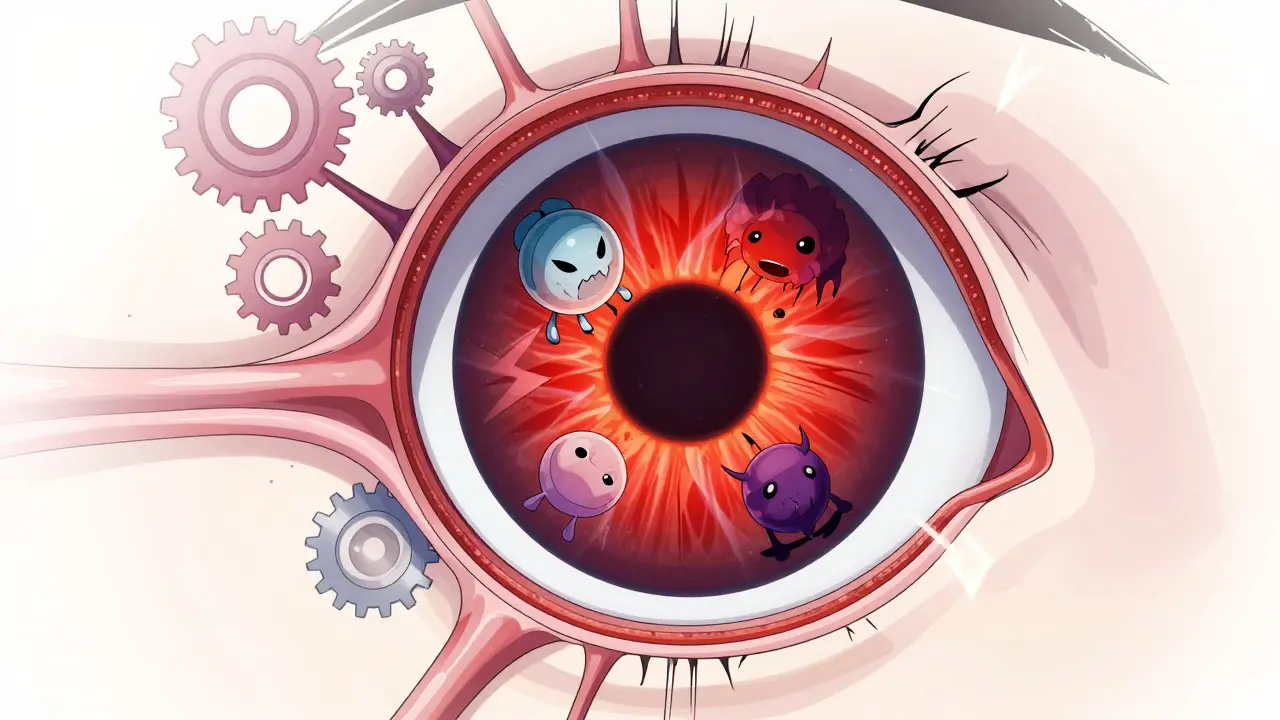
To understand why treatment is so complex, you first have to look at what is happening inside the eye. The uvea is the middle layer of your eye, responsible for providing blood supply. In autoimmune uveitis, your body’s defense system mistakenly identifies proteins in this layer as foreign invaders. It launches an attack, causing swelling, pain, and redness. This isn’t just a surface irritation; it is a deep-seated biological error.
This condition rarely travels alone. It is often linked to systemic autoimmune diseases. If you have been diagnosed with ankylosing spondylitis, rheumatoid arthritis, multiple sclerosis, lupus, Crohn’s disease, psoriasis, or sarcoidosis, your risk of developing uveitis increases significantly. Even Kawasaki disease in children can trigger this response. Recognizing these connections is vital because treating the eye in isolation often fails if the underlying systemic issue is ignored.
Symptoms can sneak up on you or hit suddenly. You might notice:
- Persistent eye redness and swelling
- Sharp pain, especially when moving your eyes
- Blurred vision or the appearance of floaters
- Extreme sensitivity to light (photophobia)
- Headaches that don’t go away with typical painkillers
If left untreated, the consequences are severe. The inflammation can lead to cataracts, glaucoma, retinal detachment, and permanent vision loss. Early detection is not just helpful; it is the difference between seeing clearly and losing your sight entirely.
Why Corticosteroids Are Not a Long-Term Solution
When uveitis flares up, speed matters. Doctors almost always start with corticosteroids, powerful anti-inflammatory drugs used to quickly suppress immune responses. Depending on where the inflammation is located, these come as eye drops for anterior uveitis, injections around the eye for intermediate cases, or oral pills for severe, widespread inflammation.
Steroids work wonders in the short term. They calm the storm rapidly. But they are terrible houseguests for the long haul. Prolonged use of corticosteroids carries heavy risks. The very medication saving your vision can cause cataracts and raise eye pressure, leading to steroid-induced glaucoma. Systemically, long-term steroid use affects bone density, blood sugar levels, and weight. This creates a medical paradox: the cure for the inflammation becomes a new source of damage.
This is where the concept of steroid-sparing therapy enters the conversation. The goal is simple: use steroids to put out the fire, then switch to medications that keep the embers from reigniting without the destructive side effects of steroids.
How Steroid-Sparing Therapy Works
Steroid-sparing therapy involves using immunosuppressants or biologic agents to modulate the immune system. Instead of broadly suppressing all inflammation like steroids do, these targeted therapies address specific pathways involved in the autoimmune response. This approach allows patients to taper off steroids safely while maintaining remission.
The shift toward these therapies has been driven by necessity and innovation. For years, most treatments were considered "off-label," meaning they were approved for other conditions but used for uveitis based on clinical judgment. However, a major milestone occurred with the FDA approval of adalimumab (Humira), a biologic drug that blocks tumor necrosis factor-alpha to treat autoimmune diseases for non-infectious uveitis. This was the first time a biologic received specific approval for this condition, setting a new standard of care.
Adalimumab works by blocking TNF-alpha, a protein that drives inflammation in the eye. By neutralizing this signal, the drug reduces swelling and prevents further tissue damage. Research from specialists like Dr. Nisha Acharya at UT Southwestern Medical Center has shown high success rates, particularly in pediatric patients, significantly reducing dependence on steroids.
Key Medications in Steroid-Sparing Treatment
Not every patient responds to the same drug, which is why ophthalmologists often collaborate closely with rheumatologists. The choice of medication depends on the type of uveitis, its severity, and any associated systemic diseases. Here is a breakdown of common options:
| Medication Type | Examples | Mechanism of Action | Typical Use Case |
|---|---|---|---|
| TNF Inhibitors | Adalimumab (Humira), Infliximab | Blocks TNF-alpha protein production | First-line biologic for moderate to severe non-infectious uveitis |
| Conventional Immunosuppressants | Methotrexate, Cyclosporine | Suppresses overall immune cell activity | Often used before biologics or in combination with them |
| Interleukin Inhibitors | Tocilizumab (investigational) | Blocks interleukin-6 signaling | Refractory cases not responding to TNF inhibitors |
Methotrexate remains a staple in many treatment plans. It is effective, well-studied, and generally less expensive than biologics. However, it requires regular blood monitoring to check liver function and blood counts. Cyclosporine is another option, though it can affect kidney function. Biologics like adalimumab offer a more targeted approach with potentially fewer systemic side effects, but they come with a higher cost and require injection administration.
The Importance of Multidisciplinary Care
Managing autoimmune uveitis is not a solo mission for an eye doctor. Because the root cause is often a systemic autoimmune disorder, collaboration between ophthalmologists and rheumatologists is essential. A study published in the National Center for Biotechnology Information (NCBI) highlights that coordinated care leads to better outcomes. Rheumatologists manage the broader immune system health, while ophthalmologists monitor the delicate structures of the eye.
This partnership ensures that treatment decisions consider the whole patient. For example, if a patient has both uveitis and rheumatoid arthritis, a single medication might address both conditions effectively. Conversely, some treatments for one condition might exacerbate the other. Regular follow-ups are crucial. Patients typically see their ophthalmologist within 24 hours of symptom onset and then frequently thereafter to monitor inflammation levels, check for side effects, and adjust dosages.

Diagnosis and Monitoring Protocols
Before starting any steroid-sparing therapy, accurate diagnosis is paramount. Doctors must rule out infectious causes of uveitis, such as herpes simplex or toxoplasmosis. Treating an infection with immunosuppressants can be disastrous. Diagnostic tools include:
- Slit-lamp examination to visualize inflammation
- Optical coherence tomography (OCT) to detect fluid buildup
- Fluorescein angiography to assess blood vessel leakage
- Blood tests to identify underlying autoimmune markers
Once treatment begins, monitoring continues. Patients may experience increased risk of infections due to immunosuppression. Signs of infection, fever, or unusual fatigue should be reported immediately. Additionally, regular checks for cataracts and glaucoma remain necessary, even on steroid-sparing regimens, as residual inflammation can still impact eye health.
Future Directions in Uveitis Treatment
The landscape of autoimmune uveitis treatment is evolving rapidly. While TNF inhibitors have revolutionized care, researchers are exploring alternative pathways. Interleukin inhibitors and JAK-STAT pathway modulators are currently in clinical trials, offering hope for patients who do not respond to current therapies. Personalized medicine is also on the horizon. Genetic testing and biomarker analysis may soon allow doctors to predict which drug will work best for an individual patient, minimizing trial-and-error prescribing.
As awareness grows, specialized uveitis clinics are expanding across the country. These centers provide comprehensive care, combining advanced diagnostics, multidisciplinary expertise, and access to the latest therapies. For patients, this means better support, clearer communication, and improved quality of life.
What is the difference between anterior and posterior uveitis?
Anterior uveitis affects the front part of the uvea, near the iris, and is often treated with eye drops. Posterior uveitis affects the back of the eye, including the retina and choroid, and usually requires injections or oral medications because drops cannot reach those areas effectively.
Can autoimmune uveitis be cured completely?
Currently, there is no permanent cure for autoimmune uveitis. However, with proper management using steroid-sparing therapies, many patients achieve long-term remission and preserve their vision. The goal is control, not necessarily elimination of the underlying autoimmune tendency.
Is Humira covered by insurance for uveitis?
Since Humira (adalimumab) received FDA approval for non-infectious uveitis, it is generally covered by most insurance plans. However, prior authorization may be required. Patients should consult their insurer and healthcare provider to understand coverage details and potential assistance programs.
How long does it take for steroid-sparing therapy to work?
Unlike steroids, which work quickly, steroid-sparing agents like methotrexate or adalimumab can take several weeks to months to reach full effectiveness. This is why doctors often continue low-dose steroids initially while the new medication builds up in the system.
Are there lifestyle changes that help manage uveitis?
While lifestyle changes cannot replace medication, managing stress, avoiding smoking, and maintaining a healthy diet can support overall immune health. Protecting your eyes from UV light with sunglasses and wearing protective eyewear during activities that risk eye injury is also recommended.