When you pop a painkiller or take your daily blood pressure medication, the chances are high that the active ingredient inside started its journey in China. As of 2023, Chinese manufacturers supply roughly 80% of the global active pharmaceutical ingredient (API) market. That number is staggering. It means that for every five pills you buy worldwide, four contain chemicals synthesized on Chinese soil. But this dominance comes with a shadow: persistent concerns about quality control, regulatory gaps, and supply chain vulnerabilities that keep regulators and doctors awake at night.
We often hear "generic" and think "cheaper copy." In reality, the story behind Chinese generic production is a complex mix of industrial might, chemical expertise, and ongoing struggles to meet international safety standards. While China produces the bulk of the world's raw drug ingredients, it faces significant hurdles in proving that these products are consistently safe and effective. Let’s look at what’s actually happening on the factory floors, why the quality debate matters to you, and where the industry is heading.
The Scale of Chinese Pharmaceutical Power
To understand the concerns, you first have to grasp the sheer scale of the operation. China didn’t become the world’s pharmacy overnight. After joining the World Trade Organization in 2001, the country leveraged state-backed policies to expand its manufacturing base rapidly. By 2024, China was the largest producer of pharmaceuticals by volume globally.
The real power lies in Active Pharmaceutical Ingredients (APIs). These are the biologically active components-the actual medicine-that cause the intended effect in your body. Finished pills are just APIs mixed with fillers and coatings. Chinese companies like Sinopharm and Shijiazhuang Pharma Group operate massive plants capable of producing between 500 and 2,000 metric tons of specific APIs annually. They dominate the production of small molecule drugs, which include common treatments for heart disease, diabetes, and infections.
| Region/Entity | Market Share | Primary Strength |
|---|---|---|
| China | 78% | Raw material synthesis, cost efficiency |
| India | 12% | Finished dosage forms, formulation |
| Western Producers (US/EU) | 10% | High-complexity biologics, strict compliance |
This dominance creates a unique dependency. Indian manufacturers, who control 20% of the global generic finished dosage market, import 65% of their APIs from China. This means even when you buy an "Indian-made" generic pill, the core ingredient likely came from a Chinese lab. The Atlantic Council noted that since 2008, Chinese policies including environmental regulation exemptions and state subsidies have cemented this position, creating what experts call a "single point of failure" for essential medicines.
Why Quality Concerns Persist
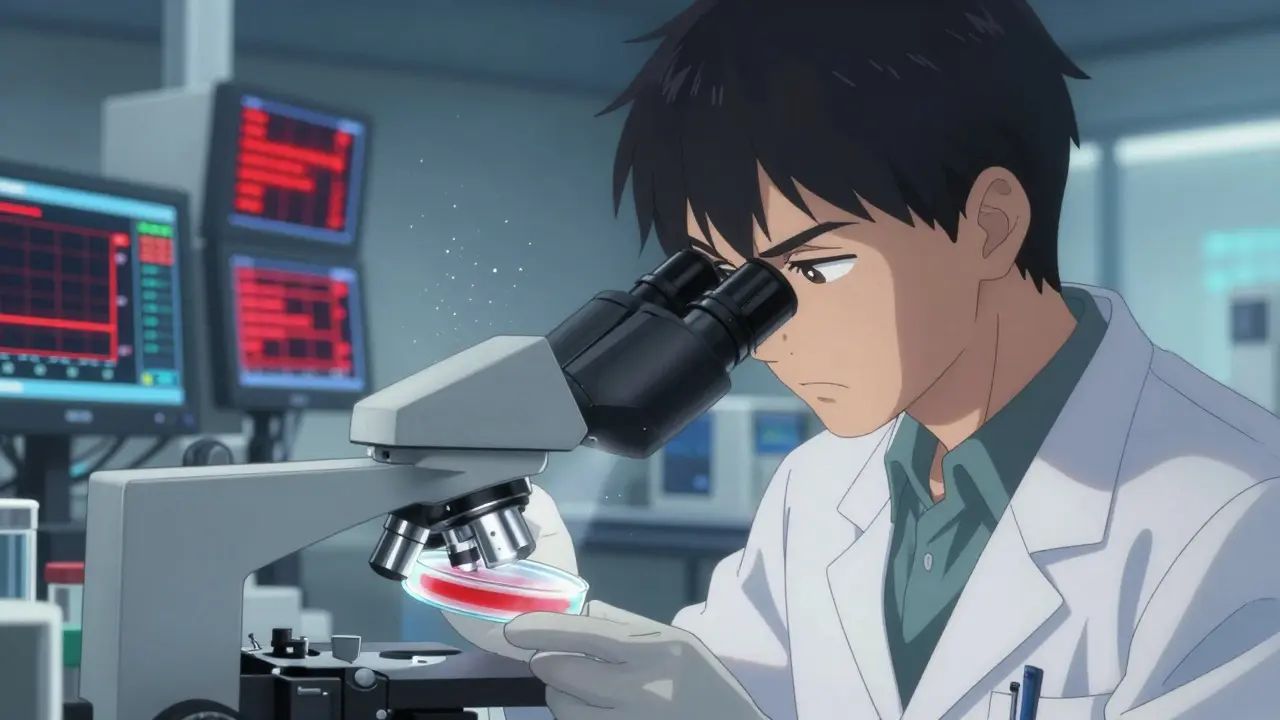
If China makes so much of the world’s medicine, why do we still hear about quality issues? The answer lies in the gap between capacity and consistency. Producing chemicals is hard; producing them safely, cleanly, and identically batch after batch is harder.
Technical data reveals significant disparities. A 2023 study by the U.S. Food and Drug Administration (FDA) found that 12.7% of Chinese API samples failed purity tests. Compare that to 2.3% for European APIs and 1.8% for U.S.-made ones. Those percentages might sound small, but in pharma, they represent millions of potentially sub-potent or contaminated doses.
The root causes are structural:
- Inadequate Laboratory Controls: Cited in 78% of FDA warning letters to Chinese facilities between 2022 and 2023, labs often lack the precision needed to detect impurities early.
- Data Integrity Issues: Found in 52% of inspected sites, this involves falsifying records or failing to document changes in the manufacturing process accurately.
- Outdated Technology: According to a 2025 Nature journal analysis, 65% of Chinese production still relies on old-school batch processing. In contrast, 35% of U.S. and European facilities use continuous manufacturing, which offers tighter control over variables like temperature and pressure.
Dr. Robert Elder, a supply chain expert at Duke University, explained that Western and Indian producers have increasingly ceded the most dangerous synthesis steps-like fluorination using highly toxic materials-to Chinese manufacturers over the last two decades. Why? Because China has lower regulatory oversight and significantly lower costs. Morgan Lewis analysis shows Chinese production costs run 30-40% lower than Western competitors. But that savings often comes at the expense of rigorous quality checks.
The Regulatory Gap: Inspections and Access
You can’t fix what you can’t see. One of the biggest challenges for global regulators is simply getting into Chinese factories. Dr. Margaret Hamburg, former FDA Commissioner, testified before Congress in March 2024 that the FDA inspects Chinese facilities at one-tenth the rate of domestic U.S. facilities due to access limitations.
This "blind spot" is critical. When the FDA does inspect, they find problems. Between 2022 and 2024, 247 U.S. pharmaceutical companies documented specific quality failures linked to Chinese suppliers on the FDA’s Industry Systems portal. A notable example was Zydus Pharmaceuticals’ 2023 recall of 1.2 million bottles of blood pressure medication because the API from Huahai Pharmaceutical was sub-potent-it simply didn’t contain enough active drug to work effectively.
China is trying to close this gap. The National Medical Products Administration (NMPA) launched the Generic Consistency Evaluation (GCE) program in 2016. The goal? Force domestic generics to prove they are bioequivalent to original brand-name drugs. Progress is slow. As of 2024, only 35% of approved generic drugs in China had completed this evaluation. Furthermore, while the NMPA claims to have closed 80% of non-compliant facilities since 2015, independent verification remains difficult for foreign regulators.
Real-World Impact on Patients and Companies
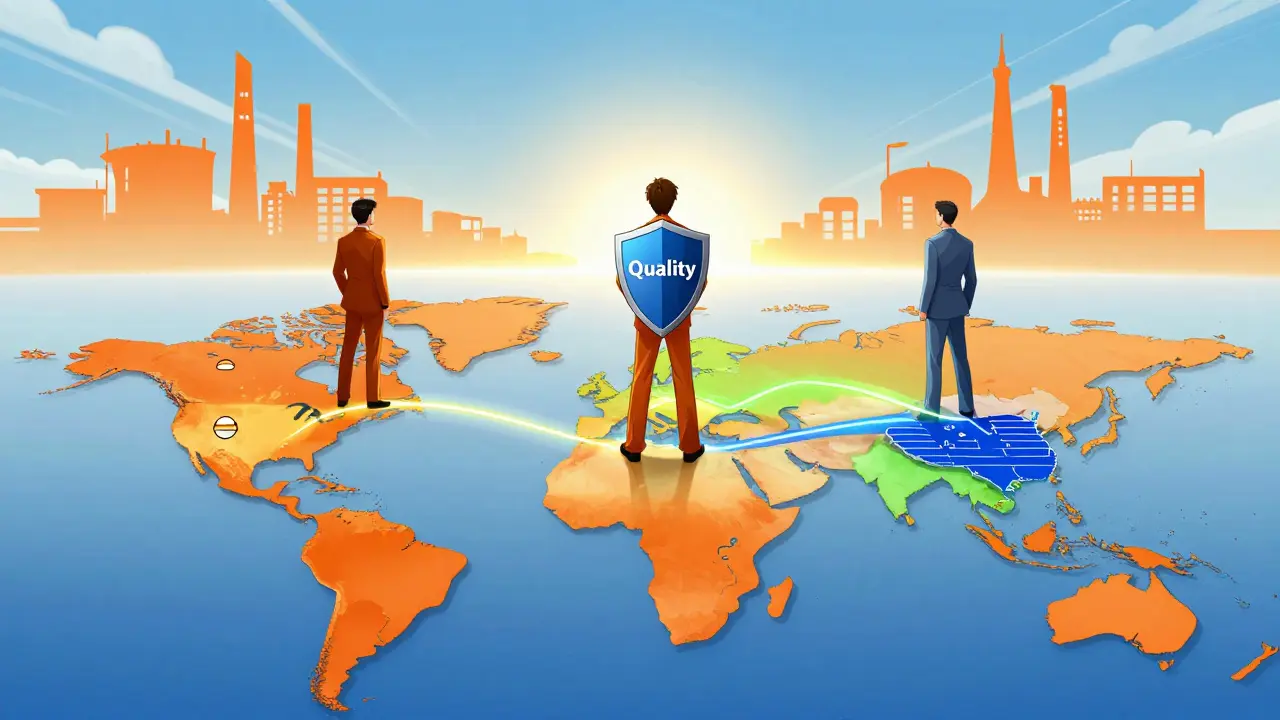
These statistics translate directly into risks for patients and headaches for procurement managers. A 2023 survey by PhRMA found that 68% of U.S. generic drug manufacturers reported API quality issues when sourcing from China. Specifically, 42% cited inconsistent purity levels, meaning some pills might be stronger or weaker than prescribed.
For hospital pharmacists and QA specialists, this means extra work. On professional forums, users share stories of repeated Out-of-Specification (OOS) results. One specialist noted that Chinese-sourced metformin API required 37% retesting compared to just 8% for Indian-sourced material. Retesting delays shipments, increases costs, and sometimes leads to shortages.
However, the economic reality keeps buyers tied to Chinese suppliers. Despite higher rejection rates, switching away from China is expensive. One procurement manager shared that switching to Chinese API for amoxicillin saved their company $4.2 million annually. With China’s National Volume-Based Procurement (NVBP) program driving down prices by 53% between 2018 and 2023, manufacturer margins have compressed to 15-20%. There is little room to pay a premium for "safer" sources unless forced by regulation.
The Path Forward: Diversification and Upgrades
The era of unchecked reliance on Chinese generics is ending. Geopolitical tensions and recent supply chain shocks have accelerated efforts to diversify. The U.S. CHIPS and Science Act allocated $500 million specifically for domestic API production. The European Union’s 2024 Pharmaceutical Strategy aims to cut API dependency on China from 80% to 40% by 2030.
China knows it must adapt to keep its market share. Its 2024 "Pharma 2035" initiative allocates $22 billion to upgrade manufacturing technology. Targets include increasing FDA-inspected facilities from 187 in 2023 to 500 by 2027 and mandating continuous manufacturing for 30% of high-volume products by 2026. Deloitte’s 2024 analysis suggests China needs $30-40 billion in quality infrastructure investment to achieve 95%+ regulatory compliance rates within five years.
Until then, the industry remains in a transition phase. McKinsey forecasts China’s API market share will drop from 78% in 2023 to 65% by 2030 as India, Vietnam, and Mexico expand capacity. For now, the best approach for stakeholders is vigilance: demanding transparent supply chains, supporting local production incentives, and recognizing that "cheap" medicine often carries hidden costs in terms of health risks and logistical instability.
Are all Chinese generic drugs unsafe?
No. Many Chinese manufacturers produce high-quality APIs that meet international standards. However, the industry is uneven. While top-tier facilities comply with Good Manufacturing Practices (GMP), a significant portion of smaller producers struggle with consistency, data integrity, and purity controls. The risk varies greatly depending on the specific supplier and whether they undergo regular third-party audits.
Why does the US rely so heavily on Chinese APIs?
The primary driver is cost. Chinese production costs are 30-40% lower than Western alternatives due to integrated chemical supply chains, lower labor costs, and historically laxer environmental regulations. Additionally, China dominates the production of Key Starting Materials (KSMs), making it difficult for other countries to quickly build alternative supply chains without significant investment and time.
What is the Generic Consistency Evaluation (GCE)?
Launched in 2016 by China’s NMPA, the GCE requires domestic generic drugs to demonstrate bioequivalence to reference brand-name products. It aims to eliminate low-quality generics from the Chinese market. As of 2024, only 35% of approved generics have completed this process, indicating that many older, potentially substandard drugs remain in circulation.
How do FDA inspections work in China?
The FDA conducts pre-approval and routine inspections of foreign facilities. However, access to Chinese facilities is often restricted or delayed by local authorities. Consequently, the FDA inspects Chinese sites at a much lower rate than domestic U.S. facilities. When inspections do occur, they frequently result in warning letters citing issues like inadequate laboratory controls and data falsification.
Is the world moving away from Chinese pharmaceuticals?
Yes, gradually. Governments in the U.S. and EU are investing billions to reshore API production and diversify sources to countries like India, Vietnam, and Mexico. McKinsey predicts China’s API market share could fall from 78% to 65% by 2030. However, due to entrenched supply chains and cost advantages, China will likely remain a dominant player for the next decade.