
Why does one pill cost you $5 while another costs $100? If you’ve ever stared at a pharmacy receipt in disbelief, you aren’t alone. The gap between what you pay for generic drugs versus brand-name medications is widening, especially under the current U.S. healthcare landscape. Understanding this split isn't just about budgeting-it’s about knowing your rights and avoiding surprise bills that can derail your monthly finances.
In 2024, the rules of the game shifted significantly thanks to new federal regulations. Whether you are on Medicare Part D or commercial insurance, the tiered system dictates your wallet. This guide breaks down exactly what those average costs look like, why they vary so much, and how you can actually lower them before you even pick up your prescription.
The Tiered System Explained
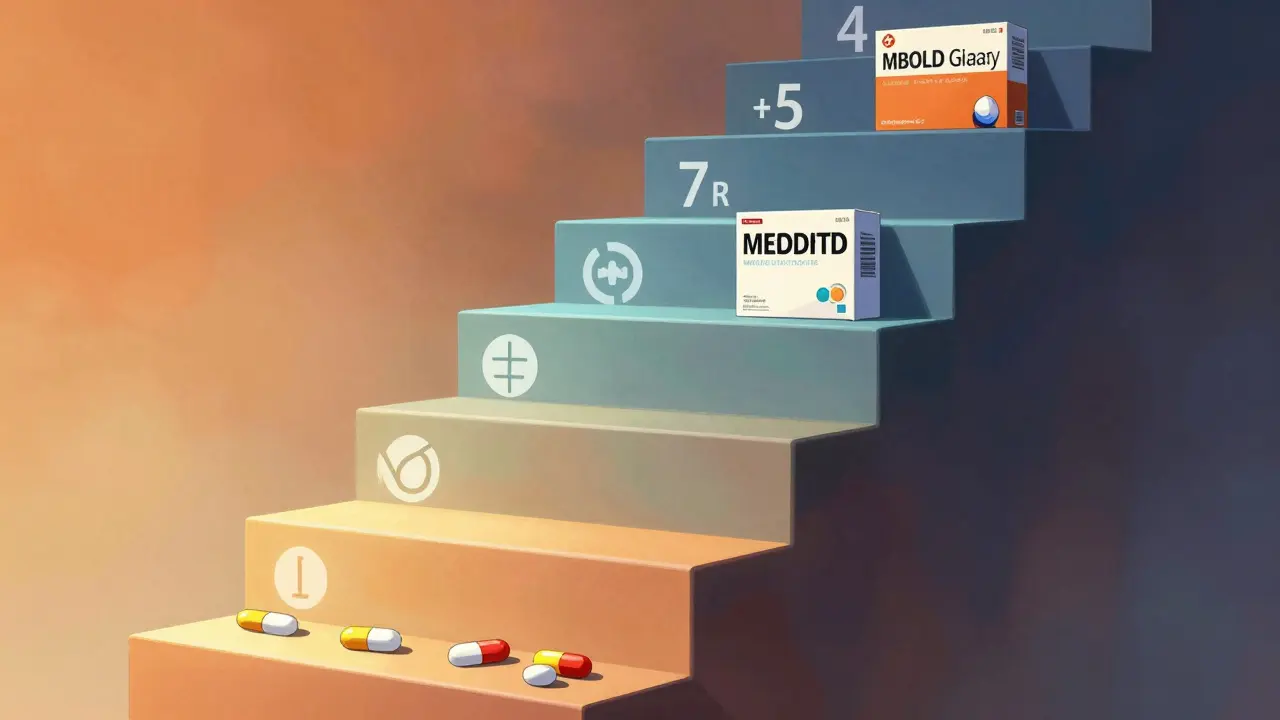
To understand the price tag, you first need to understand the shelf. Insurance plans don't treat all drugs equally. They use a formulary, which is essentially a list of covered drugs grouped into "tiers." Think of these tiers as price buckets. The lower the tier, the less you pay. Most plans in 2024 used a four-tier structure, sometimes adding a fifth for specialty drugs.
- Tier 1 (Preferred Generic): These are the cheapest options. Usually, these are off-patent drugs with multiple manufacturers competing on price.
- Tier 2 (Non-Preferred Generic): Still generic, but maybe not the insurer's favorite brand. Slightly higher cost than Tier 1.
- Tier 3 (Preferred Brand): Brand-name drugs that the insurer has negotiated a decent deal on.
- Tier 4 (Non-Preferred Brand): Expensive brand names where the insurer wants you to consider cheaper alternatives first.
- Tier 5 (Specialty): High-cost injectables or complex treatments, often requiring special handling.
Your copay depends entirely on which bucket your medication falls into. A generic statin might sit comfortably in Tier 1, while a newer brand-name biologic could land squarely in Tier 4. The difference isn't just a few dollars; it's often a matter of hundreds.
Average 2024 Costs: The Numbers
Let’s look at the actual money involved. In 2024, the disparity between generic and brand copays was stark. For beneficiaries enrolled in Medicare Advantage Prescription Drug (MA-PD) plans, the median copay for a preferred brand drug was around $47. For non-preferred brands, that median jumped to $100. Compare that to generics, where many plans offered copays as low as $0 to $10. Some specific plans, like those documented in Oklahoma, showed standard generic copays of just $4.50 for preferred generics.
Commercial insurance works differently. Instead of flat fees, many commercial plans use coinsurance-a percentage of the drug's cost. You might pay 10-20% for a generic, but 30-50% for a brand name. If the brand drug costs $500, you’re looking at a $150-$250 bill, whereas the generic version might cost you $5.
| Drug Type | Medicare Advantage (Median) | Standalone PDP (Typical) | Commercial Insurance |
|---|---|---|---|
| Preferred Generic | $0 - $10 | $0 - $15 | 10-20% Coinsurance |
| Non-Preferred Generic | $7 - $15 | $10 - $20 | 20-30% Coinsurance |
| Preferred Brand | $47 | 22% Coinsurance | 30-50% Coinsurance |
| Non-Preferred Brand | $100 | 47% Coinsurance | 50%+ Coinsurance |
Note the difference in structure here. Medicare Advantage plans often use fixed copays, making costs predictable. Standalone Prescription Drug Plans (PDPs) frequently use coinsurance, meaning your bill fluctuates based on the drug's wholesale price. This unpredictability can be a major headache for patients on expensive brand medications.
Why the Huge Price Gap?
You might wonder why insurers penalize brand names so heavily. It comes down to negotiation power and market competition. Generic drugs have no patent protection, allowing dozens of manufacturers to produce the same active ingredient. This competition drives prices down. Insurers love this because it keeps their overall costs low.
Brand-name drugs, however, are protected by patents. The manufacturer is the sole source, giving them pricing power. To manage this, insurers place these drugs on higher tiers. They want you to try the cheaper generic first. If you insist on the brand, they pass more of that high cost onto you through higher copays or coinsurance.
There’s also a darker side to this. Reports from the Medicare Payment Advisory Commission (MedPAC) highlighted that generic prices aren't always as low as they seem due to "tying arrangements" between wholesalers and pharmacies. Sometimes, pharmacies are forced to accept higher prices on generics to keep favorable terms on branded drugs. This artificial inflation can confuse patients who expect generics to be dirt cheap, only to find cash prices surprisingly high.
Navigating the Coverage Phases
Your copay isn't static throughout the year. It changes as you move through different phases of coverage. In 2024, Medicare Part D had three main phases:
- Initial Coverage Phase: You pay your standard copays until total drug costs hit $1,700.
- Coverage Gap (The "Donut Hole"): Once you exceed $1,700, you enter the gap. Here, you pay 25% of the cost for both brand and generic drugs until your total spending reaches $8,000.
- Catastrophic Coverage: After $8,000, you pay either 5% coinsurance or a small copay, whichever is greater.
This structure means that if you take expensive brand drugs, you’ll hit the coverage gap much faster than someone taking generics. Once in the gap, the 25% charge can add up quickly. However, the Inflation Reduction Act of 2022 introduced caps to help mitigate this. For most people reaching catastrophic coverage in 2024, out-of-pocket costs were limited to approximately $3,300-$3,800.

Strategies to Lower Your Costs
Knowing the averages is one thing; beating them is another. Here are practical steps to reduce your prescription bills in 2024 and beyond.
1. Check the Formulary Before You Fill
Don't wait for the pharmacy counter to learn your drug is Tier 4. Use the Medicare Plan Finder tool or your insurer’s website to check the tier status of your medications. If your brand drug is on a high tier, ask your doctor if there is a therapeutic alternative on a lower tier. Often, two different brand drugs treat the same condition, but one might be preferred by your plan.
2. Ask About Generics
If you are paying for a brand name, ask your doctor: "Is there a generic equivalent?" In 2024, 92.7% of all prescriptions were generics, yet they accounted for only 17% of total drug spending. Switching to a generic can slash your costs by 80-90%. Even if the brand feels "better," the clinical difference is often negligible for most chronic conditions.
3. Consider Pharmacy Choice
Copays can vary by pharmacy network. Retail chains like CVS or Walgreens might charge more than independent pharmacies or mail-order services for maintenance drugs. Mail-order is particularly effective for 90-day supplies of stable medications, often offering lower copays per dose.
4. Look Into Extra Help
If you have limited income, you might qualify for the Social Security Administration’s "Extra Help" program. In 2024, this capped generic copays at $4.50 and brand copays at $11.20 below the out-of-pocket threshold. This is a massive saving for those eligible, turning a $100 brand copay into an $11 charge.
5. Review During Open Enrollment
Plans change every year. A plan that was cheap for you in 2023 might raise your brand copays in 2024. Use the Annual Election Period (October 15 - December 7) to compare plans specifically for your medication list. A counselor can run your drugs through multiple plans to find the one with the lowest total annual cost, not just the lowest premium.
What’s Coming in 2025?
If you’re planning ahead, the landscape is shifting again. The Inflation Reduction Act mandates a hard cap on out-of-pocket costs starting in 2025. Beneficiaries will pay no more than $2,000 annually for covered Part D drugs. This eliminates the fear of unlimited liability for brand-name users.
Additionally, CMS projected that 98% of 2025 plans would offer $0 copays for preferred generics, up from 87% in 2024. While brand copays might see slight increases (with non-preferred brands potentially hitting a median of $105), the overall financial safety net is getting stronger. Insulin also benefits from a separate $35 monthly cap, ensuring essential diabetes care remains affordable regardless of brand or generic status.
What is the difference between a copay and coinsurance?
A copay is a fixed dollar amount you pay for a prescription, such as $10 or $50. Coinsurance is a percentage of the drug's cost, such as 20%. Copays provide predictable costs, while coinsurance means your bill varies depending on the drug's price. Medicare Advantage plans often use copays, while standalone PDPs and commercial plans often use coinsurance.
Why are my generic drug prices higher than expected?
While generics are cheaper than brands, their prices can still vary. Factors include the specific manufacturer, the pharmacy's markup, and complex wholesaler agreements known as "tying arrangements." Additionally, if you are in the "coverage gap" phase of Medicare Part D, you pay 25% of the drug cost, which can make even cheap generics feel expensive.
Can I switch from a brand name to a generic without asking my doctor?
Usually, yes. Pharmacists can automatically substitute a generic for a brand name unless the prescriber writes "Dispense As Written" or "DAW" on the prescription. However, it’s always best to confirm with your doctor to ensure the generic is clinically appropriate for your specific health needs.
How do I know which tier my drug is on?
You can check your plan’s formulary, usually available on your insurer’s website or via the Medicare Plan Finder tool. Enter your medication name, and the tool will show you the tier level and associated cost-sharing for each plan you are comparing.
What happens when I hit the out-of-pocket maximum?
Once you reach the out-of-pocket maximum, you enter catastrophic coverage. In 2024, this meant paying 5% coinsurance or a small copay. Starting in 2025, the law caps this total annual spending at $2,000 for Medicare Part D beneficiaries, providing significant financial protection against high drug costs.








Write a comment
Your email address will be restricted to us