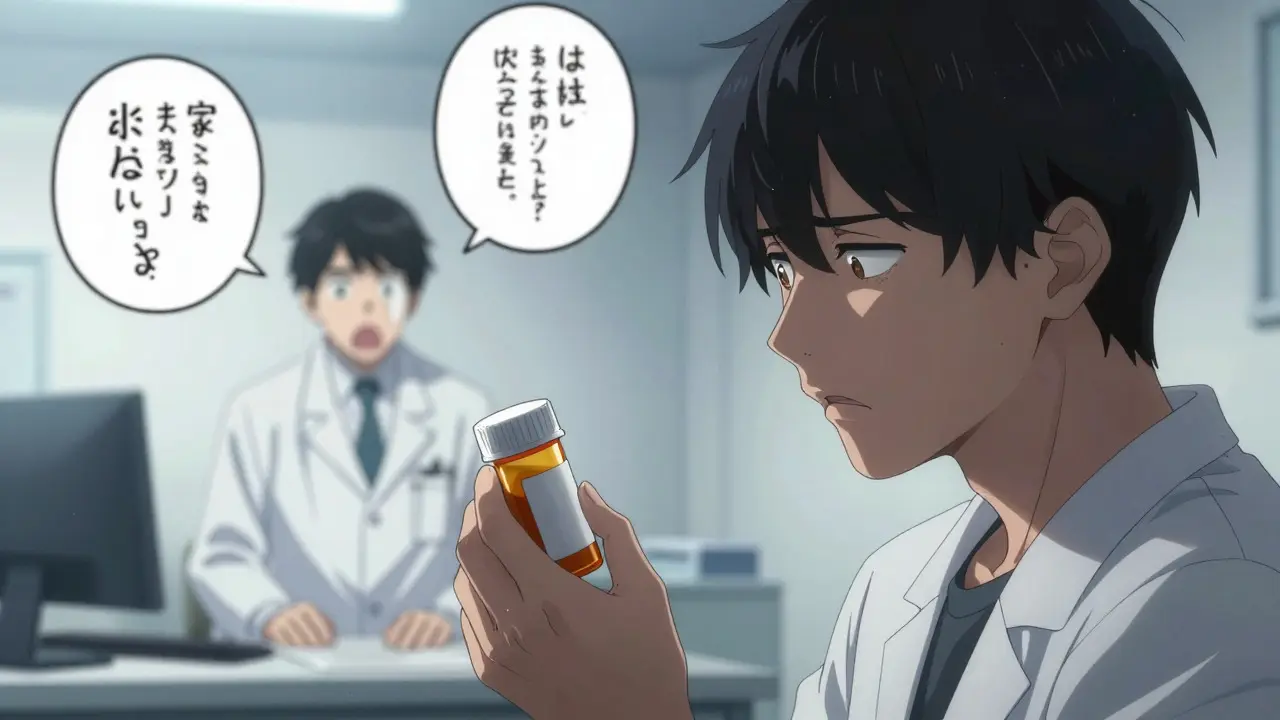
Imagine you just got a new prescription for a serious condition. The doctor explains the dosage quickly, but their accent is thick, or they are using medical jargon that flies over your head. You nod, smile, and leave the office feeling relieved-until you get home and realize you have no idea if you take the pill with food or on an empty stomach. This isn't just a minor inconvenience; it is a life-threatening scenario.
For millions of people, this confusion is a daily reality due to language barriers. When patients and providers do not share a common language, medication errors skyrocket. These aren't just typos on a label; they are missed doses, double dosages, and dangerous drug interactions. But here is the good news: you have rights, there are tools available, and there are specific steps you can take right now to ensure your medications work safely for you.
The High Cost of Miscommunication
We often think of medication errors as something that happens because a pharmacist was tired or a doctor wrote illegibly. While those things happen, the biggest hidden risk factor is communication. According to data from the Agency for Healthcare Research and Quality (AHRQ), language barriers are a critical patient safety concern. It’s not just about understanding words; it’s about understanding complex instructions like "take one tablet every eight hours" versus "take one tablet three times a day."
The stakes are incredibly high. A study published in Pediatrics by researchers at the Children's Hospital of Philadelphia found that adverse drug events occur at twice the rate for children whose families have Limited English Proficiency (LEP) compared to English-proficient families. That means nearly 18% of LEP children in LEP households face medication mishaps, compared to less than 10% in others. For adults, the numbers are equally alarming. Roughly half of all adults with LEP encounter at least one language barrier during healthcare visits within a three-year period.
Why does this happen? It’s rarely malice. Usually, it’s a combination of time pressure, lack of resources, and the assumption that "good enough" communication is sufficient. But when it comes to chemistry going into your bloodstream, "good enough" is never enough.
Who Can You Ask for Help?
If you feel lost in a medical conversation, the first thing to know is that asking for help is not a burden-it is a requirement for safe care. Under Title VI of the Civil Rights Act of 1964, any healthcare organization receiving federal funds (which includes almost all hospitals and clinics) must provide free language assistance services to patients with LEP. This is your legal right.
Here is who you should look for:
- Professional Interpreters Trained specialists who translate medical conversations accurately and confidentially.: These are the gold standard. They know medical terminology, understand cultural nuances, and are bound by confidentiality rules. They come in-person, over the phone, or via video call.
- Bilingual Staff Hospital employees who speak your native language.: While helpful, be cautious. A nurse who speaks Spanish may not know the specific medical term for "hypertension" in your dialect. Always ask if they are certified interpreters.
- Family Members Relatives or friends used as informal translators.: This is common but risky. Studies show up to 25% of interpretation done by family members contains errors. They might skip embarrassing details, add their own opinions, or simply not know the technical words. Use them only as a last resort.

Technology: Your Digital Advocate
In 2026, technology has become a powerful ally in bridging these gaps. If you are visiting a pharmacy or clinic, don't be afraid to suggest digital tools if human interpreters aren't immediately available.
Video Remote Interpretation (VRI) Real-time translation via video screen allowing visual cues. is particularly effective for medication discussions. Unlike phone calls, VRI allows you to see facial expressions and hand gestures, which are crucial when explaining how to use an inhaler or apply a cream. Services like LanguageLine Solutions offer this, and many major hospital systems have integrated it directly into their electronic health records (EHR).
However, be wary of relying solely on consumer-grade apps like Google Translate for complex prescriptions. A Reddit user shared a harrowing story where their mother received incorrect insulin dosing instructions because a pharmacy staff member relied on a basic translation app, leading to hospitalization. Apps are great for ordering coffee, but dangerous for chemotherapy dosages. If you use an app, always have a professional verify the result.
Practical Steps to Protect Yourself
You are the CEO of your own health. Even with the best interpreters, you need active strategies to ensure nothing falls through the cracks. Here is a checklist to use at every appointment and pharmacy visit.
- Demand Written Instructions in Your Language: Verbal instructions fade. Ask the pharmacist or doctor for written materials translated into your primary language. In 2021, the National Healthcare Quality and Disparities Report noted that even in areas with large Spanish-speaking populations, 31% of pharmacies could not provide prescription labels in Spanish. Don't accept "we don't have that" as a final answer. Ask if they can email a translated PDF or print a generic version from a national database.
- Use the "Teach-Back" Method: This is a technique where you repeat back what you heard in your own words. For example, say, "So, I will take this blue pill once a morning with breakfast, correct?" This confirms understanding without making the provider feel challenged. If you are using an interpreter, do the teach-back with them.
- Practice Directly Observed Dosing: For high-risk medications like blood thinners or insulin, ask if you can demonstrate how you plan to take the medicine while the clinician watches. A study in the Journal of General Internal Medicine showed this simple step significantly reduces errors, even when language barriers exist.
- Identify Your Language Preference Early: When booking appointments, explicitly state your preferred language. Most modern EHR systems have a field for this. If the system doesn't flag it, the front desk won't book an interpreter. Make it part of your intake script: "I speak [Language] primarily. Please ensure an interpreter is available."">>

Navigating the Pharmacy Counter
The pharmacy is often the last line of defense before you take a medication. This is where many errors slip through. Pharmacists are busy, and the counter can be chaotic. Here is how to handle it:
First, check the label immediately. Does it match what you were told? If the label says "Take 1 tab PO QD" and you don't know what that means, ask. "PO" means by mouth, "QD" means once a day. Acronyms are a universal trap. Ask the pharmacist to write out the full instructions in plain language.
Second, bring all your current medications with you. This prevents dangerous interactions. If you have a language barrier, consider creating a "Medication Passport." This is a small notebook or digital file listing every drug you take, the dose, and the reason for taking it, translated into both English and your native language. Hand this to the pharmacist. It gives them a clear reference point and reduces the cognitive load of translation during a quick interaction.
If the pharmacist seems rushed or confused, politely ask for a manager or a different pharmacist. You deserve clarity. Remember, a confused pharmacist is more likely to make a mistake than one who takes an extra two minutes to explain.
When Things Go Wrong
Mistakes happen. If you suspect a medication error due to miscommunication, act quickly. Check your symptoms against the side effects listed on the bottle or online resources like the FDA’s MedWatch program. If you feel unwell, go to the emergency room and tell them exactly what happened: "I may have taken the wrong dose because the instructions weren't clear in my language."">
Document everything. Keep copies of prescriptions, notes from appointments, and receipts. If you need to file a complaint or seek clarification later, having a paper trail is essential. Many hospitals have Patient Advocates or Ombudsmen whose job is to resolve these issues. They can also help ensure that future visits include proper interpretation services.
Is it illegal for a hospital to refuse me an interpreter?
Yes, for most facilities. Under Title VI of the Civil Rights Act, healthcare providers receiving federal funding must provide free language assistance. Refusing to provide an interpreter can lead to penalties for the institution. However, enforcement varies, so you may need to escalate to the Office for Civil Rights if ignored.
Can I use my child as an interpreter?
It is generally discouraged. Children may lack the vocabulary for complex medical terms and may feel embarrassed translating sensitive information about parents' health. This can lead to omissions or inaccuracies. Professional interpreters are trained to maintain neutrality and accuracy.
What if my language is rare and no interpreter is available?
Large interpretation services like LanguageLine cover hundreds of languages. If a local hospital doesn't have an in-person interpreter for a rare language, they should offer Video Remote Interpretation (VRI) or telephone interpretation. Do not settle for untrained staff; insist on a remote service if necessary.
How much does an interpreter cost?
For patients, it should be free. Hospitals and clinics are required to absorb the cost. Behind the scenes, hospitals pay between $3.50 to $6.00 per minute for telephone/video services, but this cost is borne by the facility, not the patient.
Are translated prescription labels reliable?
They are better than nothing, but not perfect. Some pharmacy software struggles with specific terms like "dropperful" or complex timing instructions. Always verify the translated label with a verbal explanation from the pharmacist or interpreter to ensure the meaning is preserved.