
Imagine this: you’ve tried taking a standard painkiller for your migraine, but the throbbing in your head just keeps coming back. You’re not alone. For millions of people, single-ingredient medications simply aren’t enough to stop a full-blown migraine attack. This is where migraine combination medications come in. By pairing two or more drugs that work on different parts of the brain’s pain pathways, these treatments offer a stronger shield against pain than any single drug could provide on its own.
The good news? You don’t have to break the bank to get effective relief. With major patents expiring over the last few years, generic versions of powerful combination therapies are now widely available. These generics cost a fraction of the branded names while delivering the same clinical results. Let’s look at what works, why it works, and how to choose the right option for your needs.
Why Combining Drugs Works Better for Migraines
Migraines are complex. They aren’t just headaches; they involve neurogenic inflammation, cortical spreading depression, and activation of the trigeminovascular system. Think of it like a house fire with smoke, heat, and flames all happening at once. Using only one type of extinguisher might put out the flames but leave the smoke and heat behind. That’s why monotherapies (single-drug treatments) often fail to provide complete relief.
Combination therapy targets multiple mechanisms simultaneously. According to a comprehensive 2024 review by Dr. Richard B. Lipton published in PMC, combining agents provides "incremental benefits" because they address different aspects of the inflammatory and neural processes underlying migraines. For example:
- NSAIDs (like naproxen or ibuprofen) inhibit cyclooxygenase enzymes to reduce inflammation.
- Triptans (like sumatriptan) activate 5-HT1B/1D receptors to cause vasoconstriction and stop the release of pain-causing neuropeptides.
- Caffeine enhances the absorption of other drugs and acts as an independent analgesic by blocking adenosine receptors.
When you combine these, you get a synergistic effect. Studies show that combination therapies can improve pain-free rates by 24% to 42% compared to using either drug alone. More importantly, they significantly reduce recurrence rates. While monotherapy sees headache return in about 40% of cases, combination therapy drops that number to around 22%. This means you’re less likely to wake up the next morning with the migraine still hanging around.
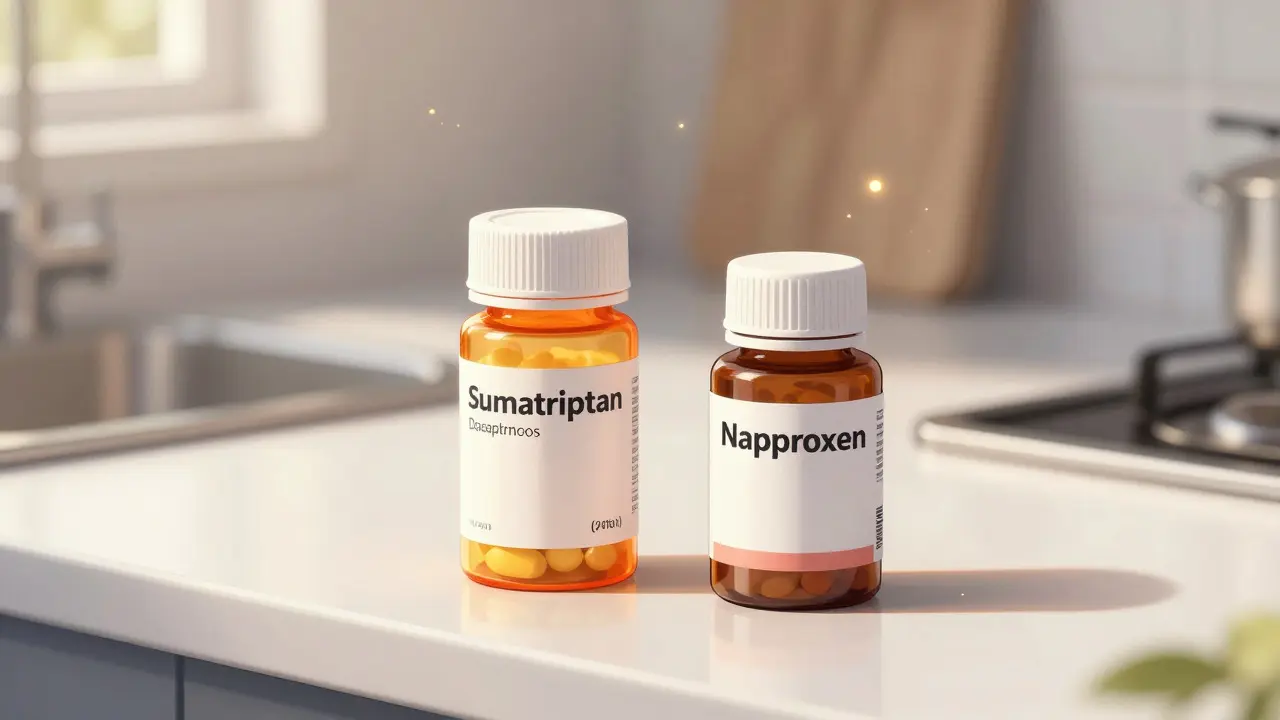
The Gold Standard: Sumatriptan and Naproxen
If there is one combination that stands out in clinical research, it is the pairing of sumatriptan and naproxen. Originally sold under the brand name Treximet, this fixed-dose tablet contains 85 mg of sumatriptan and 500 mg of naproxen sodium. It has been extensively studied and proven superior to either component used in isolation.
| Treatment | Complete Pain Relief at 2 Hours | Sustained Pain Relief at 24 Hours |
|---|---|---|
| Sumatriptan + Naproxen | 48% | 35% |
| Sumatriptan Alone | 37% | 26% |
| Naproxen Alone | 29% | 19% |
The data is clear. The combination gets nearly half of patients completely pain-free within two hours, whereas naproxen alone helps less than a third. But here is the real game-changer: accessibility. In 2020, the patent for Treximet expired. Since then, generic equivalents containing identical dosages have flooded the market. A dose that once cost between $350 and $450 now costs approximately $15 to $25 for the generic version. That is a savings of over 90%.
You don’t even need the fixed-dose pill to get these benefits. Clinical studies have confirmed that taking generic sumatriptan (50 mg) alongside generic naproxen (500 mg) as separate pills is clinically noninferior to the branded combination tablet. This "loose" combination approach is often cheaper and allows for more flexible dosing based on individual tolerance.
Over-the-Counter Power: Acetaminophen, Aspirin, and Caffeine
Not every migraine requires a prescription. For many people, especially those with mild to moderate attacks, the classic OTC combination of acetaminophen, aspirin, and caffeine is highly effective. Marketed famously as Excedrin Migraine, this trio has Level A evidence of effectiveness according to the American Academy of Family Physicians (AAFP).
A typical tablet contains 250 mg of acetaminophen, 250 mg of aspirin, and 65 mg of caffeine. The recommended effective dose is usually two tablets (totaling 500 mg of each active ingredient). Here is why this mix works so well:
- Aspirin reduces inflammation and blood clotting factors involved in migraine pain.
- Acetaminophen provides additional pain relief through central nervous system action.
- Caffeine constricts blood vessels and speeds up the absorption of the other two drugs into your bloodstream.
This combination achieves a 29% pain-free rate at two hours, which is 17 percentage points higher than placebo. It is also significantly more effective than ibuprofen alone. However, caution is needed. Because it contains aspirin, it may not be suitable for everyone, particularly those with stomach ulcers or bleeding disorders. Also, keep an eye on your total daily intake of acetaminophen from all sources to avoid liver stress.
The cost difference here is stark too. Branded Excedrin Migraine can run $5 to $7 per dose, while generic store-brand versions of acetaminophen/aspirin/caffeine combinations cost between $0.50 and $1.00 per dose. For frequent sufferers, switching to generics can save hundreds of dollars a year.
Emergency Department Cocktails
When home remedies and oral prescriptions fail, migraines can become debilitating enough to require emergency care. In hospital settings, doctors use intravenous (IV) "cocktails"-combinations of several drugs administered sequentially. These are designed for severe, intractable cases where rapid relief is critical.
A typical ED cocktail might include:
- Ketorolac (30 mg): A potent NSAID given IV for immediate anti-inflammatory effect.
- Metoclopramide (10 mg): An anti-nausea drug that also helps speed up gastric emptying, allowing oral meds to work if taken later.
- Magnesium Sulfate (1-2 g): Helps relax blood vessels and calm nerve activity.
- Sodium Valproate (500-1000 mg): An anticonvulsant that stabilizes neuronal membranes.
- Dexamethasone (10 mg): A steroid added specifically to prevent the migraine from returning within 72 hours.
Research shows that these multi-drug approaches are far more effective than single-agent IV treatments. About 68% of emergency department migraine treatments now utilize some form of combination therapy. The addition of dexamethasone is particularly important for reducing recurrence, addressing the common frustration of feeling better in the ER only to crash again when you get home.
What Doesn’t Work: Preventive Combinations
While acute combination therapies (for stopping an attack) are highly effective, preventive combinations (taken daily to stop attacks before they start) have had mixed results. It is crucial to distinguish between the two.
A notable finding from Dr. Lipton’s 2024 review highlighted that combining topiramate (up to 100 mg/day) with propranolol (up to 240 mg/day) was no more effective than adding a placebo. This suggests that not all drug pairs create synergy. In prevention, the side effects of combining two strong daily medications often outweigh the marginal benefits. Always discuss preventive strategies with a specialist, as individual response varies widely.

Risks and Side Effects to Watch
More drugs mean more potential interactions. While generics make these treatments accessible, they don’t change the pharmacology. Here are key risks to manage:
- Medication-Overuse Headache (MOH): This is the biggest risk. Using combination acute medications more than 10 days a month can actually cause chronic daily headaches. The risk jumps to 70% with frequent combination use compared to 30% with monotherapy. Keep a headache diary to track usage.
- Gastrointestinal Issues: NSAIDs like naproxen and aspirin can irritate the stomach lining. Take them with food, or ask your doctor about adding a proton pump inhibitor if you use them frequently.
- Cardiovascular Concerns: Triptans constrict blood vessels. They are generally contraindicated for people with uncontrolled hypertension, history of stroke, or coronary artery disease. Always disclose your heart health history to your provider.
- Liver and Kidney Function: Acetaminophen stresses the liver; NSAIDs stress the kidneys. If you have existing organ impairment, dosage adjustments or alternative combinations may be necessary.
Butalbital-containing combinations (like Fiorinal) should be used sparingly-less than 10 days per month-due to high addiction potential and MOH risk. Modern guidelines favor triptan/NSAID combos over barbiturate-based ones for safety.
How to Choose the Right Option
Selecting the right combination depends on your migraine severity and history. Here is a practical guide:
- Mild Migraines: Start with OTC acetaminophen/aspirin/caffeine. It’s cheap, accessible, and effective for many.
- Moderate to Severe Migraines: If OTC fails, move to prescription options. Generic sumatriptan (50 mg) plus generic naproxen (500 mg) is the current standard of care. It offers the best balance of efficacy and cost.
- Refractory Cases: If oral meds don’t work due to nausea or vomiting, consider nasal spray triptans or seek ED care for IV cocktails. Newer options like generic rizatriptan combined with naproxen are also showing promise for those who fail initial sumatriptan therapy.
Always assess your disability impact using tools like the MIDAS score or HIT-6. If your migraines are affecting your work or life significantly (MIDAS >10), see a headache specialist. They can help tailor a regimen that minimizes side effects while maximizing relief.
The Future of Combination Therapy
The landscape is evolving. By 2028, combination therapies are projected to hold 45% of the acute migraine market share, driven by generic availability and growing awareness of their superiority. New formulations are in development, such as meloxicam/rizatriptan combinations currently in Phase 3 trials, which aim to offer even faster onset and fewer GI side effects.
For now, the message is clear: you do not need to suffer through ineffective single-drug treatments. Generic combination medications provide a scientifically backed, cost-effective path to better migraine control. Talk to your doctor about switching to a combination strategy if your current routine isn’t cutting it. Your quality of life is worth optimizing.
Is generic sumatriptan/naproxen as effective as the brand name Treximet?
Yes. Generic versions contain the exact same active ingredients (85 mg sumatriptan and 500 mg naproxen sodium) in the same dosages. Clinical studies confirm they are bioequivalent and clinically noninferior to the branded product, offering the same pain relief at a fraction of the cost.
Can I take Excedrin Migraine every day for headaches?
No. Using Excedrin or similar combination medications more than 10 days per month can lead to medication-overuse headache (rebound headaches). This condition makes headaches more frequent and harder to treat. Limit use to occasional attacks and consult a doctor if you need relief more often.
Which is better: sumatriptan alone or sumatriptan with naproxen?
The combination is generally more effective. Studies show that adding naproxen to sumatriptan increases the rate of complete pain relief at two hours from 37% to 48% and significantly reduces the chance of the migraine returning within 24 hours. The combination targets both inflammation and neural pain pathways simultaneously.
Are there any risks associated with migraine combination medications?
Yes. Risks include gastrointestinal irritation from NSAIDs, potential liver strain from acetaminophen, and cardiovascular concerns with triptans (avoid if you have uncontrolled hypertension or heart disease). The most significant risk is medication-overuse headache if used too frequently (>10 days/month).
Do preventive combination medications work well?
Results are mixed. Recent studies indicate that some common preventive combinations, such as topiramate plus propranolol, offer no significant benefit over placebo. Preventive therapy is highly individualized, and combination approaches are not universally recommended unless specific patient profiles suggest potential synergy under specialist supervision.






Write a comment
Your email address will be restricted to us