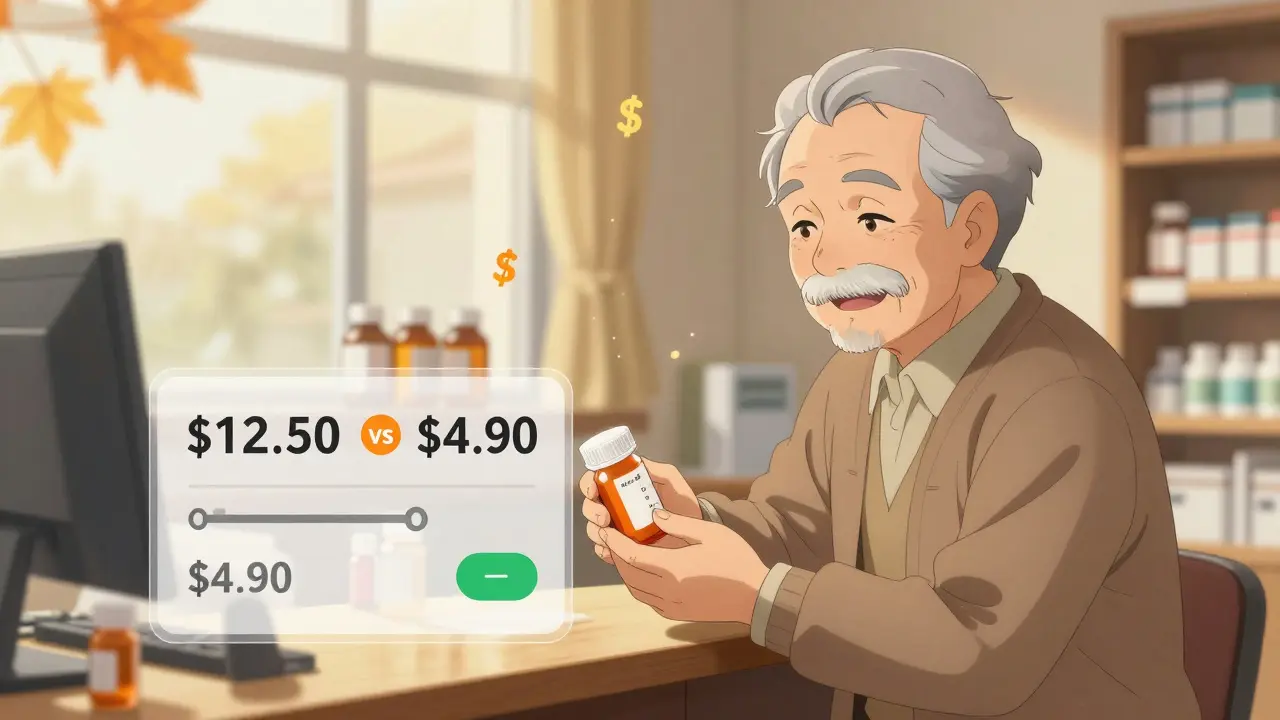
If you’re on Medicare and take generic drugs every month, you could be paying over $700 a year more than you need to. That’s not a guess-it’s the math. Without Extra Help, a single generic prescription costing $50 could cost you $12.50 after your deductible. Do that 12 times a month, and you’re looking at nearly $1,800 a year just in copays. But with Medicare Extra Help, that same drug costs you $4.90. No deductible. No monthly premium. Just $4.90 per fill.
What Medicare Extra Help Actually Covers
Medicare Extra Help, also called the Part D Low-Income Subsidy (LIS), is a federal program that cuts your prescription drug costs to the bone. It doesn’t just lower copays-it removes almost every cost barrier. In 2025, if you qualify, you pay:- $0 for your Part D plan premium
- $0 for your deductible
- Up to $4.90 for each generic drug
- Up to $12.15 for each brand-name drug
Who Qualifies? The Exact Income and Resource Limits
You don’t need to be broke to qualify. The income limits are strict but realistic for people living on fixed incomes. For 2025:- Individuals: Annual income under $23,475
- Married couples living together: Annual income under $31,725
- Individuals: $17,600
- Married couples: $35,130
Why This Matters More Than You Think
People don’t realize how much extra help changes their health. A 2024 report from the Medicare Rights Center found that 68% of people who got Extra Help started taking their medications regularly-medications they’d been skipping because they were too expensive. One woman in Ohio stopped choosing between her blood pressure pill and her groceries. A man in Florida finally filled his diabetes script after two years of rationing. These aren’t rare stories. They’re common. Without Extra Help, many seniors skip doses, split pills, or delay refills. That leads to hospital visits, emergency care, and higher long-term costs. The Medicare Payment Advisory Commission found that Extra Help recipients have medication adherence rates 23 percentage points higher than those without it. That’s not just savings-it’s life-saving.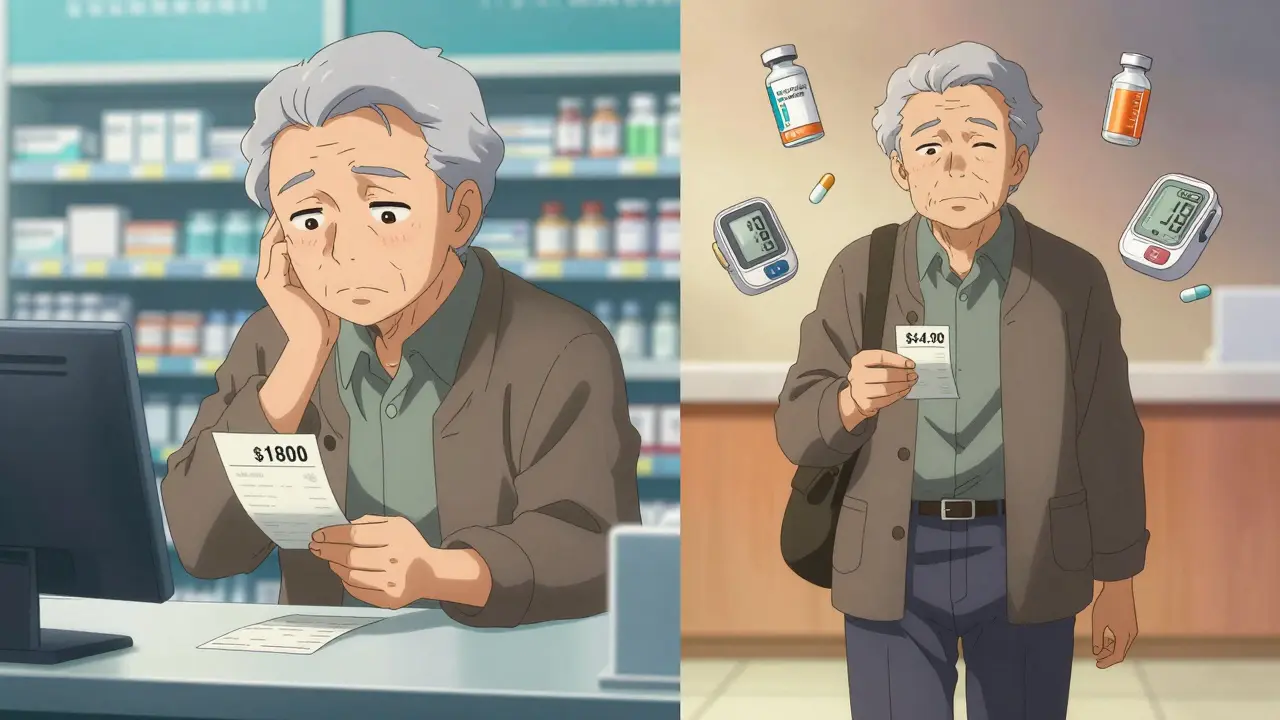
How to Apply (And What to Watch Out For)
You don’t have to be a paperwork expert to get Extra Help. There are three easy ways to apply:- Go to ssa.gov and fill out the online application
- Call 1-800-772-1213 (TTY 1-800-325-0778)
- Visit your local Social Security office
- Your Social Security number
- Your Medicare number
- Proof of income (last year’s tax return or Social Security statement)
- Bank and investment account statements
The Big Mistake People Make
The biggest error? Thinking you’re too rich to qualify. I’ve seen people turn down help because they made $500 over the limit. That $500 could be from a small raise, a one-time bonus, or even a modest increase in Social Security cost-of-living adjustment. But losing Extra Help means your $200-a-month generic drugs suddenly jump to $748 in copays-plus your $595 deductible and $30+ monthly premium. That’s over $1,500 extra a year. And when you lose Extra Help, you don’t get a grace period. Your benefits stop on January 1. No warning. No notice. You just show up at the pharmacy and get hit with the full price. That’s why every August, you’ll get a form in the mail asking you to reapply. You must return it within 30 days. If you don’t, you lose everything-even if your income hasn’t changed.What If You’re Denied?
If you’re denied, don’t give up. You have 60 days to appeal. Many denials happen because people misreported income or forgot to include a small asset. Call your State Health Insurance Assistance Program (SHIP). They’re free, local, and trained to help. You can find your local SHIP by visiting shiptacenter.org or calling 1-877-839-2675.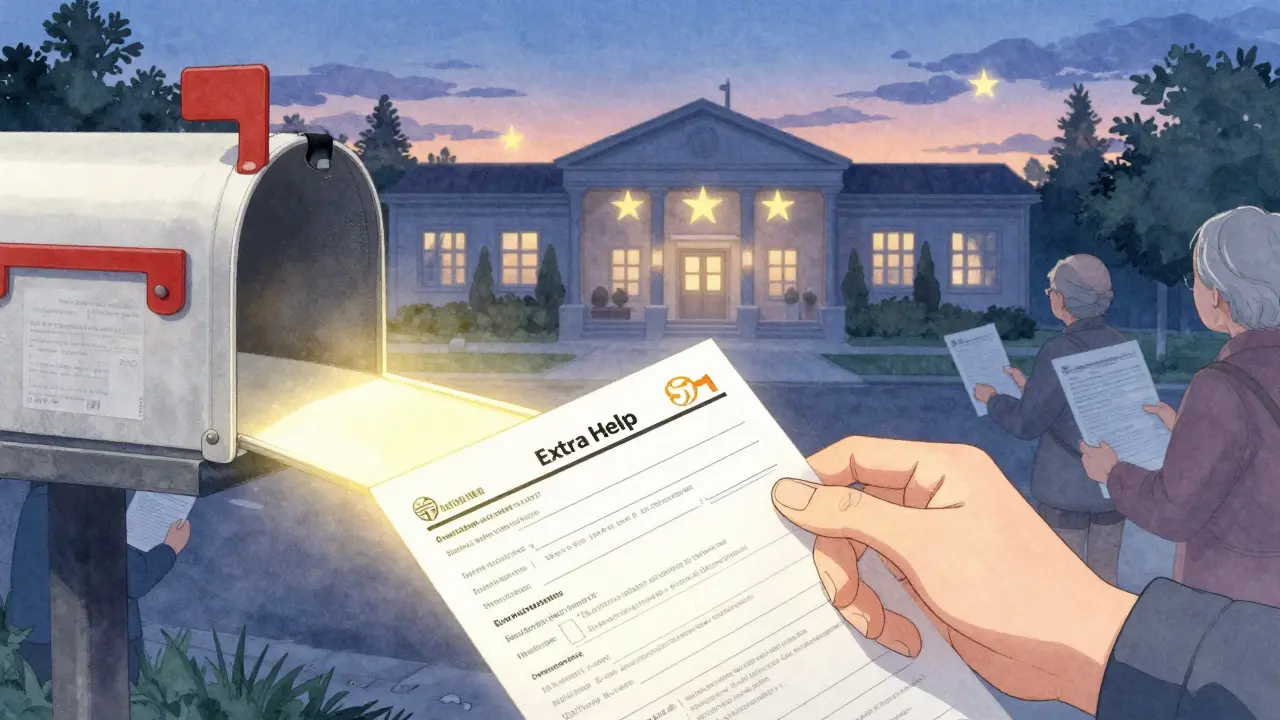
Extra Help and Your Part D Plan
Extra Help doesn’t pick your plan. You still need to choose a Medicare Part D plan. But here’s the trick: Extra Help gives you a Special Enrollment Period. That means you can switch plans once a month, not just during open enrollment. If your drug isn’t covered well, or your pharmacy isn’t in-network, you can change. And you can ask for a formulary exception if a generic isn’t on your plan’s list. Extra Help recipients get priority on these requests.What’s Coming Next
In 2025, insulin costs are capped at $35 a month for all Medicare Part D enrollees-Extra Help or not. That’s a win. But the real change might be coming soon. The Biden administration proposed raising the income limit to 175% of the Federal Poverty Level. That would mean individuals making up to $28,500 a year could qualify. If passed, over a million more seniors could get help. For now, the program is still narrow. But it’s powerful. If you’re on fixed income and take even one generic drug a month, you’re likely eligible. And if you are, you’re leaving hundreds-maybe over a thousand-dollars on the table every year.Real People, Real Savings
One man in Pennsylvania took four generic drugs a month: blood pressure, cholesterol, thyroid, and diabetes. Before Extra Help, his monthly cost was $148. After? $19.60. He saved $1,540 a year. He started taking his pills on time. His blood pressure dropped. His doctor said he was doing better than in years. A woman in Texas, 78, takes three generics. She used to skip doses to make them last. After Extra Help, she filled them every month. She said, “I didn’t realize I was so sick until I started feeling better.” These aren’t outliers. They’re the rule when you get Extra Help.Do I have to reapply for Extra Help every year?
Yes. Every August, you’ll get a form in the mail asking you to update your income and resources. You must return it within 30 days. If you don’t, your Extra Help ends on January 1. Even if your situation hasn’t changed, you still need to respond. Many people lose benefits just because they missed this step.
Can I still get Extra Help if I have savings in a bank account?
Yes, as long as your total countable resources don’t exceed $17,600 (individual) or $35,130 (couple). Your home, car, and personal items don’t count. But cash, stocks, bonds, mutual funds, and IRAs do. If you have $15,000 in savings and $3,000 in stocks, you’re at $18,000-over the limit. But if you spent $500 on medical bills or home repairs before applying, you might be under. Keep receipts.
What if I’m just over the income limit? Can I still qualify?
Sometimes. If your income went over because of a one-time payment-like a tax refund, stimulus check, or inheritance-you can explain it when you apply. Social Security can look at your average monthly income over the past year. They may still approve you. Don’t assume you’re ineligible without talking to someone.
Does Extra Help cover all my medications?
It covers all drugs on your Medicare Part D plan’s formulary. But you still need to choose a plan that includes your medications. Extra Help doesn’t guarantee coverage of every drug, but it gives you the right to request exceptions. If your doctor says a specific generic is necessary, you can appeal. Extra Help applicants get faster processing on these requests.
Can I use Extra Help at any pharmacy?
You can use it at any pharmacy that accepts Medicare Part D. That includes major chains like CVS, Walgreens, and Walmart, plus many local pharmacies. But your plan might have preferred pharmacies with lower copays. Always check your plan’s pharmacy network before choosing. Extra Help doesn’t override your plan’s network rules-it just caps your cost.




Write a comment
Your email address will be restricted to us