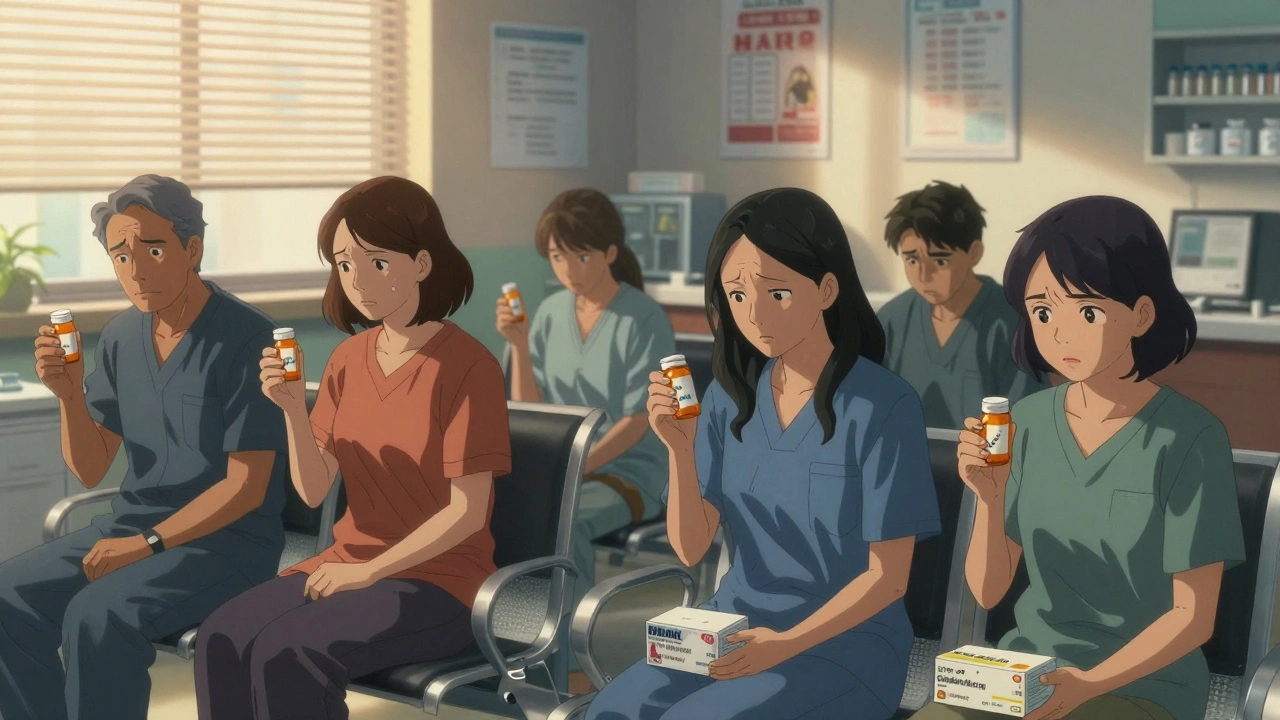
When your doctor hands you a prescription for a generic drug, you might feel a quiet unease. It’s cheaper, sure-but is it safe? You’ve heard the claims: "It’s the same as the brand-name drug." But then you hear someone say their blood pressure spiked after switching, or their depression got worse. Suddenly, the science feels distant. The fear isn’t irrational-it’s deeply human.
Why Do People Think Generics Are Less Safe?
The word "generic" itself carries weight. In every other part of life, "generic" means basic, plain, maybe even low-quality. A generic cereal doesn’t have the cartoon mascot. A generic phone case doesn’t come in neon colors. So why should medicine be different? For many patients, the label triggers a mental shortcut: if it costs less, it must be less effective. Or worse-less safe.
The FDA says generics are bioequivalent. That means they deliver the same active ingredient, in the same amount, at the same rate as the brand-name version. The acceptable range? Within 80% to 125% of the brand’s absorption. That’s not a fluke-it’s a strict, science-backed standard. Yet, a 2012 CDC survey found that 20% to 40% of patients weren’t sure if generics worked the same. One in five believed they were outright less safe.
These aren’t just random worries. They’re shaped by real experiences. Someone switches from brand-name sertraline to the generic version and suddenly feels jittery, exhausted, or emotionally flat. They go back to the brand-and feel better. Their brain doesn’t analyze pharmacokinetic curves. It remembers: "This one worked. That one didn’t."
Even the FDA admits this gap. In 2014, they acknowledged that "perceptions of inferiority persist despite scientific evidence to the contrary." The problem isn’t the drugs-it’s the story patients tell themselves.
Who’s Most Likely to Doubt Generics?
Not everyone feels the same way. Risk perception isn’t random. It’s tied to who you are.
Older adults-especially those over 60-are more likely to worry about side effects. One 2024 study found 31.9% of seniors feared generics might cause harm, compared to 24.7% of younger people. Why? Many have been on the same brand-name medication for years. They trust what’s familiar. Changing it feels like gambling with their health.
People with lower education levels are nearly twice as likely to believe generics are dangerous. A 2024 study showed those with less formal schooling were 1.95 times more likely to see generic use as risky. And it’s not just about knowledge-it’s about access to clear information. Many patients never get a real explanation from their doctor. They’re handed a pill and told, "It’s the same."
There’s also a racial and socioeconomic layer. Black and Hispanic patients are 1.8 times more likely than White patients to express safety concerns. In poorer neighborhoods, generic use drops by 19%. Rural patients often believe generics are weaker and need higher doses-a dangerous misunderstanding that leads to self-adjusting medication. Meanwhile, urban patients worry more about where the pills are made, imagining shady overseas factories.
Even employment status plays a role. Retired and unemployed people are more open to generics. Employed patients, often with better insurance, are more likely to insist on brand-name drugs-even if it costs them more.
When Science Doesn’t Match Experience
Here’s the paradox: 68% of patients who switched to generics report no difference in effectiveness or side effects. That’s the majority. But the minority who do notice changes? Their stories stick.
Reddit threads, PatientsLikeMe forums, and clinic waiting rooms are full of them. One user wrote: "I switched to generic bupropion and felt like I was falling apart. Went back to the brand-within days, I was myself again." The FDA did issue a safety note about certain bupropion XL generics in 2012 after similar reports. It was a rare case of a specific formulation issue, not a failure of the generic system-but it fueled a lasting belief: "Generics can be different."
And here’s the twist: brand-name companies know this. Some now sell "authorized generics"-the exact same drug, just without the brand name and logo. It’s the same pill, same factory, same packaging-except now it’s labeled as generic. Patients see this and think: "If the brand company sells their own drug as a generic, why did they charge so much before? Is this really the same?" The result? More confusion, not less.

What Doctors and Pharmacists Do (and Don’t Do)
Who you hear it from matters more than what you read.
Research shows patients who get a clear explanation from their doctor about bioequivalence are 3.2 times more likely to accept a generic. But too often, that conversation never happens. Doctors are rushed. They assume the patient knows. Or they don’t know the details themselves.
Pharmacists are the last line of defense. They’re the ones who hand over the pill bottle and can answer questions. But in 2018, one study found the average pharmacist-patient interaction about a generic substitution lasted just 47 seconds. That’s not enough time to explain bioequivalence, address fears, or build trust.
When pharmacists do take the time-when they say, "This is the same active ingredient as your brand, made to the same FDA standards"-adherence goes up by 37%. But time is scarce. And many patients never even talk to their pharmacist.
What Actually Works to Change Minds
Simply telling patients "it’s the same" doesn’t work. You need to meet them where their fear lives.
One study found that educational materials designed for low-health-literacy patients reduced safety concerns by 42%. These weren’t dense brochures. They were simple, visual, and used everyday language: "Your medicine has the same active ingredient. It just doesn’t have the fancy packaging."
The best resources? AARP’s "Understanding Generic Drugs" guide scored 4.5 out of 5 for clarity. The FDA’s own guide? Only 3.2. Why? Because AARP spoke like a neighbor, not a regulator.
Timing matters too. Patients who hear about generics at the moment of prescribing are 2.8 times more likely to accept them. That’s the sweet spot-before the prescription is filled, when the decision is still open.
And cost helps. Medicare plans that made generics $0 copay saw 18% higher usage. When money isn’t a barrier, fear loses some of its power. But even then, 50% of patients still request brand-name drugs when they can afford it.

The Real Cost of Fear
Generics make up 90% of prescriptions in the U.S. But they account for only 23% of drug spending. That’s $370 billion saved every year.
Yet, because of safety fears, patients still pay for brand-name drugs they don’t need. The Congressional Budget Office estimates this costs the system $8 billion a year. That’s $8 billion in unnecessary spending-money that could go to cancer treatments, mental health services, or insulin for people who can’t afford it.
And the ripple effect? Poor adherence. If someone stops taking their blood pressure med because they think the generic isn’t working, their risk of stroke or heart attack goes up. That’s not just money-it’s lives.
Some experts call this a trust gap. Not a science gap. Not a quality gap. A trust gap. And fixing it means more than better labels or cheaper copays. It means changing the story.
What’s Next?
Machine learning is now being used to predict which patients are most likely to resist generics-based on age, education, past behavior, even where they live. That means doctors and pharmacists can target their conversations. Instead of guessing who’s worried, they can know.
The FDA’s 2023 education plan is finally pushing multilingual, community-based outreach. Early results show a 15% drop in safety concerns among Spanish-speaking patients. That’s progress.
But the biggest hurdle isn’t regulation. It’s psychology. Until patients stop equating price with quality, and until providers stop assuming patients understand, the gap will remain.
Generics aren’t a compromise. They’re a proven, safe, and powerful tool. But they won’t reach their full potential until we stop treating fear like a medical error-and start treating it like a human response.
Are generic drugs really the same as brand-name drugs?
Yes. The FDA requires generic drugs to have the same active ingredient, strength, dosage form, and route of administration as the brand-name version. They must also be bioequivalent-meaning they work in the body at the same rate and to the same extent. The only differences are in inactive ingredients, packaging, and price. Every generic must pass the same strict manufacturing standards as brand-name drugs.
Why do some people feel different on generic medication?
Sometimes, people notice differences because of placebo effects or natural variations in how their body responds. But in rare cases, changes in inactive ingredients (like fillers or coatings) can affect how a drug is absorbed-especially with complex medications like extended-release pills or inhalers. The FDA investigates these reports. If a generic version consistently causes problems, it’s pulled. Most patients, however, feel no difference at all.
Is it safe to switch from a brand-name drug to a generic?
For most medications, yes. Switching is safe and common. But for drugs with a narrow therapeutic index-like blood thinners, seizure medications, or thyroid hormones-doctors may prefer to stick with one version to avoid small changes in absorption. Always talk to your doctor before switching. They can help you decide based on your condition and history.
Why do doctors sometimes prescribe brand-name drugs instead of generics?
Sometimes, it’s because the generic isn’t available yet-new drugs have patent protection. Other times, the doctor is unaware of a generic option. Or, in rare cases, they believe the brand is more reliable for a specific patient. But often, it’s because the patient asked for it. Doctors usually follow the patient’s lead unless there’s a medical reason not to.
Can I trust generics made overseas?
Yes. The FDA inspects all manufacturing facilities-whether in the U.S., India, China, or elsewhere-with the same standards. Over half of all generic drugs sold in the U.S. are made overseas, but they must meet the same quality, safety, and effectiveness requirements as those made domestically. The FDA conducts thousands of inspections each year to ensure compliance.
Do insurance plans encourage generic use?
Yes. Most insurance plans, including Medicare Part D, have lower copays for generics. Some even require you to try a generic first before covering the brand-name version. Plans that offer $0 copays for generics see significantly higher usage rates. Insurance companies push generics because they save money-and those savings can help keep premiums lower for everyone.
What You Can Do
If you’re unsure about a generic prescription:
- Ask your doctor: "Is there a generic version? Is it right for me?"
- Ask your pharmacist: "Is this the same as my old pill? What’s different?"
- Don’t assume a change in how you feel means the drug is bad. Track symptoms and report them clearly.
- Use trusted resources like AARP’s guide or the FDA’s generic drug page-not social media stories.
- If you’ve had a bad experience, tell your provider. Your story helps improve care.
Generics aren’t a second choice. They’re the standard. And understanding why we fear them is the first step to trusting them.



Write a comment
Your email address will be restricted to us