
Every year, over 150 million people around the world get a urinary tract infection. That’s more than the population of Japan. And if you’re a woman, your chances are even higher - about 1 in 2 will get at least one UTI in their lifetime. It’s not just uncomfortable. Left untreated, it can turn into something serious - kidney infection, sepsis, even hospitalization. But here’s the thing: most UTIs are simple to fix… if you know what to look for, what to take, and how to stop them from coming back.
What Exactly Is a UTI?
A urinary tract infection isn’t just a "bladder infection." It’s any bacterial invasion in your urinary system - from the urethra (where urine leaves your body) all the way up to the kidneys. The most common culprit? Escherichia coli (a type of bacteria normally found in the gut). It accounts for 75 to 95% of all uncomplicated UTIs. How does it get there? Usually from the anus. Bacteria travel up the urethra, which is much shorter in women - about 4 centimeters - compared to men’s 20 centimeters. That’s why women get UTIs 30 times more often than men.
Symptoms are hard to miss. If you’ve got a lower UTI (cystitis or urethritis), you’ll likely feel:
- Burning when you pee (reported by 92% of patients)
- Needing to go all the time, even when there’s little to come out
- Sudden, urgent need to pee
- Pain or pressure above the pubic bone
- Cloudy, strong-smelling, or bloody urine
If the infection climbs to your kidneys (pyelonephritis), it gets worse. You might have:
- Sharp pain in your side or back
- Fever over 38.3°C
- Nausea or vomiting
- Chills
These are red flags. Don’t wait. Kidney infections can spread to your bloodstream and become life-threatening.
Which Antibiotics Actually Work?
Not all antibiotics are created equal for UTIs. What works in one place might not work in another because of local resistance patterns. The Infectious Diseases Society of America (IDSA) and the CDC have clear guidelines based on the type of infection and where you live.
For uncomplicated cystitis (a simple bladder infection), first-line options are:
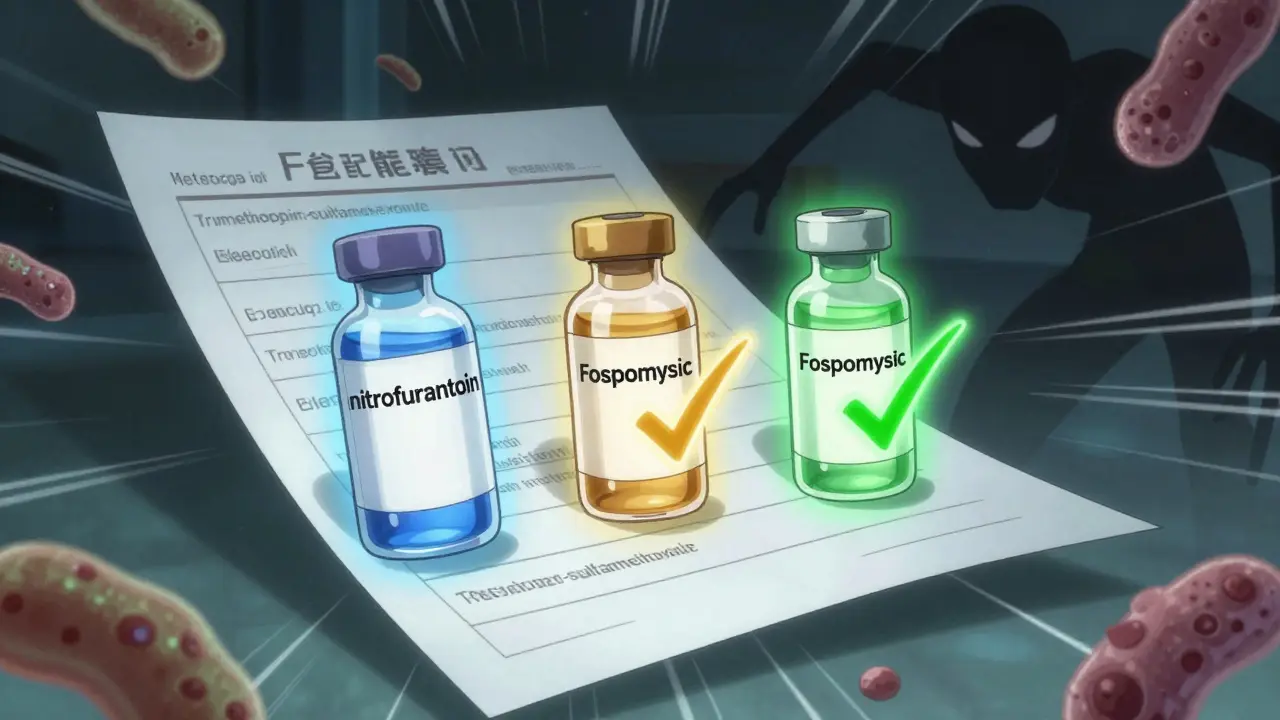
- Nitrofurantoin - 100 mg twice a day for 5 days. It’s 90% effective and has fewer side effects than other options. But here’s the catch: it doesn’t work for kidney infections because it doesn’t reach high enough concentrations in the kidneys.
- Trimethoprim-sulfamethoxazole (Bactrim) - 160/800 mg twice daily for 3 days. Still works well in areas where resistance is under 20%. But in the U.S., E. coli resistance has climbed above 30%, making it less reliable.
- Fosfomycin - a single 3-gram dose. Convenient, 86% effective, and good for people who can’t take other antibiotics.
For complicated UTIs or pyelonephritis, you need stronger, longer treatment:
- Ciprofloxacin - 500 mg twice daily for 7 to 14 days. Used when the infection has reached the kidneys or if you’re sick enough to need hospitalization.
- Ceftriaxone - given as an IV shot, often in the ER. Used for severe cases.
Here’s what doctors are seeing: Klebsiella and Enterococcus faecalis are becoming more common in people who’ve been hospitalized or had catheters. And Proteus mirabilis often shows up in men with enlarged prostates or people with kidney stones.
One big mistake? Overusing fluoroquinolones like ciprofloxacin. They’re powerful, but they’re linked to tendon damage, nerve problems, and rising resistance. The European Association of Urology now recommends avoiding them as first-line unless absolutely necessary.
Prevention: It’s Not Just About Hygiene
Most people think drinking cranberry juice or wiping front-to-back is enough. It helps - but it’s not the whole story. Real prevention needs a layered approach.
Hydration matters more than you think. A 2022 JAMA Internal Medicine study gave 140 women with recurrent UTIs a goal of 1.5 liters of water a day. Result? A 48% drop in infections. Simple. Cheap. Effective.
Empty your bladder after sex. This isn’t a myth. Studies show it cuts UTI risk by half. Bacteria can get pushed into the urethra during intercourse. Peeing within 30 minutes flushes them out.
Avoid spermicides. If you use condoms with nonoxynol-9, you’re 2.5 times more likely to get a UTI. The chemical irritates the urethra and kills good bacteria that keep pathogens in check. Switch to non-spermicidal lubricants or internal condoms.
Postcoital prophylaxis - taking a single antibiotic dose right after sex - is one of the most effective strategies for women who get UTIs after intercourse. A 2023 UrologyHealth.org review found it reduces recurrence by 95%. Options: nitrofurantoin 50 mg or trimethoprim 100 mg, taken within 2 hours of sex.
Low-dose daily antibiotics are another option for frequent sufferers. Taking nitrofurantoin 50 mg or trimethoprim 100 mg every night cuts episodes from nearly 7 per year to less than 1. It’s not for everyone - long-term antibiotics carry risks - but for some, it’s life-changing.
Non-Antibiotic Prevention: What Actually Works?
People want alternatives. And some of them actually have science behind them.
- D-mannose - a sugar that stops E. coli from sticking to bladder walls. A 2021 European Urology study found 2 grams daily reduced recurrence by 83% - better than antibiotics in that trial.
- Cranberry - only works if it’s concentrated. Most juices have too little. Look for supplements with at least 36 mg of proanthocyanidins (PACs). A 2022 Cochrane Review found a 39% reduction in UTIs in women with frequent infections.
- Vaginal estrogen - for postmenopausal women, this is a game-changer. Estrogen loss thins the vaginal lining, making it easier for bacteria to invade. Applying 0.5 grams of estrogen cream twice a week cuts UTI frequency by 70%, according to Mayo Clinic data.
- Probiotics - early research is promising. A 2024 Nature Medicine study used vaginal suppositories of Lactobacillus crispatus and saw a 55% drop in UTIs over 6 months.
One thing to avoid? Over-the-counter pain relievers like phenazopyridine (Pyridium). They numb the burning - which feels great - but they don’t kill the infection. And they turn your urine bright orange. If you wear contacts, they’ll stain.
When to See a Doctor - and When Not to
You don’t need antibiotics for every single symptom. A 2021 BMJ Open study found 25 to 43% of mild UTIs resolve on their own. But here’s the line: if you’re pregnant, over 65, diabetic, have a fever, back pain, or symptoms lasting more than 48 hours - see a doctor.
And if you keep getting UTIs? Get a urine culture. Many people are treated based on symptoms alone. But conditions like interstitial cystitis or vaginal atrophy can mimic UTI symptoms. One 2023 survey found 41% of people were misdiagnosed at first.
Doctors are starting to use at-home test strips like AZO Test Strips. They’re convenient - 2.1 million sold last year - but they miss about 1 in 5 infections. Don’t rely on them alone. If you feel like you have a UTI and the test is negative, still get checked.

What’s New in UTI Treatment?
The last new antibiotic approved for UTIs in the U.S. was over 20 years ago. That’s changing.
- Gepotidacin - approved by the FDA in 2024. It’s a brand-new class of antibiotic that works against drug-resistant E. coli. In trials, it cured 92% of cases.
- EB8018 - a new drug from Europe that blocks bacteria from attaching to the bladder wall. It’s not an antibiotic. It’s more like a shield. Early results show 75% fewer recurrences.
These aren’t just science fiction. They’re real, and they’re coming to clinics soon.
Final Thoughts
UTIs aren’t something you just have to live with. They’re preventable. Treatable. And with the right approach, you can stop them from ruling your life. Drink water. Pee after sex. Skip the spermicides. If you’re postmenopausal, ask about estrogen. If you’re stuck in a cycle of infections, talk to your doctor about D-mannose, probiotics, or low-dose antibiotics. And if you’re unsure? Get a urine test. Don’t guess.
Because the truth is: most UTIs are simple. But ignoring them - or treating them wrong - can cost you far more than a doctor’s visit.
Can a UTI go away on its own without antibiotics?
Yes, some mild UTIs - especially in healthy, young women - can clear up on their own within a few days. A 2021 study in BMJ Open found that 25 to 43% of uncomplicated cases resolved without antibiotics. But this doesn’t mean you should wait. If symptoms last more than 48 hours, if you have a fever, back pain, or are pregnant, diabetic, or over 65, antibiotics are necessary. Untreated UTIs can spread to the kidneys and become life-threatening.
Why do I keep getting UTIs after sex?
Sex can push bacteria from the anus or skin into the urethra. Women are especially vulnerable because their urethra is short and close to the vagina and anus. To prevent this, pee within 30 minutes after sex. Avoid spermicidal condoms and lubricants - they increase risk. For frequent cases, taking a single dose of nitrofurantoin or trimethoprim right after intercourse reduces recurrence by 95%.
Is cranberry juice good for preventing UTIs?
Most commercial cranberry juice is not effective - it’s too diluted with sugar and water. What works is concentrated cranberry supplements with at least 36 mg of proanthocyanidins (PACs) daily. A 2022 Cochrane review found this reduced UTIs by 39% in women with recurrent infections. But it’s not a magic fix. It works best alongside other prevention methods like hydration and peeing after sex.
Can men get UTIs?
Yes, but less often. Men have longer urethras, which makes it harder for bacteria to reach the bladder. When men get UTIs, it’s often linked to something else - like an enlarged prostate, kidney stones, or a catheter. UTIs in men are more likely to be complicated and need longer treatment. Always get tested if a man has UTI symptoms - it’s rarely just a simple infection.
What’s the best antibiotic for a UTI?
It depends. For uncomplicated bladder infections in most cases, nitrofurantoin is preferred - it’s effective, has fewer side effects, and doesn’t contribute as much to resistance. Fosfomycin is good for a single dose. Trimethoprim-sulfamethoxazole works if local resistance is low. For kidney infections or complicated cases, ciprofloxacin or ceftriaxone are used. Always ask your doctor about local resistance patterns - what works in one region may not work in another.
Can D-mannose replace antibiotics?
For prevention, yes - D-mannose has shown strong results. A 2021 study found it prevented 83% of recurrent UTIs, outperforming antibiotics in that trial. But it’s not a treatment for an active infection. If you already have symptoms like burning, urgency, or fever, you need antibiotics. D-mannose works by blocking bacteria from sticking to the bladder wall - it doesn’t kill them. Use it to prevent future infections, not to cure current ones.
Why do antibiotics sometimes make UTIs worse?
Antibiotics don’t make the UTI worse - but they can cause side effects that feel like it. Trimethoprim-sulfamethoxazole can trigger yeast infections because it kills good bacteria. Ciprofloxacin may cause tendon pain or nerve issues. Also, if you take the wrong antibiotic - one that doesn’t match the bacteria - the infection won’t improve. That’s why urine cultures matter, especially for recurrent infections. Overuse of antibiotics also leads to resistance, making future infections harder to treat.
Are at-home UTI test strips reliable?
They’re convenient, but not perfect. Tests like AZO Test Strips detect nitrites and white blood cells in urine - signs of infection. But they miss about 20-30% of UTIs (false negatives), especially in early or mild cases. They’re best for people who know their symptoms well and want a quick check. If you test negative but still feel sick, see a doctor. Don’t rely on them alone.






Write a comment
Your email address will be restricted to us