Have you ever finished a bottle of antibiotics early because you felt better? Or maybe you forgot your blood pressure pill one morning and decided to double up the next day? It’s easy to think these small mistakes don’t matter. After all, if you feel fine, why worry about the schedule on the label?
The truth is, skipping or mistiming doses isn't just a minor inconvenience-it can render your treatment useless or even dangerous. Your body doesn't care if you had a busy day; it operates on strict biological clocks. When you ignore the timing instructions on your prescription labels, which are designed to keep drug levels stable in your blood, you risk serious health complications.
How Drug Levels Work in Your Body
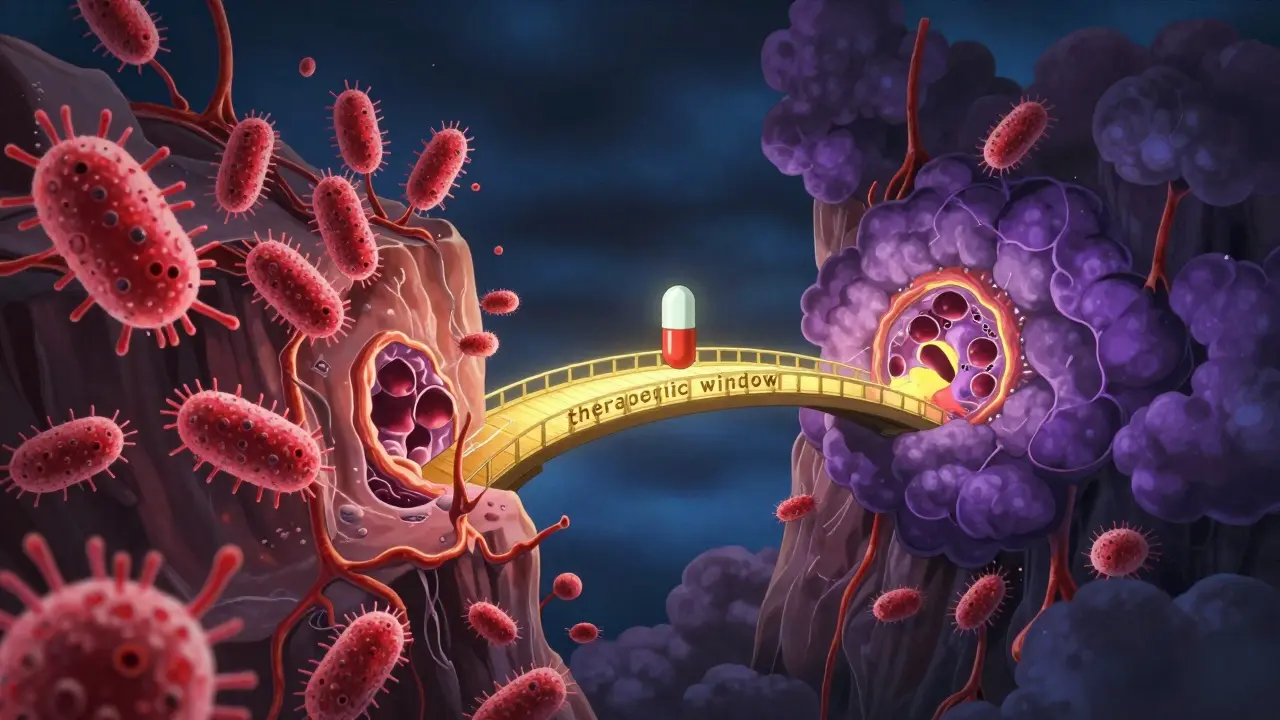
To understand why timing matters, you have to look at what happens inside your bloodstream. Every medication has a specific lifespan, known as its half-life. This is the time it takes for your body to process and eliminate half of the drug. Doctors prescribe doses at set intervals-every 8 hours, every 12 hours, or once daily-to maintain a "therapeutic window."
Think of this window like a Goldilocks zone. If the drug level drops too low (because you skipped a dose), it stops working. The bacteria grow back, or your blood pressure spikes. If the level gets too high (because you doubled up to make up for a missed dose), you risk toxicity and severe side effects.
- Therapeutic Window: The safe and effective range of drug concentration in your blood.
- Half-Life: How long it takes your body to clear 50% of the medication.
- Peak Trough: The highest and lowest points of drug concentration between doses.
When you take medication consistently, you stay within that therapeutic window. When you skip doses, you create gaps where the medicine isn't doing its job. For chronic conditions like hypertension, these gaps allow damage to accumulate silently. High blood pressure often has no symptoms until it causes a stroke or heart attack, making consistent timing the only defense you have.
The Danger of Stopping Antibiotics Early
One of the most common mistakes people make involves antibiotics. You take them for a sore throat, feel great after three days, and toss the rest away. This seems logical, but it feeds directly into the crisis of antibiotic resistance.
Antibiotics work by killing off the weakest bacteria first. The strongest ones survive longer. If you stop taking the medication before the full course is complete-usually 7 to 14 days depending on the type-you leave those strong survivors behind. They multiply, creating a superbug that the original antibiotic can no longer kill.
| Mistake | Immediate Consequence | Long-Term Risk |
|---|---|---|
| Stopping antibiotics early | Symptoms return quickly | Antibiotic-resistant infections |
| Doubling up on missed doses | Nausea, dizziness, toxicity | Organ damage (liver/kidneys) |
| Inconsistent blood pressure meds | Blood pressure fluctuations | Stroke, heart failure |
| Taking insulin without food | Rapid drop in blood sugar | Hypoglycemic shock |
The Centers for Disease Control and Prevention emphasizes that completing the full prescribed course is non-negotiable. It’s not just about feeling better today; it’s about ensuring the infection is completely eradicated so it doesn’t come back stronger tomorrow.
High-Stakes Medications That Require Precision
Not all medications are created equal. Some have narrow therapeutic windows, meaning the difference between a helpful dose and a harmful one is tiny. For these drugs, timing is literally a matter of life and death.
Anticoagulants (Blood Thinners): Drugs like warfarin prevent blood clots but also increase bleeding risk. Patients need consistent daily dosing and regular monitoring of their International Normalized Ratio (INR) every 2 to 4 weeks. Skipping a dose can lead to clotting events like strokes, while taking too much can cause internal bleeding.
Immunosuppressants: Organ transplant recipients take these drugs to stop their bodies from rejecting the new organ. Missing even one dose can trigger an immune response that damages the transplanted tissue. The scheduling must be precise to keep the immune system suppressed without leaving the patient vulnerable to other infections.
Diabetes Medications: Insulin and certain oral hypoglycemics must align with meal times. Taking them without eating can cause dangerous hypoglycemia (low blood sugar), leading to confusion, seizures, or loss of consciousness. Conversely, missing a dose when you do eat can result in hyperglycemia, damaging nerves and organs over time.
Why We Forget: Barriers to Adherence
If timing is so critical, why do so many people fail to adhere to their schedules? It’s rarely because patients don’t care. Research shows that barriers are often practical or psychological.
- Forgetfulness: Life gets busy. Morning routines change, and pills get left on the counter.
- Complex Regimens: Managing multiple medications with different schedules (some with food, some without) is mentally exhausting. Studies show that each additional daily dose decreases adherence by approximately 16%.
- Fear of Side Effects: Patients may skip doses hoping to avoid nausea or drowsiness, not realizing that consistent use often reduces these effects over time.
- Feeling Better: As mentioned with antibiotics, the absence of symptoms leads to the false belief that the medication is no longer needed.
- Cost: Financial constraints can lead to rationing pills, such as taking every other day instead of daily.
Dr. Arif Nazir, Chief Medical Officer of Abode Care Partners, notes that older adults are particularly vulnerable because they often rely on medications for day-to-day survival. Chad Worz, PharmD, from the American Society of Consultant Pharmacists, adds that complexity is the biggest challenge. When a regimen becomes too hard to follow, adherence drops.
Practical Strategies to Never Miss a Dose
You don’t need a medical degree to manage your medication timing. You just need systems that work for your lifestyle. Here are proven strategies to improve your adherence.
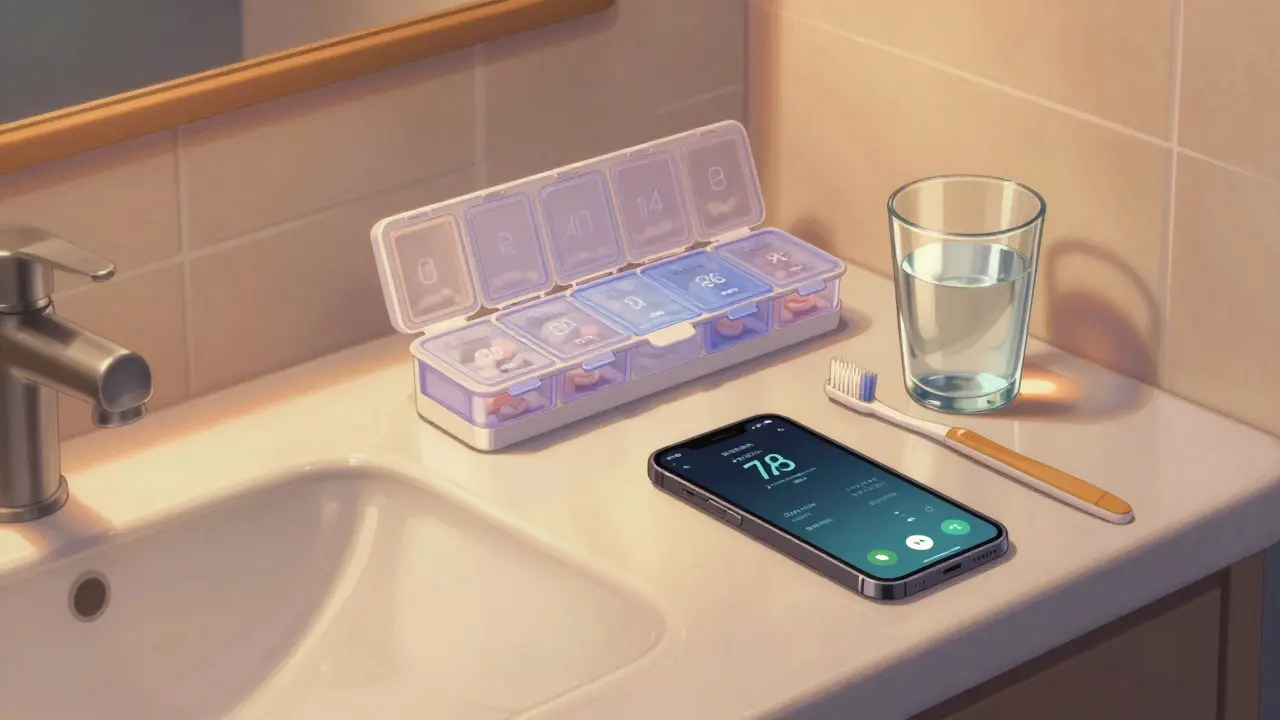
- Use Pill Organizers: Weekly pillboxes are simple but effective. Seeing an empty slot tells you immediately if you’ve taken your dose. Many pharmacies offer these for free or low cost.
- Set Smartphone Alarms: Use distinct alarms for different medications. Label them clearly (e.g., "Take BP Med") so you know exactly what to do when the phone rings.
- Pair with Habits: Anchor your medication to an existing routine. Take your morning pill with your coffee. Take your evening pill while brushing your teeth. This creates a mental cue that is harder to forget.
- Practice the "Teach-Back" Method: When your doctor prescribes a new medication, repeat the instructions back to them. Say, "So I take this twice a day, with food, right?" This confirms you understood the timing requirements.
- Keep a Log: For complex regimens, write down when you take each dose. This helps identify patterns of missed doses and provides data for your healthcare provider.
Pharmacists play a crucial role here. Ask for a medication therapy management review. They can simplify your regimen, suggest generic alternatives to reduce cost, or recommend tools like smart pill bottles that track when you open the lid.
What to Do If You Miss a Dose
Mistakes happen. The key is knowing how to recover safely. Never guess. Always check the information leaflet included with your prescription or call your pharmacist.
General rules of thumb include:
- If it’s close to the next dose: Skip the missed dose and take the next one at the regular time. Do not double up.
- If it’s halfway through the interval: Take the missed dose as soon as you remember, then resume your normal schedule.
- For critical medications: Like insulin or anticoagulants, contact your healthcare provider immediately for specific instructions. Doubling up can be fatal.
Remember, consistency beats perfection. Getting back on track is more important than stressing over a single missed pill. However, frequent misses indicate a problem with your regimen that needs to be addressed with your doctor.
Is it okay to take my medication with juice or coffee?
It depends on the medication. Grapefruit juice interacts with many drugs, including some statins and blood pressure medications, potentially causing dangerous levels of the drug in your blood. Coffee can interfere with the absorption of certain antibiotics and thyroid medications. Always check the label or ask your pharmacist if your specific medication requires water only.
What does "take on an empty stomach" mean?
This usually means taking the medication at least one hour before eating or two hours after eating. Food can slow down or block the absorption of certain drugs, reducing their effectiveness. For example, some osteoporosis medications must be taken with plain water on an empty stomach to work properly.
Can I crush my pills if I have trouble swallowing?
Never crush pills unless your doctor or pharmacist says it's safe. Many medications are extended-release or enteric-coated. Crushing them releases the entire dose at once, which can lead to overdose or stomach irritation. Ask your pharmacist about liquid alternatives or sprinkle formulations if swallowing is difficult.
Why do some medications need to be taken at bedtime?
Some medications cause drowsiness as a side effect, so taking them at night helps you sleep through it. Others, like certain cholesterol drugs, work best when taken at night because your liver produces most of its cholesterol during sleep. Always follow the specific timing instructions provided by your healthcare provider.
How can I afford my prescriptions if I'm skipping doses due to cost?
Skipping doses due to cost is dangerous. Talk to your doctor about generic alternatives, which are often cheaper and equally effective. You can also ask about patient assistance programs offered by pharmaceutical companies or look into discount cards. Your pharmacist can help you find the most affordable options without compromising your health.